



The Future Of Gaming Is Digital, Whether You Like It Or Not


The impulse for most PC gamers might be to laugh at console peasants, but this is an actively terrible decision. You see, closing a console store doesn't just mean you won't be able to buy new titles. It also prevents legitimate owners from re-downloading titles they already purchased. There are ramifications here, obviously, and I'm going to tackle them one by one by one.
Digital Games Are Impermanent Games
The most obvious truth got hammered home: you don't own a digital copy of a game. End-user license agreements (EULAs) have basically said exactly that for years now, but this really drives the point home. When the PS3 and PS Vita stores close for good, you better hope every game you own has been downloaded, fully updated, and completely backed up (which fortunately the PS3 supports). If not, you've paid good money at some point in the past for an object you can no longer access. Of course, we do that with food every day, but the difference is that we expect that sort of behavior from our food.
In the past, when we bought a game, we had a reasonable expectation that we'd always have it. The seventh console generation (that's the PS3 and Xbox 360, if you don't know) completely broke that in two ways: day one patches and digital storefront closures. This is the era when we stopped getting whole games on discs, relying on the internet to deliver critical fixes and in some cases even promised content that was missing from the disc after it was pressed. This is the era where we paid for DLC we'll never be able to access for our disc-based titles. And it's the era where console makers started pushing digital downloads.
That gets worse as you advance through time. We're basically down to the point where physical media is just a key to unlock a download. Several Switch 2 games ship in that format, where the "cartridge" is really just a game key. Sega did this with Sonic X Shadow Generations and Yakuza 0 Director's Cut, which is phenomenal because I got stung twice by one of my favorite publishers. Thanks, guys. Also Disgaea 7 Complete (which, the card is definitely NOT complete), the Madden series, and Street Fighter 6 ship that way. CD Projekt Red ensured, however, that Cyberpunk 2077 fit onto the cart. That right there is a PC-centric dev doing right by console buyers.
The Xbox 360 Marketplace went through a similar closure in 2024, but there were two key differences. First, the Xbox One and Xbox Series families support Xbox 360 backwards compatibility. If a game is backwards-compatible, you can still download that game today. Second, if you have an Xbox console with a disc drive, you can insert your Xbox 360 disc and download the backwards-compatibility archive for free and play while the disc is in the drive, just like you could on a 360. That's still not ideal, since you can't download on an Xbox 360 any more, but there's still some sort of path forward. The PlayStation 5 can't do either of those things.

And no, Nintendo doesn't get a free pass here. The Wii Shop closed down in 2019, and the 3DS and Wii U stores have gone through similar shutdowns since. Store closures were just as bad then as they are now, but the decision to stop making physical games compounds the problem.
All of this adds up to a real problem for preservation. It used to be that a collector could buy a cartridge, or a CD, or a DVD, and the full game was on the storage medium, warts and all. You can even back up your own titles for offline storage, to keep the disc itself from succumbing to wear and tear. That's just less true today; full games don't ship on discs, retail releases (especially live service titles) rarely reflect the launch state of a game after a couple of years, servers get shut down rendering game services inoperable, and digital storefronts vanish.
Walled Gardens And Locked Gates
There's been a lot of digital ink spilled about walled gardens in Smartphone Land—much of that courtesy of Epic Games and its CEO Tim Sweeney—but for some reason game console manufacturers have been immune to the handwringing online. It's far past time for that to stop. There's only one game store on each console, and that's the store run by the console manufacturer. Gone are the days of the "points" system where gamers had to buy scrip to spend on the company store, but the company store is there all the same.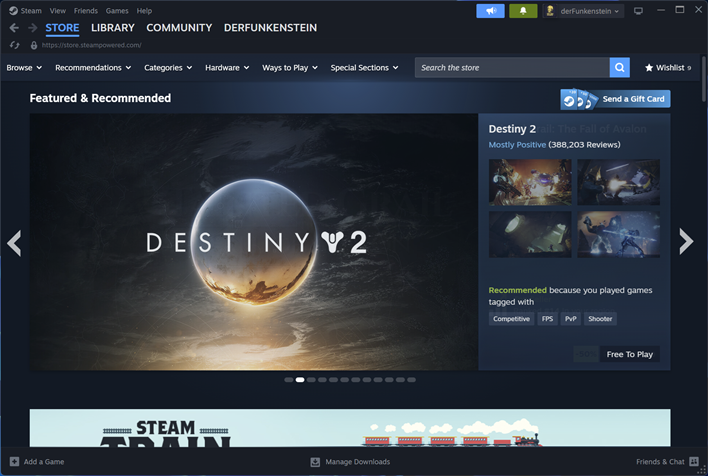
One of the reasons PC gaming works as well as it does is that there's some legitimate competition on the platform. Steam is the dominant player, of course, since Valve was the first company to successfully launch a digital storefront with the arrival of Half-Life 2. But there are legitimately better storefronts, like the DRM-free GOG.com, and then there are also-rans that at least give favorable terms to developers, like the Epic Game Store. If you don't want to buy a game from Steam, you can usually buy it elsewhere. Even SteamOS is open enough that you can install GOG and EGS games, add them to the Gamescope interface, and play them in Linux.
We have to contrast that with console game stores. They're run by the manufacturer, and they apparently last as long as the manufacturer feels necessary. That means if you want to buy a PlayStation, Xbox, or Switch title from an alternate store, you can go straight to hell.
Why Is Sony Doing This?
I think there are probably three main components that drive Sony's decisions in 2026, and one of them is that there's no competition. Sony, Nintendo, and Microsoft are at the very least least under the impression that they can do what they want, when they want. They don't have to worry about another store offering better service, friendlier terms, or anything else. I feel this needs some real attention from regulatory bodies worldwide, not just in Europe (where smartphone makers are forced to allow alternatives stores). Apple proved that by only allowing those stores in Europe. This won't get better unless someone steps in to protect consumers and force companies to stop killing games.
The second factor is just what companies do: looking after the bottom line. On Steam, my library goes back to the store's infancy, and many if not most of those games not only run on modern hardware, but are still available for sale. Some of them were actually unplayable for a while due to abandoned technology like Games for Windows Live, but most of those titles got updated so you could keep playing. Devil May Cry 4 and Dark Souls: Prepare to Die Edition come to mind, although a publisher can do it wrong, too; just look at Rockstar's Grand Theft Auto Trilogy release. This is actually the case for Xbox 360 games with backwards compatibility support, as well.
On the PS3 and PS Vita, that's far less likely, since current consoles don't have that capability. It's far more likely that those stores serve up software for use on emulators and hacked consoles, playing games that haven't actually been purchased. It's legitimately in Sony's best interest to stop paying to host effectively 100% pirated software, even if millions of paying customers get screwed over.
Lastly, and especially when we're talking about the end of new game discs in 2028, we need to talk about demand. When we first reported on the decision, we noted Sony says this move is in "response to shifting trends in consumer preference" meaning that its data shows that digital is where gamers want to buy their games. To back that up, Circana (formerly known as the NPD group, which reports this data officially) says that only seven (that's 7, single digit) PlayStation games have sold over 100,000 copies on physical discs in 2026. Only two titles eclipsed 10,000 physical sales in the week ending July 11, 2026. Suddenly the move almost makes sense, right up until the point where a store closes down and your purchases are officially lost to the aether.
Hot Take: Sony Leaves Piracy As Gamers' Last Recourse
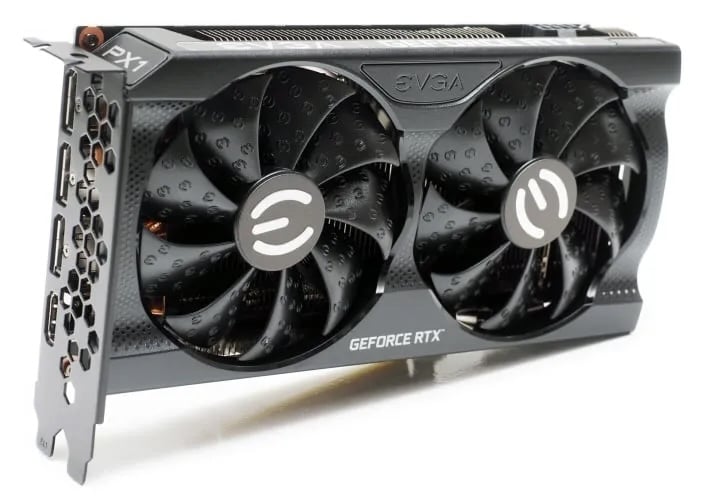
Believe it or not, I actually get why Sony is stopping production of new discs about 17 months from now, but you can't just give the middle finger to a portion of your customer base and expect them to stay loyal. The closures of the PS3 and PS Vita stores give some glimpse into the future of the PlayStation 5, and my friend, it is bleak out there. The message from Sony seems to be "you'll pay for your games digitally and like it when we inevitably shut down the store," and that's just not acceptable.So what alternatives to gamers have? Building a new gaming PC is an exercise in grieving due to component shortages. Can't afford a modern graphics card? Don't worry, NVIDIA has re-released the GeForce RTX 3060. What's next, spinning rust as primary storage? Sorry, hard drives are in short supply, too. Of course, console prices have bucked historical trends and skyrocketed over the last couple of years as well. But despite all that, the truth is that if you can get past the higher cost of entry, PC gaming will let you enjoy a couple decades' worth of titles without too much fear of losing access, and thanks to actual competition in this space, game prices are often lower.
Stepping back to the console makers, the decisions they continue to choose are consistently anti-consumer, and the worst part is that they're made after consumers have bought the consoles. The PlayStation 5 shipped in late Fall 2020, and about 94 million consoles were estimated to have sold through March of this year. Now Sony has changed the rules in a hostile way. Frankly, it's easy to see why some gamers feel the company is essentially begging consumers to just pirate the software. PlayStation Store purchases are going to disappear, and that game will be gone forever, never to be retrieved. In my view, that's a bridge too far.

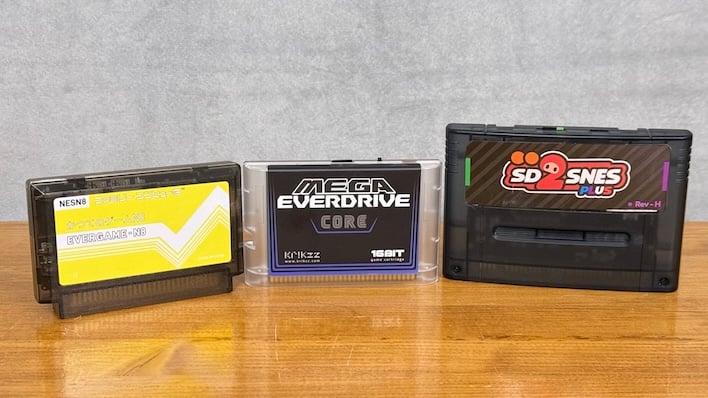
Of course as consoles get older, technology marches on and emulation becomes a feasible way to go if you don't mind giving up original hardware. Whether it's an emulator like RPCS3 that emulates the very PS3 we're discussing or an FPGA-based solution like the open-source MiSTer, old games will eventually be playable. The question is whether every game can be properly archived without official distributions of the packages available. This is the key detail that separates the all-digital PC gaming world from an all-digital console future. I can keep 37 backups of every game I own on Steam; they can't be taken away from me. The same isn't true of my digital PlayStation purchases.
So what say you, dear HotHardware reader? Are you part of team NO DISC NO BUY, a giddy PC gamer that's thrilled to see your fellow gamers suffer due to their wrong platform choices, or a sane person who recognizes that this is just bad news for gamers everywhere? Let me know in the comments what you think about this contentious topic.
The opinions and views expressed in this post are solely those of the author and do not necessarily represent the views, policies, or beliefs of HotHardware.com.





