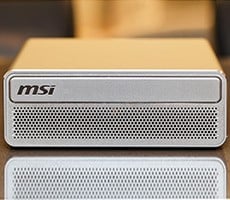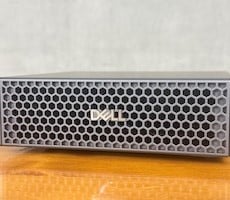


MSI EdgeMesa N AI+ Review: NVIDIA RTX Spark Power In A Pint-Sized PC


The MSI EdgeMesa N AI+ powered by the NVIDIA RTX Spark N1X felt quick and responsive throughout testing and general use. From juggling dozens of browser tabs and various applications to editing photos and working with AI-assisted tools, the system never felt sluggish or constrained, except when installing some applications (like Procyon AI or 3DMark, for example) -- but more on that later. Beyond our initial impressions, we also ran a bunch of benchmarks. Let's get started.
NVIDIA RTX Spark N1X Speedometer Browser Benchmarks
We use BrowserBench.org's Speedometer test to take a holistic look at web application performance. This test automatically loads and runs a variety of sample web apps using the most popular web development frameworks around, including React, Angular, Ember.js, and even simple JavaScript. This test is an example of how systems cope with real-world, modern web apps. All tests were performed using the latest version of Chrome.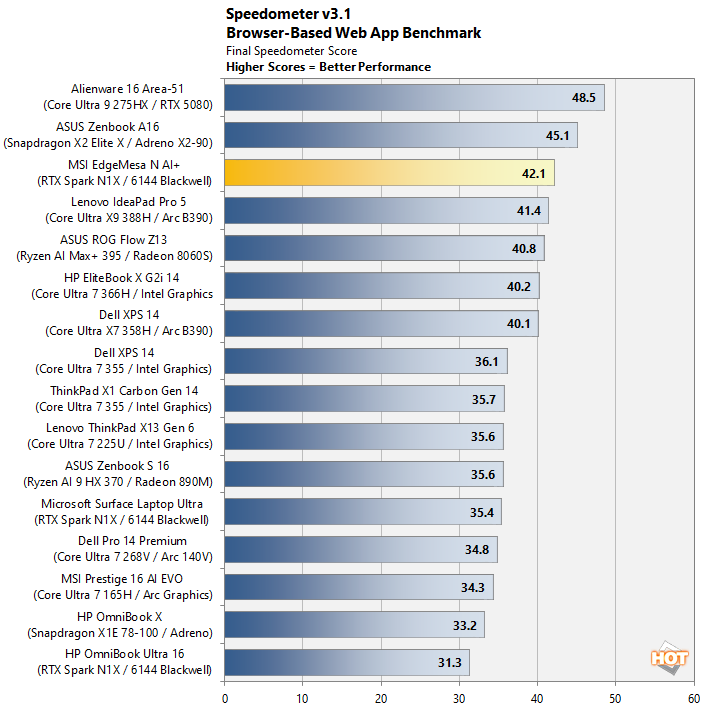
The MSI EdgeMesa N AI+ performed relatively well in this browser-based benchmark, besting all of the RTX Spark-powered notebooks and finishing near the top of the stack. We should note, however, that performance in this test was best after a reboot. If we launched the browser after running other tests or used an existing tab to navigate to the BrowserBench website, the MSI EdgeMesa N AI+'s result was somewhat lower. It consistently beat the RTX Spark notebooks we've previously tested, but didn't break the 40-point mark.
MAXON Cinebench 2026 3D Rendering With The MSI EdgeMesa N AI+
Next up is the latest-generation 3D rendering benchmark from Maxon, based on the Cinema 4D rendering engine. It's a purely CPU-based test that doesn't make use of the graphics processor or NPU, and it scales very well with additional CPU cores. We ran both single- and multi-threaded tests on all of the machines in the charts, and also tested these laptops on battery power.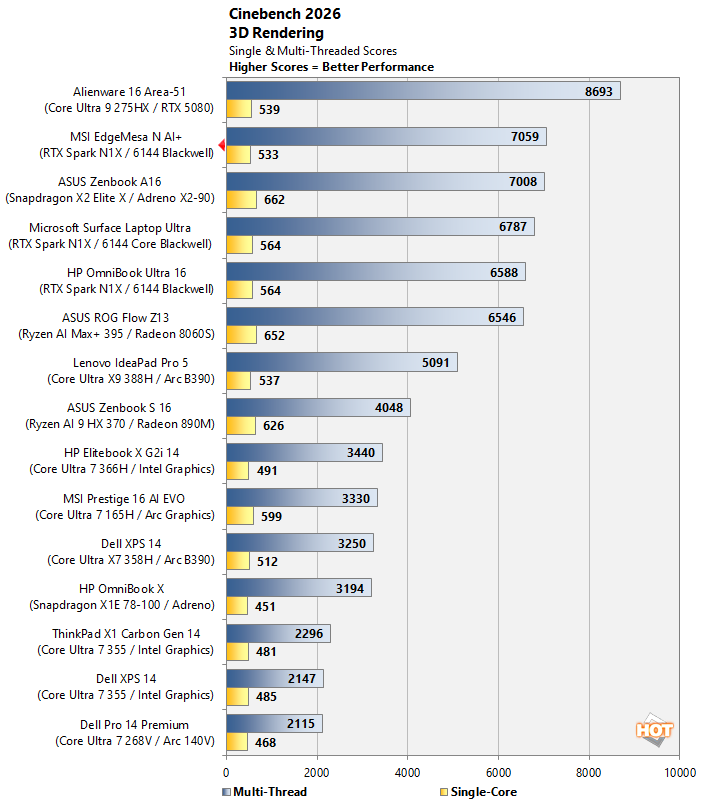
Cinebench 26 had the RTX Spark-powered MSI EdgeMesa N AI+ finishing near the top, outpacing all of the other systems running Windows-on-Arm in the multi-threaded test. The RTX Spark's single-thread score, however, was more in line with mainstream chips; the Qualcomm- and AMD-powered led in terms of single-thread performance here.
MSI EdgeMesa N AI+ PCMark 10 Applications Benchmarks
The PCMark 10 Applications benchmark measures performance in the Microsoft Office suite, as well as in the Edge browser, offering native instruction set-compatible versions of the apps for optimal performance across a wide variety of workloads in tools office workers, students and home users utilize every day.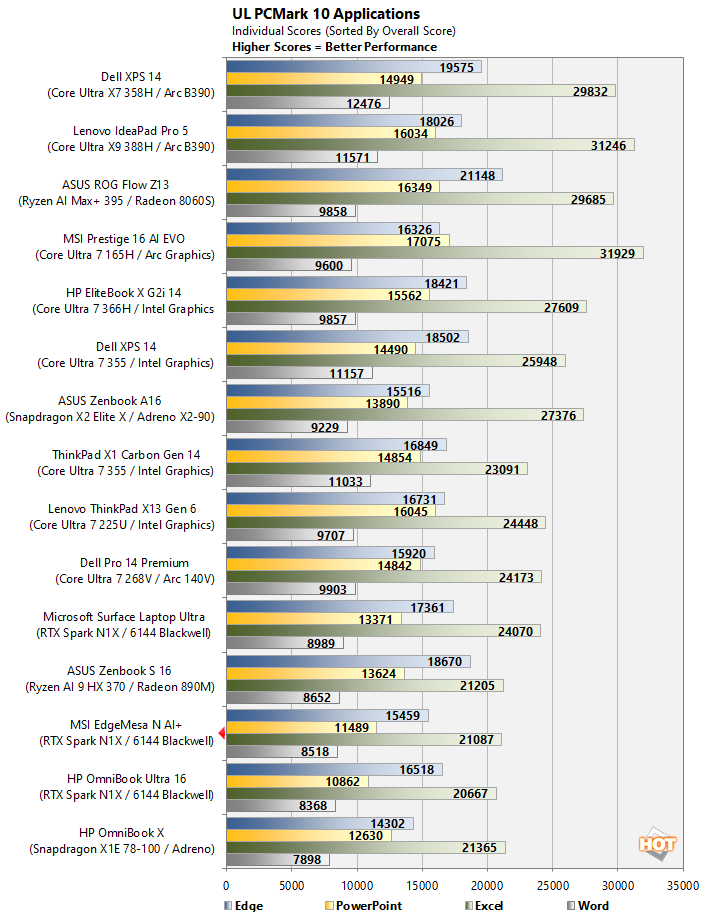
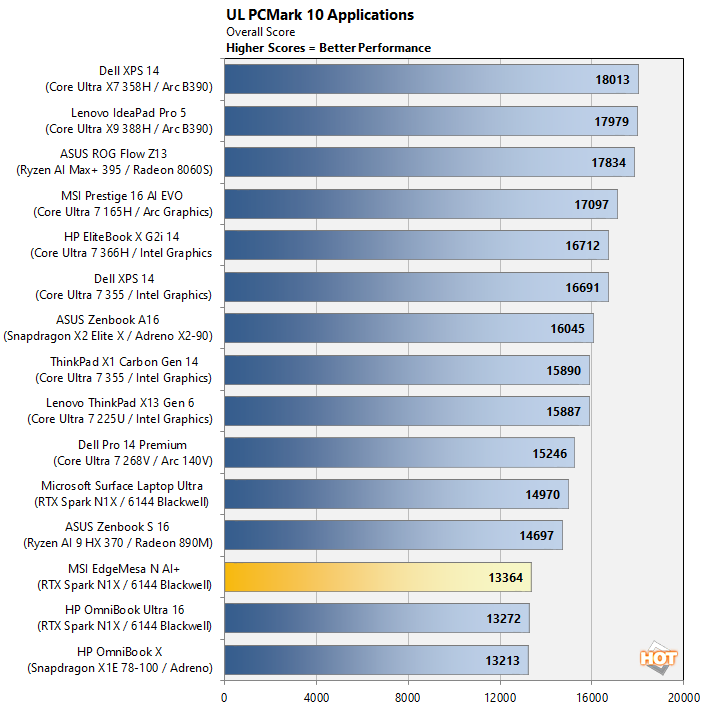
The MSI EdgeMesa N AI+ finished right on top of the RTX Spark powered HP notebook, but well behind Microsoft's Surface Laptop Ultra. On the surface (no pun intended) this doesn't make much sense, since the EdgeMesa N AI+'s processor is less constrained than a thin notebook, but we believe it has to do with the system's storage performance. We'll explain shortly.
Geekbench CPU Benchmark Results
The Geekbench CPU tests stress only the processor cores in a system (not the graphics card/GPU), with both single and multi-threaded workloads. The tests are composed of encryption processing, image compression, HTML5 parsing, physics calculations and other general-purpose compute workloads.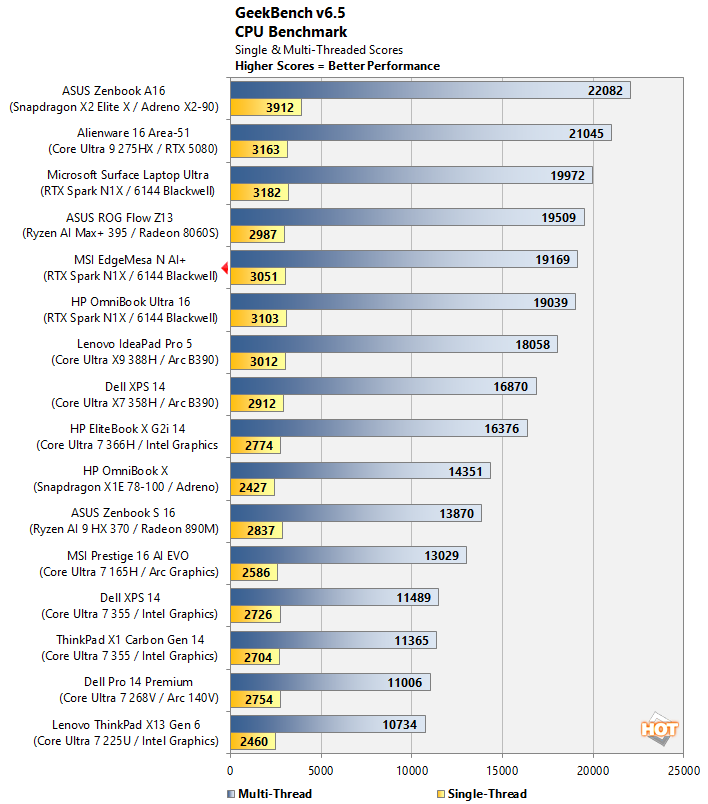
Once again, the EdgeMesa N AI+ finished in-line with the other RTX Spark powered systems, which is to say performance was pretty good. The system's single and multi-threaded scores were competitive and hung with Intel, AMD, and Qualcomm's best.
UL Procyon AI Text Generation Benchmarks
The Procyon AI Text Generation Benchmark is a tool developed by UL Solutions to evaluate the performance of large language models (LLMs) on Windows PCs. It features real-world use cases and uses seven prompts with both Retrieval-Augmented Generation (RAG) and non-RAG queries. It tests various AI models like Phi-3.5-mini, Mistral-7B, Llama-3.1-8B, and Llama-2-13B.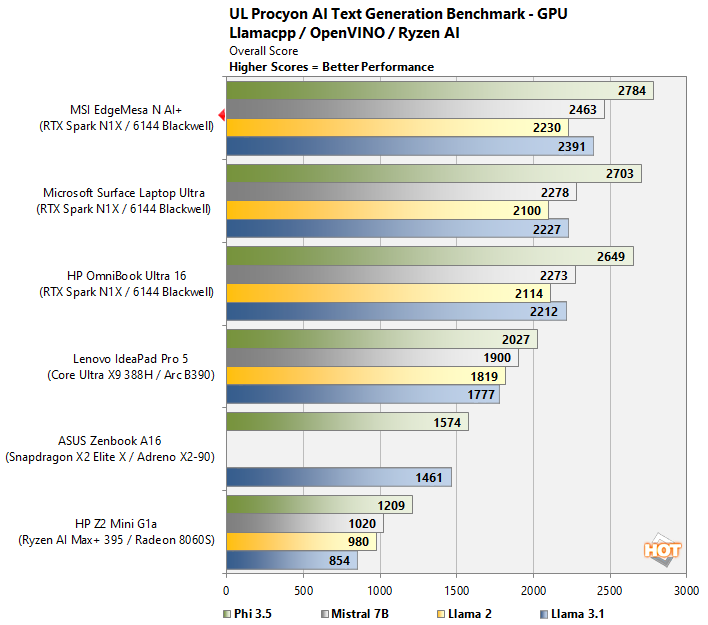
AI workloads are what the RTX Spark was designed for, and it shows in Procyon's LLM Text Generation benchmark. Here, the EdgeMesa N AI+ leads the pack, outpacing Panther Lake, Strix Halo, the Snapdragon X2 Elite and the RTX Spark powered notebooks, though the Microsoft Surface Laptop Ultra wasn't too far behind.
UL Procyon AI Computer Vision 2.0 Benchmark
The idea of "edge AI", or running AI workloads natively on your local devices, instead of in the cloud, is only just emerging on mainstream PCs. As such, benchmarks for these workloads aren't exactly prolific. Fortunately, UL has already built a few into its Procyon benchmark suite. The following is a look at how a few machines do in this benchmark suite's AI Computer Vision benchmark, which exercises the test subject's ability to handle machine vision workloads, which you'll find in everyday tasks like webcam background blur, subject tracking, eye gaze correction and other effects, for example.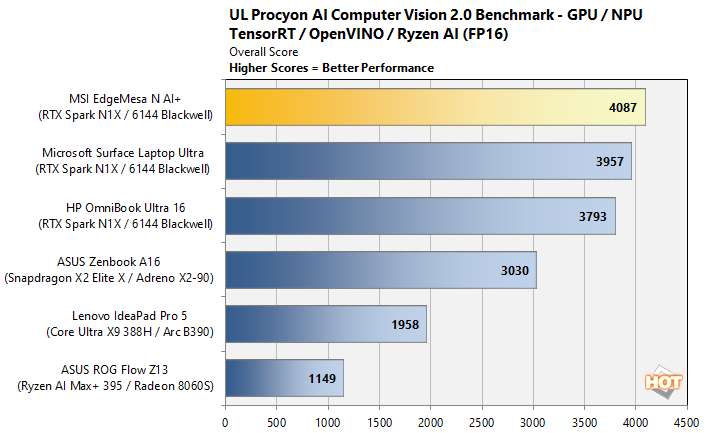
UL Procyon's latest computer vision benchmark also had the EdgeMesa N AI+ coming out on top. None of the integrated processors from Intel, AMD or Qualcomm came close here--it would take a system with a discrete GPU to hang with the EdgeMesa N AI+ here.
MLPerf Client Agentic And Image-Gen Benchmarks
The MLPerf Client benchmark was designed by MLCommons to evaluate machine learning inference tasks on PCs. It focuses on client form factors and aims to measure how well different hardware and software configurations handle different AI workloads with various models targeting LLM, Agentic, and Image Generation use cases. MLCommons also optimizes the models and benchmark configuration for specific hardware to ensure realistic real-world results that must also meet strict guidelines for accuracy.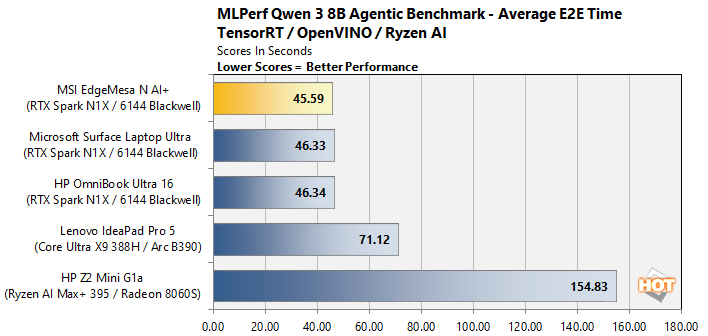
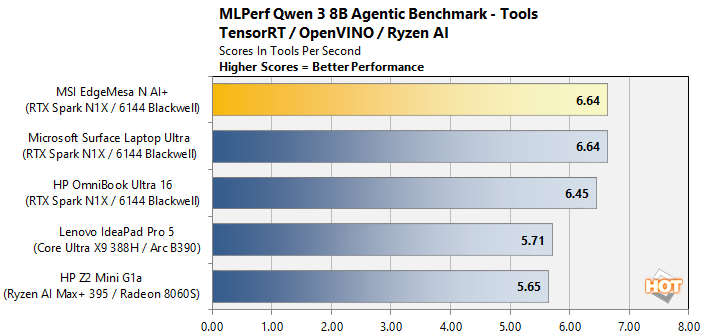
MLPerf Client's Agentic AI benchmark using the Qwen 3 8B parameter model also had the EdgeMesa N AI+ on top. The MSI mini-PC's performance is on par with or slightly better than the other RTX Spark-based machines, but well ahead of the alternatives. Intel's Panther Lake with 12Xe GPU had a strong showing as well, but the test doesn't even run on Snapdragon and AMD's Strix Halo was significantly slower.
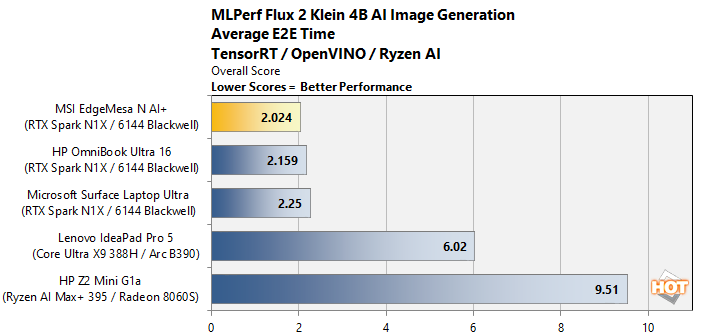
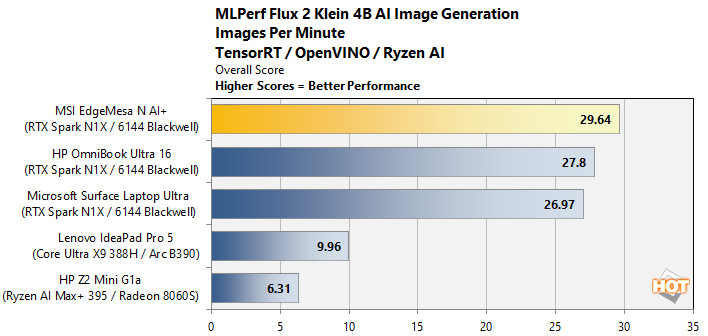
AI Image Generation using the Flux 2 Klein model in MLPerf Client had the EdgeMesa N AI+ beating all of the other systems as well. This benchmark, however, allowed the mini-PC to stretch its legs a bit and it finished well ahead of even the other RTX Spark-based machines.
UL 3DMark Graphics Benchmarks With The MSI EdgeMesa N AI+
3DMark has a wide variety of graphics and gaming-related tests available. For these next tests, we use the most taxing DirectX 12 Speedway benchmark with ray tracing, which is ideally suited to powerful discrete GPUs, and the more modest Steel Nomad Lite, which will run on many more mobile platforms.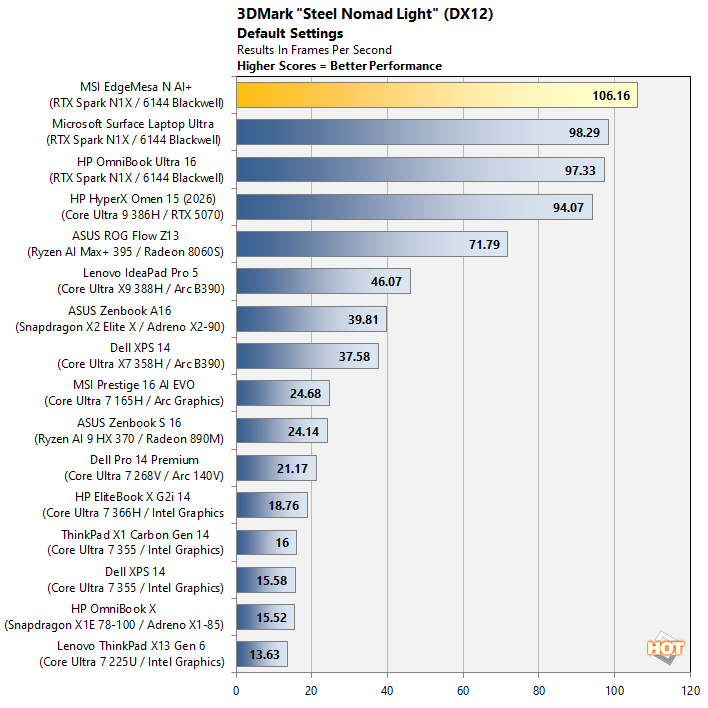
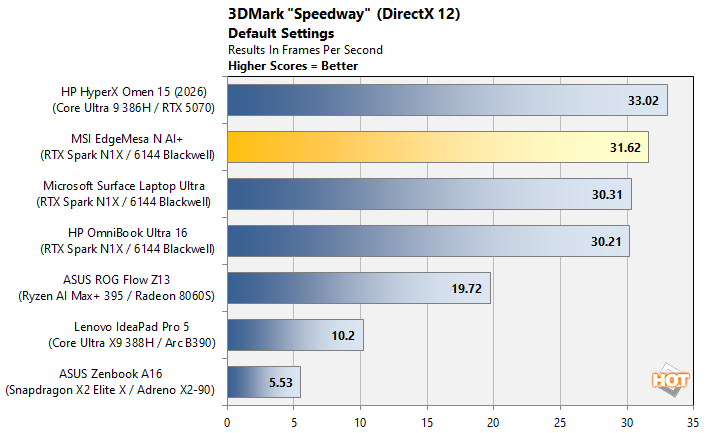
The MSI EdgeMesa N AI+ performed well in our first batch of graphics benchmarks. In the less demanding Steel Nomad Lite test, designed for integrated graphics solutions, the RTX Spark-powered MSI EdgeMesa N AI+ took the pole position, besting all of the systems we tested. In 3DMark's most demanding graphics test, the MSI EdgeMesa N AI+ slots into second, a few percentage points ahead of the other RTX Spark-based machines, but just behind the discrete GeForce RTX 5070 in the HP HyperX Omen 15.
MSI EdgeMesa N AI+ Benchmarks With Cyberpunk & The Talos Principle II
We also ran some fairly taxing gaming workloads on the systems with Cyberpunk 2077 and The Talos Principle II at a 1080p resolution. With Cyberpunk we used the game's "Ray Tracing - Low" image quality preset, which uses high-quality graphics settings, with some ray tracing. And for The Talos Principle II, we used the game's "Medium" quality preset. Resolution scaling was disabled in both games, to show the native framerate across all platforms and iGPUs.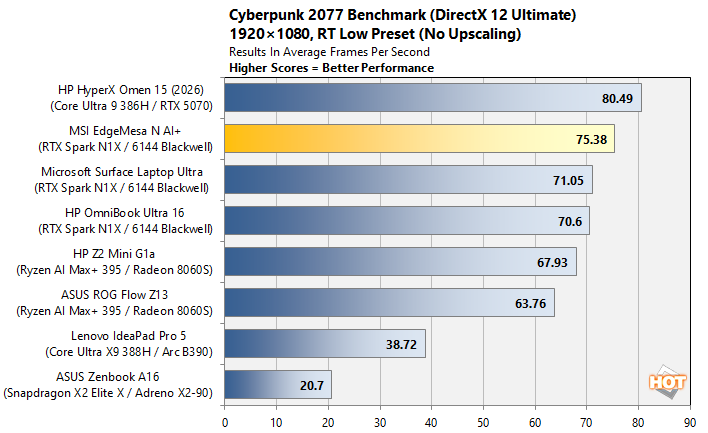
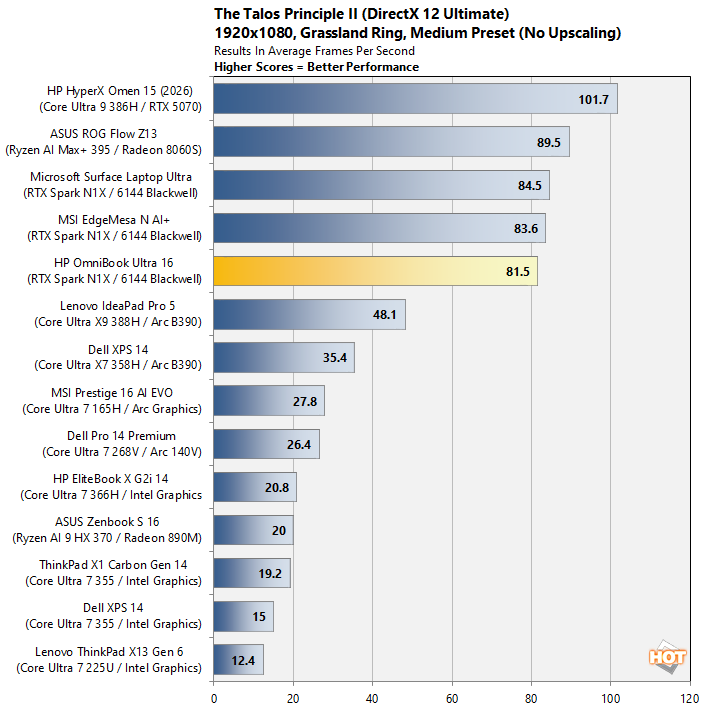
In our actual game tests, the MSI EdgeMesa N AI+'s results were mixed. In Cyberpunk 2077, only the discrete RTX 5070 put up a higher framerate and the MSI EdgeMesa N AI+ once again outran the other RTX Sparks by a few percentage points. In Talos Principle II, the MSI EdgeMesa N AI+ performed well and was right in the mix with Strix Halo and the other RTX Spark systems, but it quizzically trailed its brethren by a couple of frames per second. We have to chalk this one up to driver differences; the MSI machine should have beaten the other Sparks by a small margin.
Exploring Performance A Bit Further
As I mentioned earlier, during large app installations the MSI EdgeMesa N AI+ took longer than expected on a few occasions. I experimented with different power profiles with little effect, but tried to dig in a bit further in an effort to find any potential issues.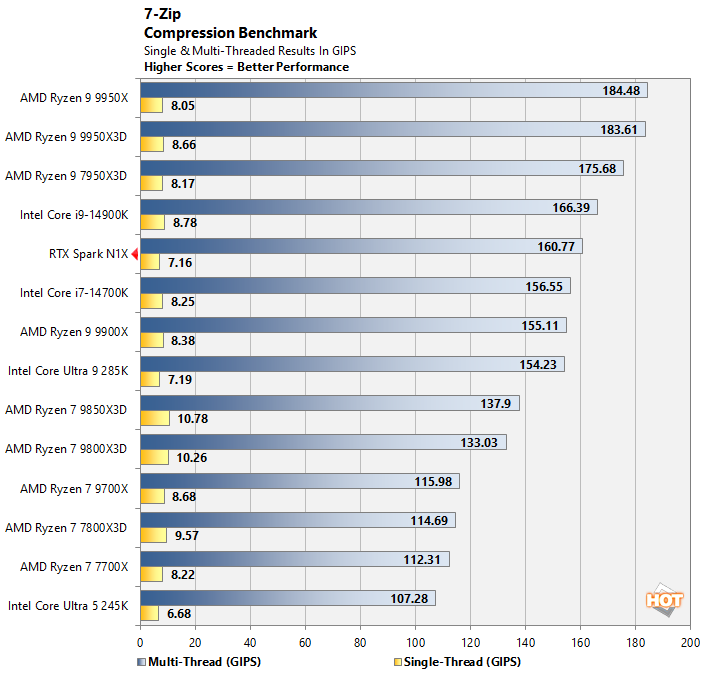
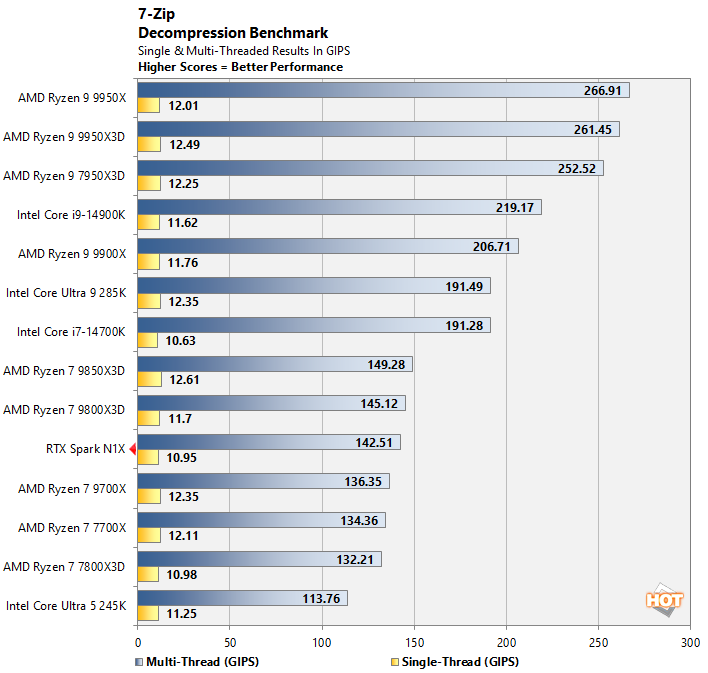
I initially thought the system was having issues decompressing large files, so I did a quick test with 7-Zip to see how the RTX Spark inside the MSI EdgeMesa N AI+ stacked up to other processors with compression / decompression workloads, but performance looked good relative to today’s desktop processors.
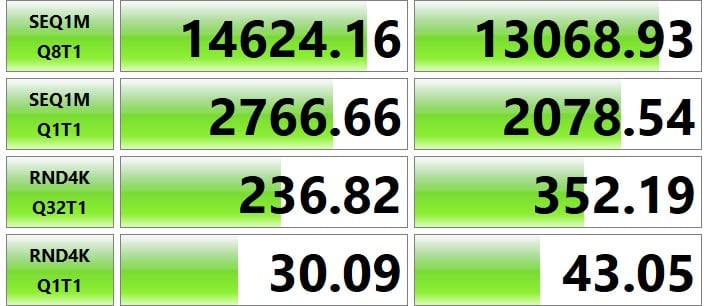
Testing the SSD in the system, however, yielded some unexpected results. Sequential transfers looked good relative to other PCIe Gen 5 NVMe SSDs, but random 4K transfers were well below expectations. Reads were 1/2 to 1/3 as fast as those of other Gen 5 SSDs, and writes were 9x lower than those of some drives we've tested. For reference, the MSI EdgeMesa N AI+ features a Samsung PN9E1 series OEM SSD and its performance was well behind even mainstream Samsung SSDs. Samsung's entry-level 990 SSD hit 78.87MB/s and 323.13MB/s in Q1T1 random 4K reads and writes, respectively, while the company's top-end 9100 Pro hits 106.76MB/s and 349.12MB/s.
We are not certain this is the reason for the slower-than-expected app installations, but it is certainly possible and could also help explain the MSI EdgeMesa N AI+’s position in our PCMark Applications test as well.