



NVIDIA RTX Spark vs. Apple M5 Pro: The Unified Architecture Battle


Even though the industry has been speculating about NVIDIA's entrance into the PC market for quite a while now, the launch of the RTX Spark has spurred many new questions regarding the potential performance of systems built around the chip and how they'll compare to others, like Apple's MacBook Pro or incumbent x86-based PCs. In that regard, here are some quick answers to what are likely some of the most common questions regarding the RTX Spark:
- Is NVIDIA RTX Spark better than Apple M5 Pro? For local, on-device AI--definitely.
- Is NVIDIA RTX Spark faster than Apple M5 Pro? It'll depend on the workload.
- Will NVIDIA RTX Spark laptops have better battery life than Apple? Probably not.
- Should I buy an NVIDIA RTX Spark laptop just for gaming? These aren't strictly gaming systems.
- Is NVIDIA RTX Spark good for creative work? For some creative work, yes--with caveats.
- Will NVIDIA RTX Spark run my apps? It should run the vast majority of Windows apps, yes.
- Who should buy NVIDIA RTX Spark laptops? Some creators and AI developers deploying on NVIDIA servers, though our future review might reveal a wider potential user base.
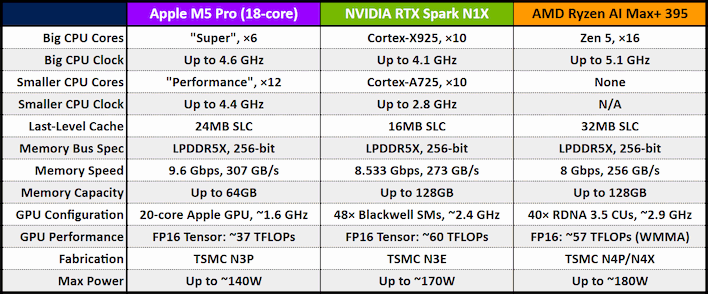
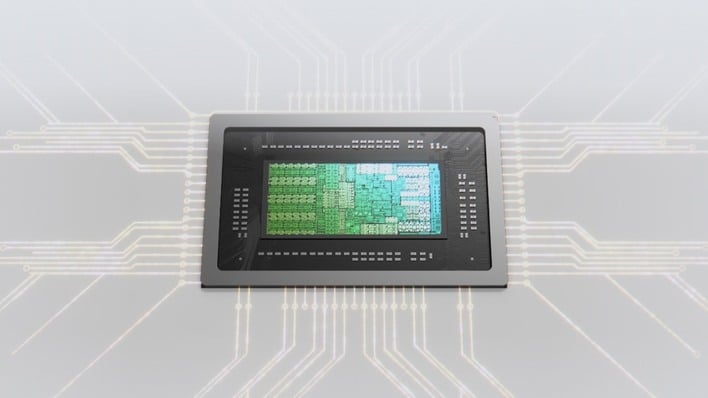
When you see the RTX Spark's specifications laid out this way, it's easy to understand why someone might make a comparison to Apple silicon. On the surface, the RTX Spark and Apple's M5 Pro seem fairly similar in terms of their specifications. You get about 20 Arm-based CPU cores, a relatively large integrated GPU, lots of unified memory, and a double-wide memory bus relative to mainstream computing platforms, to better feed that aforementioned integrated GPU and CPU cores.
The reality is that the hardware comparison is basically where the comparison ends, because both Apple's and NVIDIA's processors are highly specialized products. Apple's chip co-optimized to specifically run Apple's OS and software, and to provide the best experience possible for Mac users running said software. NVIDIA's RTX Spark, by contrast, is created to be a local AI powerhouse, and work with the much broader and more diverse Microsoft Windows ecosystem, so arguably, the two products don't technically belong in the same conversation.
How Apple Silicon Disrupted The Windows Laptop Market
When Apple broke away from Intel and started designing laptops based on its own in-house processors, many were impressed by the performance and efficiency of the M-series chips, and rightly so. The error they made was attributing the M-series' performance and efficiency gains solely to Apple's use of the AArch64 instruction set, created by Arm Holdings plc. That's the reason Apple's chips are sometimes referred to as "Arm processors," even though Arm itself had little to do with the design and creation of the chips.
In reality, Apple's processors are fast and efficient through a combination of clever purpose-built design for single-threaded client applications, top-down vertical integration from base silicon to userland software, and crucially, the use of the absolute latest, bleeding-edge processor fabrication technology available. Apple pays big bucks to make sure it has access to the newest chipmaking tech before anybody else, and the proof is in the pudding. Apple's chips offered largely unmatched efficiency—at least until Intel's Panther Lake came along.
In contrast, NVIDIA doesn't control the Windows ecosystem, and as such, NVIDIA's RTX Spark doesn't have any of these advantages. The two chiplets that make up the RTX Spark are fabricated on a 3nm process at TSMC just like the M5 Pro, but they are fabricated using the N3E process which predates the more performance-oriented N3P process used for the M5 Pro. N3E is modern and certainly not trailing that far behind but it's still a different process; TSMC describes the jump from N3E to N3P as offering as much as 10% improved efficiency, which is significant. In real-world performance testing, NVIDIA's DGX Spark mini PC offers similar power efficiency as the AMD Ryzen AI Max+ 395, which is built on a 4nm node. Apple's done a great job with its M-series processors, but if part of their perceived strength come by way of TSMC's more efficiency-focused processes, Apple shouldn't get credit for that.
NVIDIA has much more to contend with, because they don't enjoy the benefits of a closed ecosystem and vertical integration like Apple. Rather than having their own bespoke operating system and fully co-optimized software, RTX Spark based systems will run Windows on Arm—or potentially Linux, although it's not clear if it will be possible to install Linux on RTX Spark devices. More on this later. While Windows on Arm support is sufficient for a wide range of use cases, through no fault of NVIDIA, it simply isn't tailored as closely for the RTX Spark as MacOS is for Apple's M-series chips.
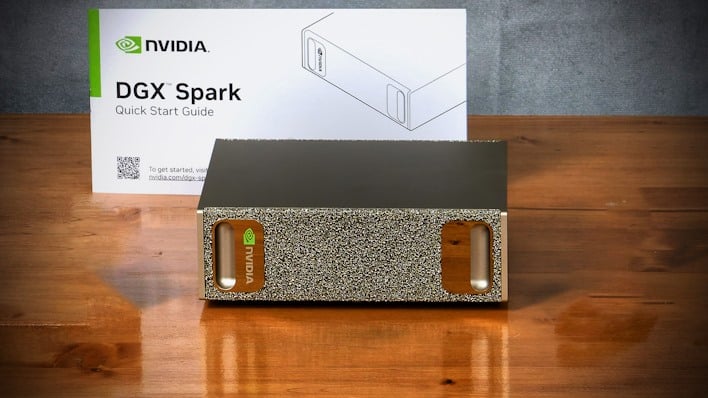
Though it would be unfair to say that the RTX Spark doesn't benefit from clever design, the chip wasn't solely created for general laptop use. As evidenced by the DGX Spark and NVIDIA's focused message about the RTX Spark, these chips were built for leading AI performance and NVIDIA's AI software stack first and foremost, and in that regard, NVIDIA and its silicon integration partner Mediatek definitely succeeded. The question is whether that's relevant to a broader swathe of users that don't buy premium laptops for these specific use cases. If you're using cloud-based services and aren't making use of local AI, or if you're not an AI developer, RTX Spark's potential advantages over traditional laptop CPU architectures remain to be seen--we'll know more once we've had the chance to fully test the platform.
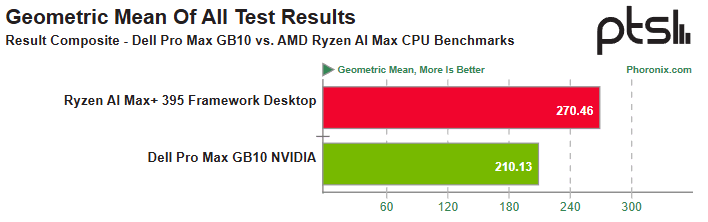
Some have made much ado about the fact that the CPU cores in NVIDIA's new chip use are based on off-the-shelf Arm designs. While the Cortex-X925 performance cores in the GB10 are quite impressive, they're licensable Arm core IP, not the fully custom CPUs that Apple designs. This isn't a bad thing at all—again, the cores are still modern and fast—but it does mean that they don't enjoy the same perfect dovetail with the client software running on them that Apple's M5 Pro does. In CPU-focused benchmarks, for example, the DGX Spark with the same GB10 chip generally trails AMD's Zen 5 and Intel's Arrow Lake, to say nothing of the M5 Pro.
NVIDIA Makes GeForce, So RTX Spark Is For Gamers, Right?
Gaming is where the narrative starts to shift a bit. Gaming on Apple devices, while possible and even performant in some cases, has never been a great proposition due to limited software support and the hacky workarounds usually required just to get things running. Meanwhile, NVIDIA is practically synonymous with gaming, so RTX Spark-powered machines should be a killer gaming machine, right? Well, yes and no. RTX Spark will most likely be plenty powerful enough for most laptop gaming scenarios, but due to its specialized design and architecture, systems built around the chip will have additional hurdles to clear with respect to gaming performance, and price points could be relatively steep.There are a few things to keep in mind as they relate to gaming on the NVIDIA RTX Spark. The first has to do with the CPUs. The Cortex-X925s running at up to 4.1 GHz should easily handle a typical gaming workload, and apparently the GB10 has unusually low LPDDR5X latency, which will also help considering its relatively small caches (16MB L3 on one cluster, 8MB L3 on the other, and a 16MB SLC). Machines with integrated graphics are almost always bottlenecked by the GPU long before the CPU is even loaded, so that's not an issue--it's the reliance on the Arm instruction set.


Just as we've seen with the Snapdragon X family of processors, running the majority of Windows software, including a high percentage of games, requires the use of x86 emulation. The fact is, although there are hundreds of Arm native games and applications available these days, the vast majority of high-profile PC games are still written for x86 processors, like those used in most laptops, the Xbox and PlayStation 5. Arm-based processors can't run x86 code natively. Microsoft's Prism translation layer has improved by leaps and bounds since it debuted and it now features support for AVX2 vector instructions, allowing it to run the majority of games. But there's still usually a performance penalty to pay when using Prism, and this means some games won't run as well on Windows on Arm. At this point in time, there are also some games that won't run at all on Arm processors, including those that requires kernel-level drivers for anti-piracy or anti-cheat reasons that haven't been natively ported to use AArch64.
That said, NVIDIA has a massive developer relations team and has been working closely with virtually every game developer in existence for decades. Qualcomm has faced an uphill battle getting some game developers to properly support Windows on Arm, but NVIDIA is likely to have much more influence and may overcome some of these hurdles by the time RTX Spark systems ship this fall.
Another thing to consider is that the massive 6,144-shader GPU (roughly equivalent in size to a GeForce RTX 5070) in the RTX Spark has to share its relatively limited memory bandwidth with the CPU cores. In addition, the GPU isn't directly connected to the memory bus the way it is on Apple, AMD, and Intel's chips. Instead, the Blackwell GPU connects to the Mediatek CPU/IO chiplet where the memory controller lives over NVLink-C2C. NVIDIA boasts that this link has some 600 GB/second of bandwidth, which is very impressive, but the majority of other machines with integrated graphics have no need for such a link at all; the GPU can access the memory controller directly. The RTX Spark's CPU to GPU interface is impressive in comparison to a discrete GPU system's PCI Express link, but it's in place because the GPU has to send every memory request to the CPU/IO chiplet, so the interface needs to be extremely fast to avoid becoming a bottleneck.
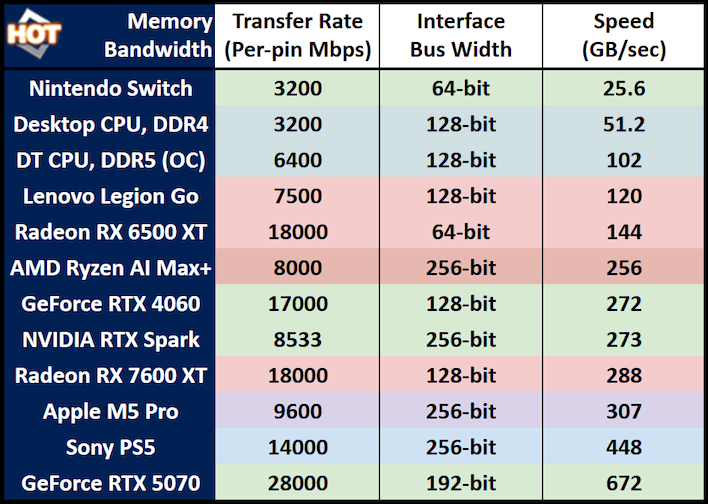
But I digress. The point is that even with a double-wide memory bus versus typical laptop SoCs, the RTX Spark offers about 273 GB/second of memory bandwidth. That's quite a lot in comparison to typical laptops, but it's less than the 307 GB/second of the M5 Pro, and much less than the 672 GB/second of a discrete GeForce RTX 5070, which also doesn't have to share its local memory with the host CPU. In many gaming scenarios, the RTX Spark will likely be bottlenecked by its memory bandwidth, so it won't always be able to fully leverage the GPU silicon that it has on-board. This saves power, which is a good thing in a laptop, but it does mean performance in some gaming workloads might be underwhelming compared to the size of the GPU and the discrete desktop or laptop comparison. For example, this 16" MSI Vector with a GeForce RTX 5070 Ti is currently available for under $1,600 and is a very solid gaming machine, though it won't have the AI dev chops of an RTX Spark-based laptop.
NVIDIA Blackwell And CUDA FTW
The real advantage that the GB10 (and thus the RTX Spark) has over the Apple M-series is still that massive NVIDIA GPU. The RTX Spark's GPU is bigger than the M5 Pro's by quite a bit, but the really notable part is simply the fact that it's a latest-generation NVIDIA GPU with the full GeForce feature set, which means that any code written for it will work on every other Blackwell GPU. The CUDA stack is consistent across every NVIDIA platform, whether it's RTX Spark or GB300 Grace Blackwell Ultra.Even as AMD works to convince customers that its processors are really good for local AI, there's little doubt that some configuration of the RTX Spark will represent the pinnacle of local AI performance among laptop SoCs, especially when using large models. The fact is, many models simply won't run on traditional platforms, even with powerful discrete GPUs, because they don't have the memory capacity to do so. The unified memory architecture on chips like the RTX Spark fix that, so system with enough memory can run models that even a mighty GeForce RTX 5090 cant. it remains to be seen if that is really something that a majority of premium laptop customers want to do, though.
So what about Linux? Unfortunately, you probably won't be able to put Linux on an RTX Spark laptop, at least not initially or officially. NVIDIA is demarcating between consumer AI and gaming versus developer-focused use cases, so RTX Spark machines are being co-developed with Microsoft for Windows 11, focusing on Copilot+ integration, Windows-native security, and Prism emulation. If you're looking to use one of these chips in a native Linux environment, NVIDIA and it partners already have a product for you: the DGX Spark.
There's no particular technical reason that Linux wouldn't work flawlessly on these machines just as it does on the DGX Spark, but the they will likely come with locked bootloaders and unless the OEMs specifically provide options in the firmware to disable Secure Boot or provide third-party keys, otherwise the bootloader will simply refuse to launch the Linux kernel. Even in the case that you can disable Secure Boot, you might run into issues with proprietary ACPI (AML) code, or missing drivers for components like the trackpad, the audio hardware, or a new tandem OLED screen controller. These issues can all be worked around in time, but you could just avoid the potential frustration by using an x86 or Apple machine it must be a laptop.
The Case For NVIDIA's RTX Spark
In trying to highlight the nuanced differences with other platforms, I may have pointed out some of the RTX Spark's potential caveats, but I'm actually impressed with its engineered elegance and think it's a cool product. I also think it's a really important product historically, because no matter what its market reception is like when it goes on sale, the RTX Spark represents the first time NVIDIA has really tried to compete with Intel and AMD on their home turf. And I do think it's Intel and AMD that NVIDIA is competing with in the laptop market, not Apple, at least not directly. Apple users are going to buy Apple hardware, and there's not much room to pull them away.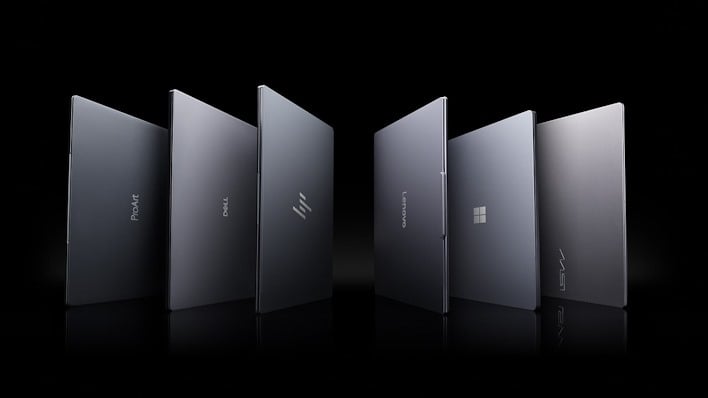
The optimal targets for RTX Spark systems are AI developers leveraging CUDA that want to be able to test their work on the go. Remember, like AMD's Ryzen AI Max processors, the RTX Spark can be equipped with up to 128GB of RAM, and that means it can handle large 70B-parameter AI models that simply can't be loaded on even the largest discrete laptop GPUs. That use case exists, and there are more and more AI developers every day, but it's not a big slice of the market. Creators that will benefit from the relatively high compute performance of the RTX Spark's 20 CPU cores and large GPU may also benefit, especially if their preferred software is Arm native. In fact, during his keynote, NVIDIA's CEO showed some upcoming Adobe applications offering substantial performance gains on RTX Spark and you can bet Adobe isn't the only company NVIDIA is working with.
RTX Spark devices aren't available yet and the designs based around this SoC won't launch until later this year, but virtually all of the usual suspects have systems on the way: ASUS, Dell, HP, Lenovo, MSI, Acer, and of course, Microsoft itself. Surprisingly, rather than thick slabs like the ASUS ROG Flow, most of the machines are thin and lights, despite the up-to-140W TDP of the GB10 SoC. I'm sure we'll learn more about how NVIDIA optimized the chip to work in thin laptop form factors as we get closer to launch, but it's going to be interesting to see how they manage acoustics and thermals.
NVIDIA's OEM partners haven't announced pricing yet, but most analysts seem to agree that RTX Spark-based systems are likely going to start around $2,000, with high-end models potentially creeping up over $3,000 (or more) if they're equipped with the top-end chip and enough RAM for the large local AI model use case. It will be interesting to see if NVIDIA's technology, ecosystem software and CUDA support are enough to move laptops at those price points, of if price points can actually drift lower.
For some, like the aforementioned AI developers already entrenched in CUDA, the RTX Spark is probably a no-brainer. For broader, more common laptop use cases though, we'll remain cautiously optimistic, and will wait to see what other tricks NVIDIA, Microsoft, the system builders and ISVs have in store as we get closer to launch.





