NVIDIA GeForce RTX 5060 GPU Review: Blackwell At Just $299 [Updated]


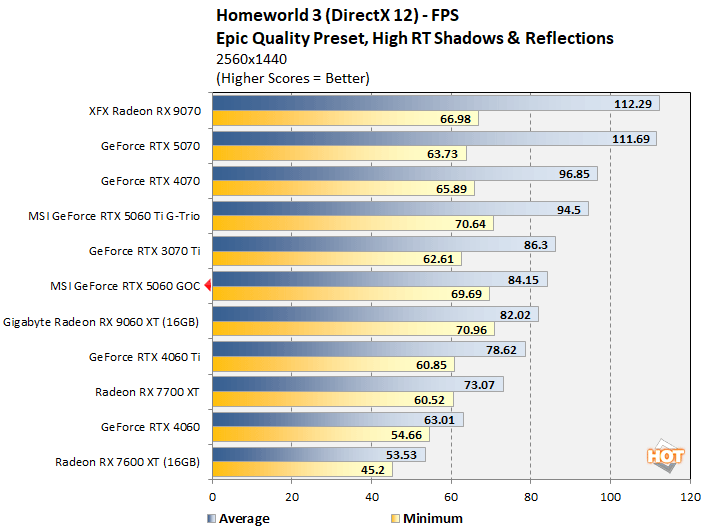
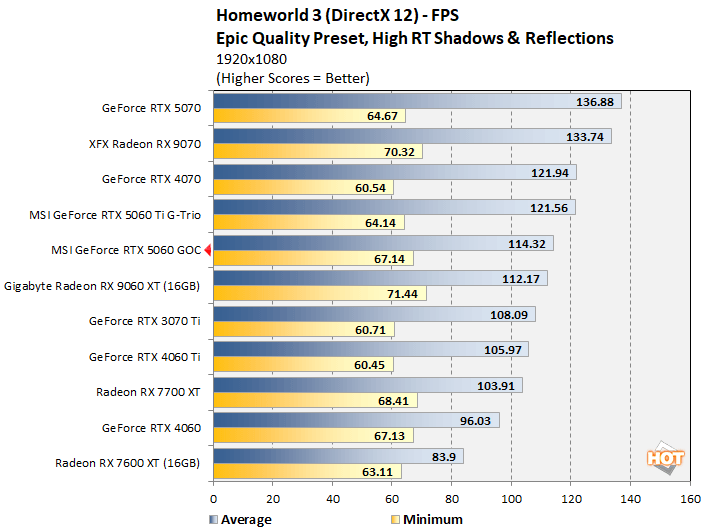
Homeworld 3 Benchmarks

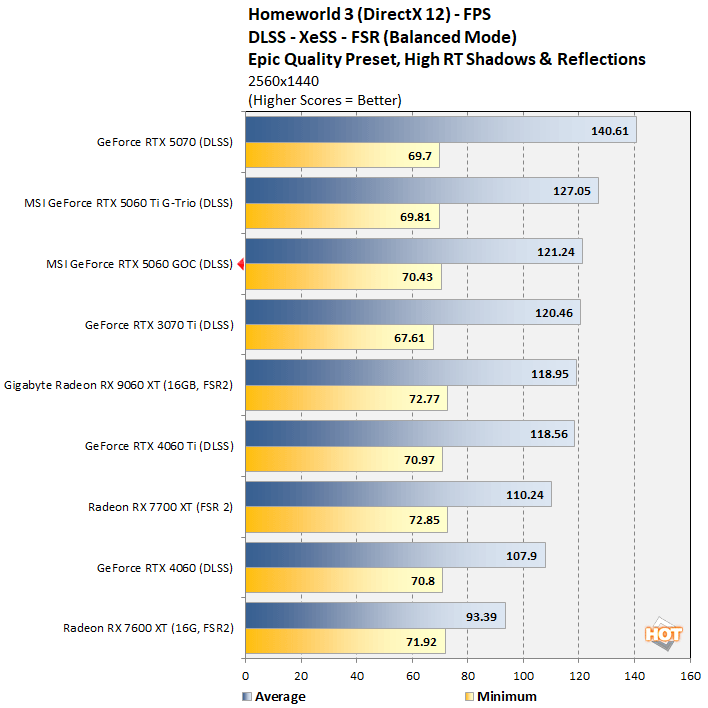
Homeworld 3

Horizon Zero Dawn Remastered Benchmarks
Next up, we’ve got some benchmarks from Horizon Zero Dawn Remastered. The original Horizon Zero Dawn was initially released as an exclusive on the PlayStation 4, but was ported to the PC a couple of years back. A few months ago, however, a remastered version of the game was released, with upgraded visuals and support for more advanced graphics technologies. For those unfamiliar with the game, it follows a character named Aloy, who is on a quest to unravel mysteries of a future Earth ruled by machines. She is outcast from her tribe and fights to uncover her past and stop an impending threat.
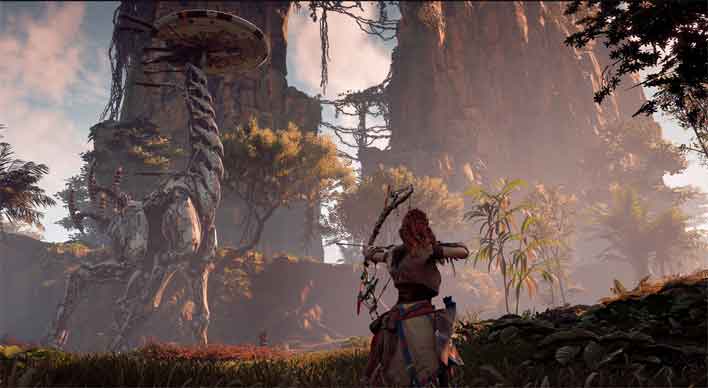
Horizon Zero Dawn Remastered
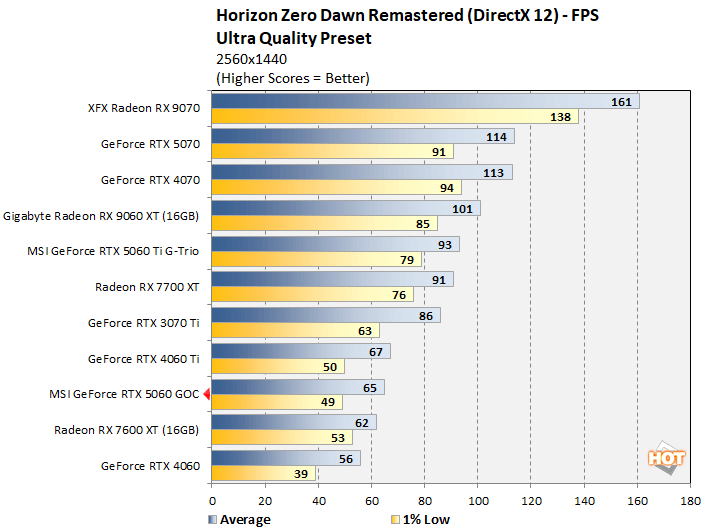
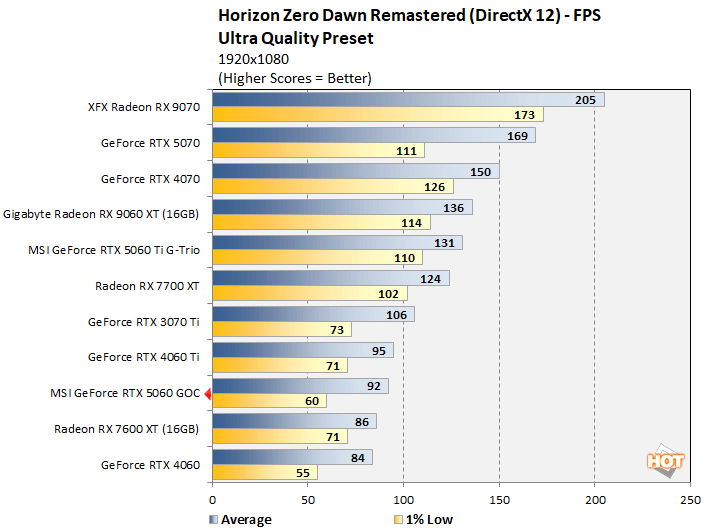
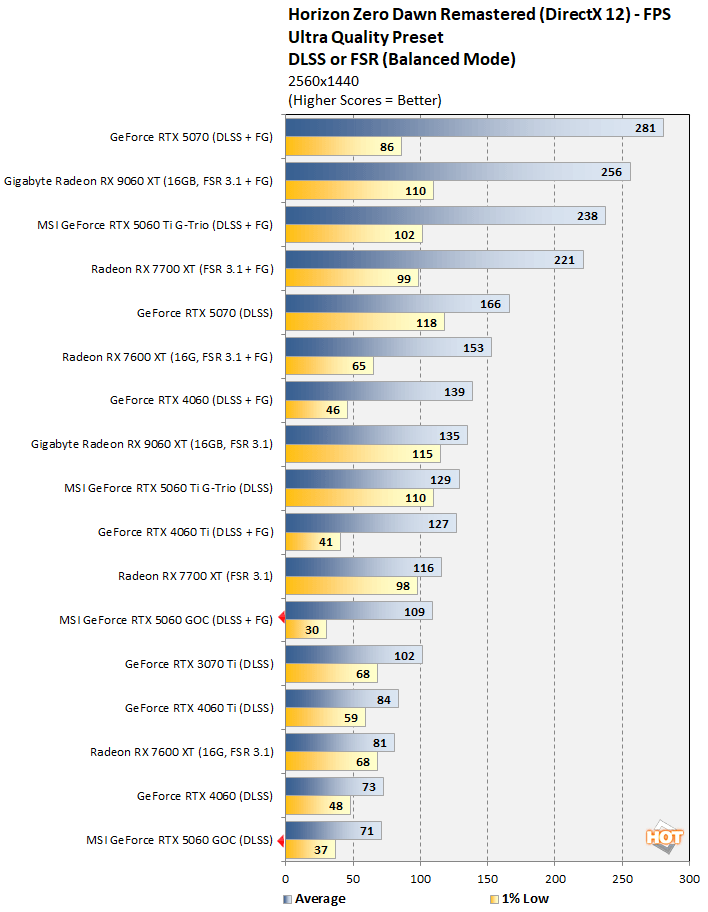
With DLSS or FSR enabled, the GeForce RTX 5060's minimum framerates take a hit and its average results remain in the bottom third of graphics cards we tested.
The Talos Principle II Testing
Croteam’s The Talos Principle II is a sequel to the original first-person, puzzle-based adventure game that features philosophical themes and expansive environments with increasingly more difficult challenges as the game progresses. It was originally released for multiple platforms, but has been continually updated on the PC.
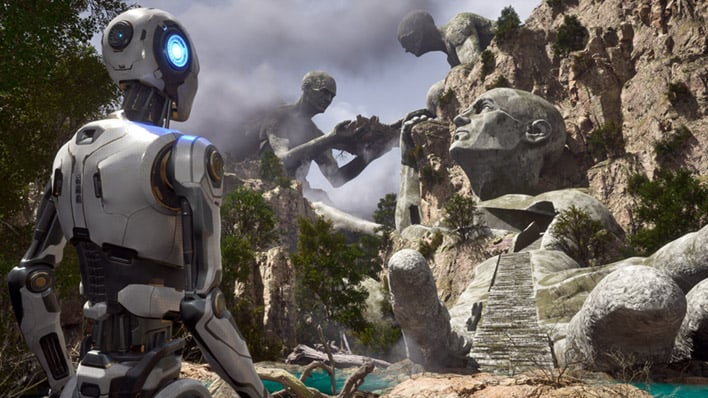
The Talos Principle II
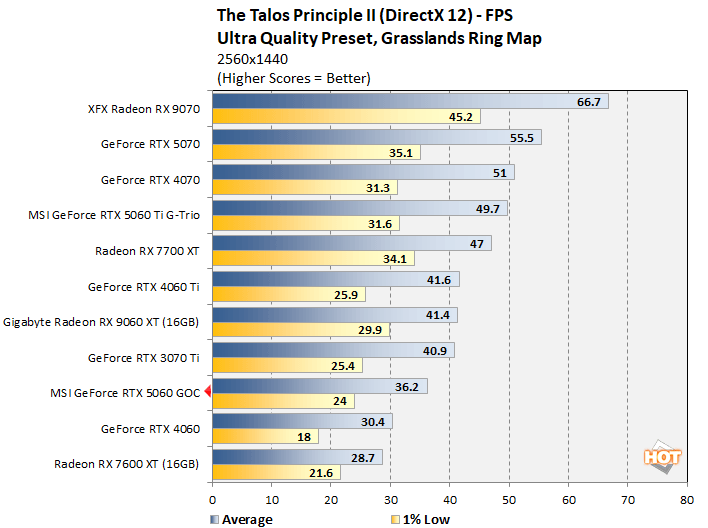
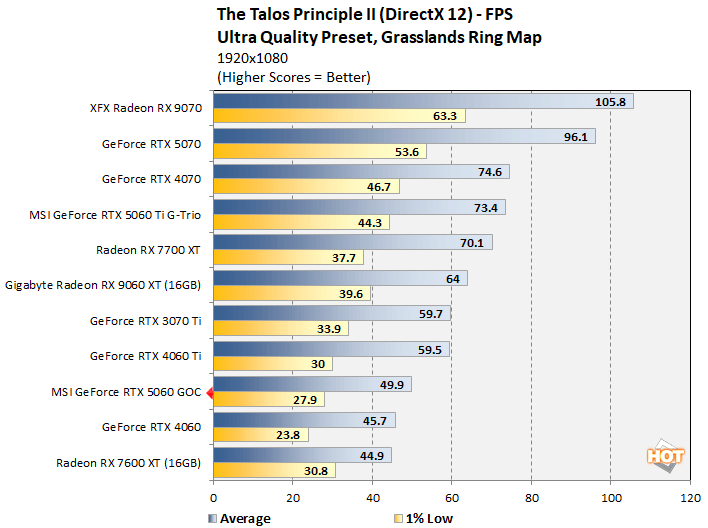
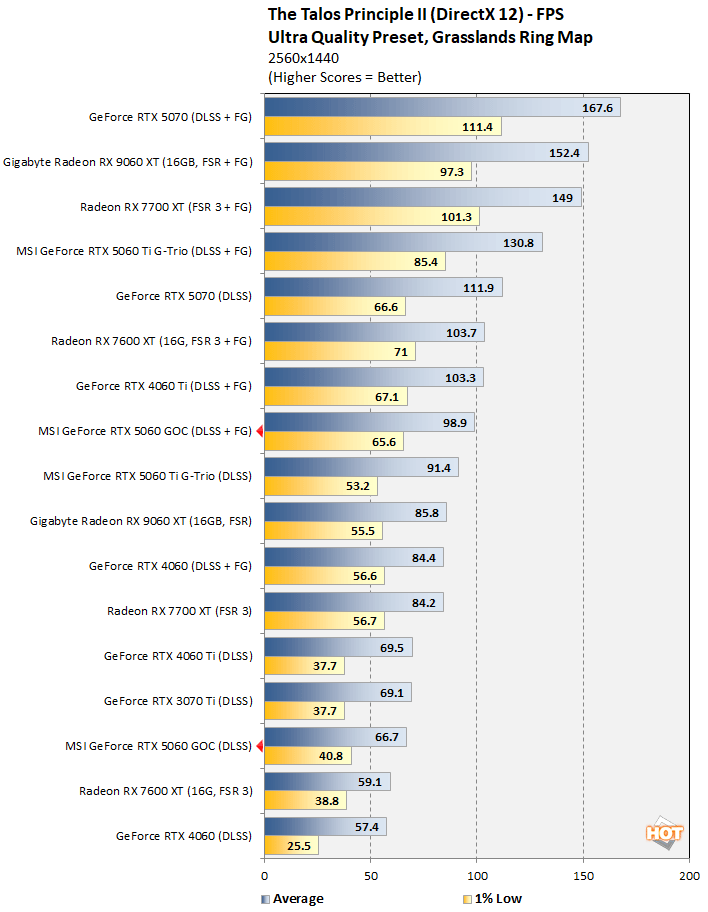
The Talos Principle II has the GeForce RTX 5060 outrunning the RTX 4060 and Radeon RX 7600 XT, but the GeForce RTX 4060 Ti finishes well out in front at both resolutions and the Radeon RX 9060 XT clearly wins in this game as well.
Turn on DLSS or FRS (in balanced mode) and the GeForce RTX 5060's framerates looks much better and it competes more favorably with the RTX 4060 Ti. But if this game is your jam, the Radeon RX 9060 XT is the stronger pick.
Assassin's Creed Mirage Benchmarks
Ubisoft’s Assassin's Creed Mirage is an action-adventure game set in 9th century Baghdad, Iraq. It is the thirteenth major installment in the storied Assassin's Creed franchise and the successor to 2020's Assassin's Creed Valhalla.

Assassin's Creed Mirage
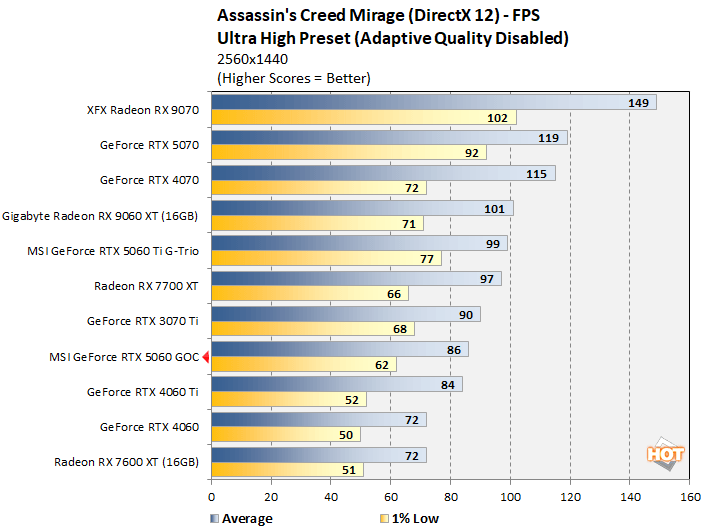
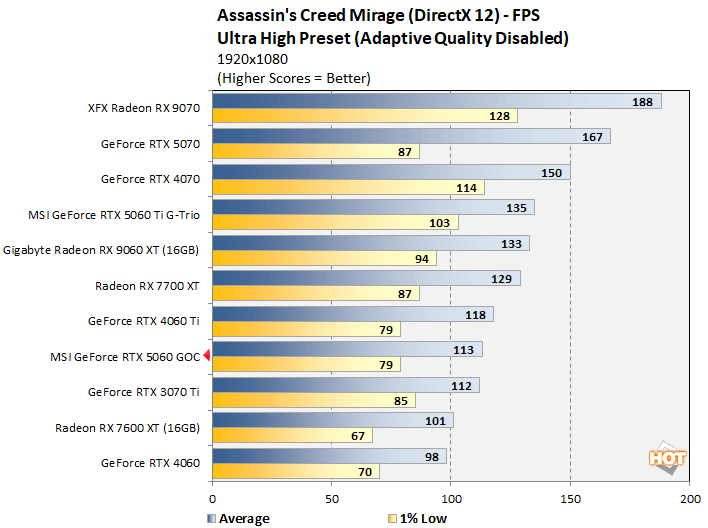
The GeForce RTX 5060 and RTX 4060 Ti trade victories depending on the resolution in this game, but once again we see much stronger overall performance from the Radeon RX 9060 XT.
Enabling DLSS or FSR in Assassin's Creed Mirage significantly boosts framerates, but we still see the GeForce RTX 5060 finishing in its familiar position. It is faster than the GeForce RTX 4060, but doesn't come close to the Radeon RX 9060 XT or higher end cards.
Black Myth: Wukong Benchmarks
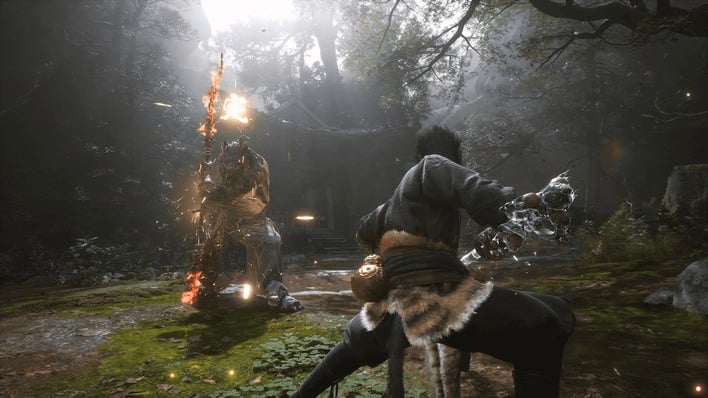
Black Myth: Wukong is a title with a storied history. It began development way back in 2018, and was first showed to the public with an incredible trailer in 2020, but the pandemic and other internal struggles delayed the game's development and it wasn't released until last year. Black Myth: Wukong supports a variety of upscalers, including NVIDIA's DLSS, AMD's FSR3, Intel's XeSS, and Epic's own TSR. Using DLSS, FSR3, or TSR gives you the option of enabling frame generation too, which you'll need if you want to crank up the visuals in this stunning title to maintain smooth animation.
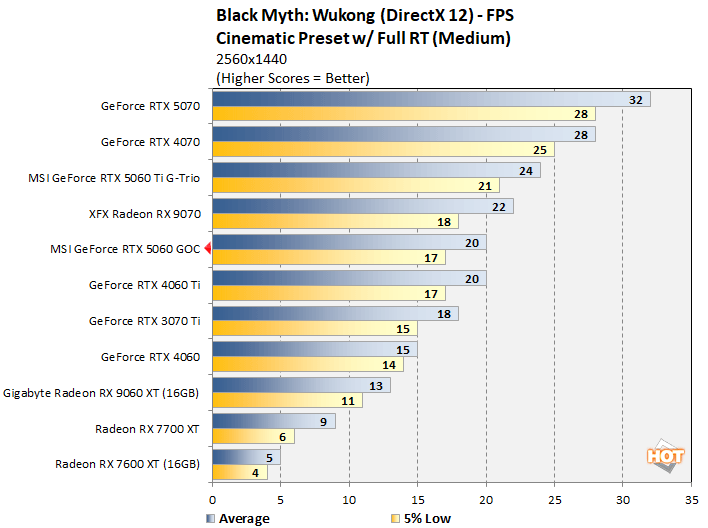
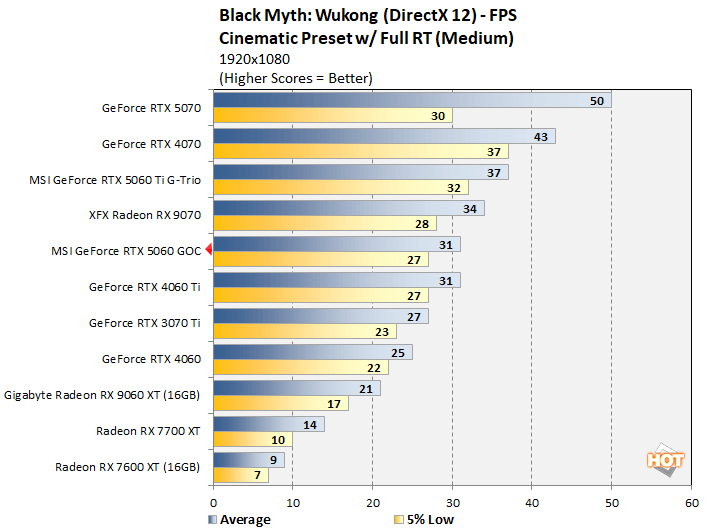
Black Myth: Wukong's Cinematic image quality preset with full ray tracing enabled (at medium quality) is punishing on mainstream GPUs. The GeForce RTX 5060 performs relatively well here, however, and actually puts up identical scores to the RTX 4060 Ti. (No, these results are not typos).
If you want to play Black Myth: Wukong with the highest image quality settings, resolution scaling with DLSS or FSR are essentially required. As you can see, with DLSS and Frame Generation enabled, the GeForce RTX 5060 is playable, with 5% low framerates approaching the 60 FPS mark, and it pulls slightly ahead of the RTX 4060 Ti too.
Black Myth: Wukong
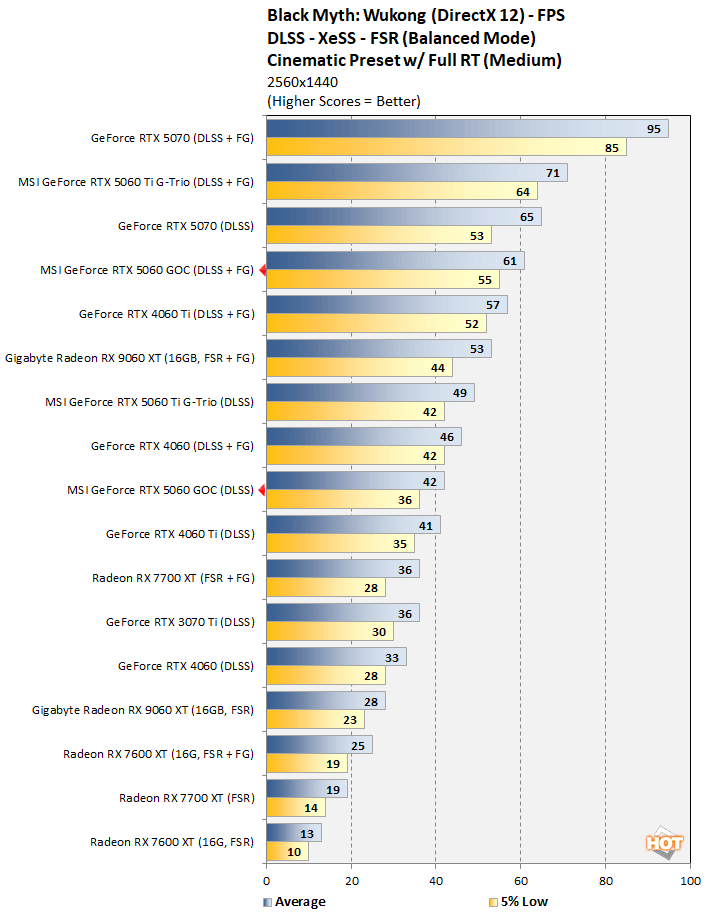
If you want to play Black Myth: Wukong with the highest image quality settings, resolution scaling with DLSS or FSR are essentially required. As you can see, with DLSS and Frame Generation enabled, the GeForce RTX 5060 is playable, with 5% low framerates approaching the 60 FPS mark, and it pulls slightly ahead of the RTX 4060 Ti too.
F1 24 Racing Sim Benchmarks
F1 24 is Codemaster’s latest Formula One racing simulation, and like previous version of the game, it sports impressive visuals. This latest addition to the franchise supports DirectX 12 with ray tracing, and it incorporates support for a number of AMD's FidelityFX Super Resolution (FSR) features and NVIDIA technologies, like DLSS with frame generation. We tested the games with its Ultra High graphics preset, with ray tracing and TAA enabled at a couple of resolutions to see what these graphics cards could do.

F1 24
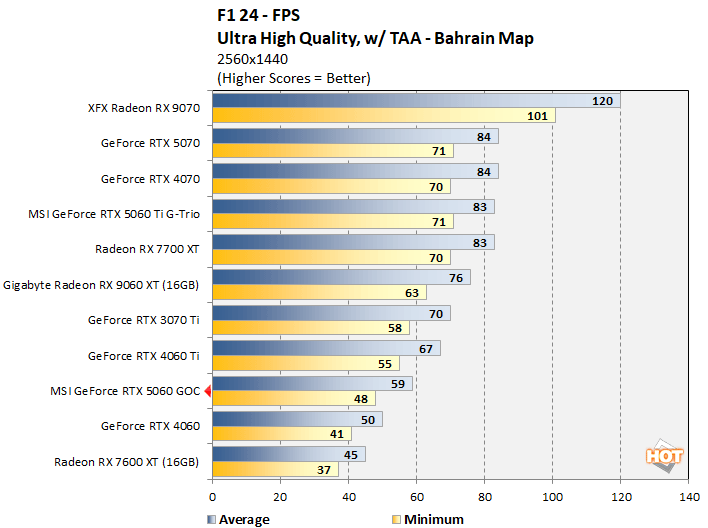
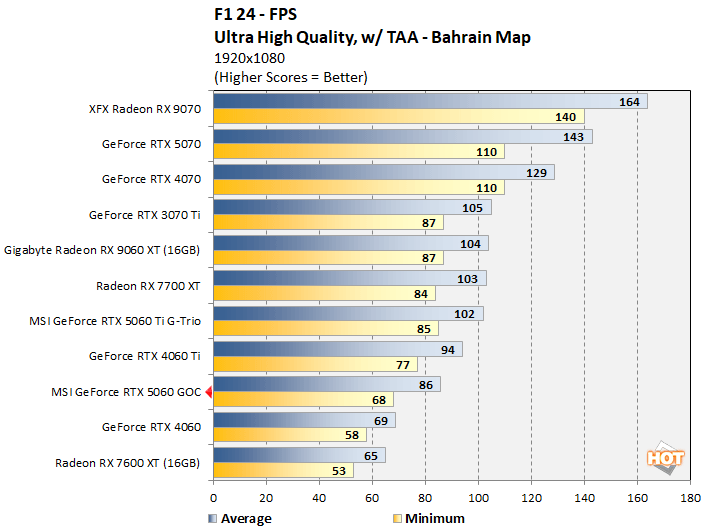
F1 24 had the GeForce RTX 5060 finishing just behind the GeForce RTX 4060 Ti, but well out in front of the RTX 4060 and 7600 XT.
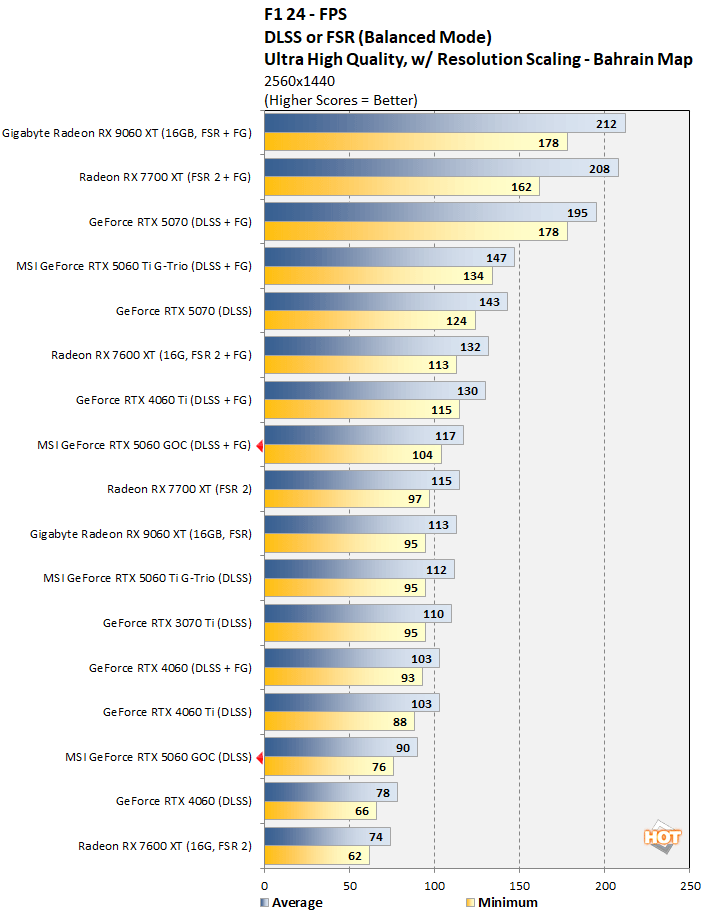
With DLSS or FSR 2 (Balanced) enabled in F1 24, all of the framerates obviously increase, but the rankings don't change. The GeForce RTX 5060 can't quite catch the RTX 4060 Ti and AMD's Radeon RX 9600 XT is well ahead.
Cyberpunk 2077 Benchmarks
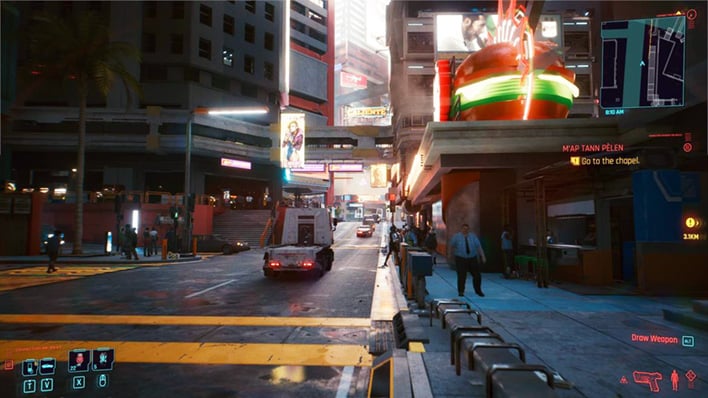
Cyberpunk 2077 is based on the Cyberpunk tabletop role-playing game franchise. The tabletop game was published for the first time all the way back in 1988, and the intervening 30-odd years has not changed the game world all that much. As a result, Cyberpunk 2077 looks somewhat retro-futuristic, as this is how people in the '80s imagined what the future would look like.The PC game make use of virtually every advanced DirectX graphics technology and features support for DLSS, FSR and XeSS, and after a somewhat rocky release, it has been significantly updated and optimized for a multitude of hardware configurations. Although it is no longer considered a new title, Cyberpunk 2077 remains a showcase for many advanced graphics technologies.
We tested a pre-release version of Cyberpunk 2077 that's been updated with support for DLSS 4's transformer model and multi-frame generation. This is an important note because Cyberpunk foreshadows how future games, that are optimized for the Blackwell GPU architecture and the RTX 50 series, may perform relative to previous-gen GPUs.
Cyberpunk 2077
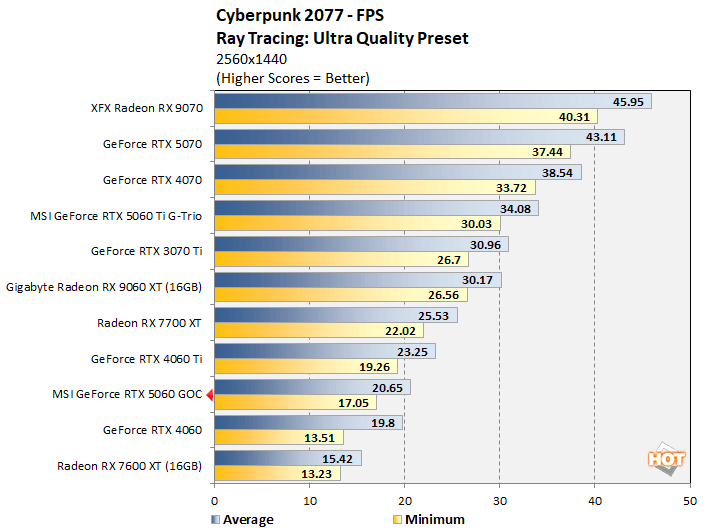
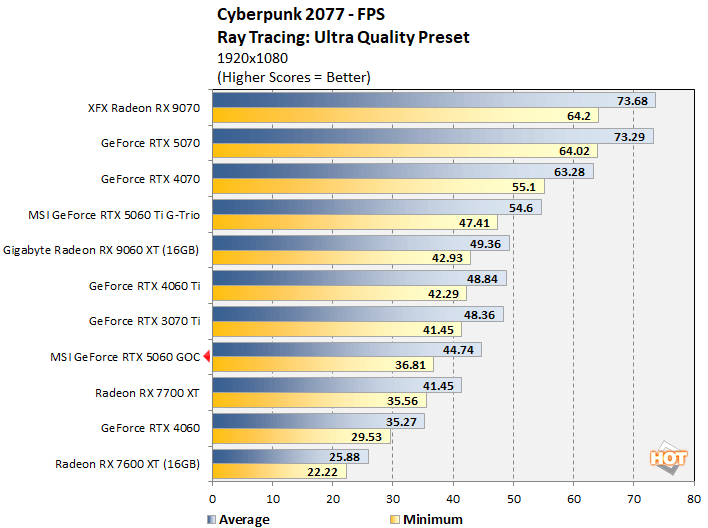
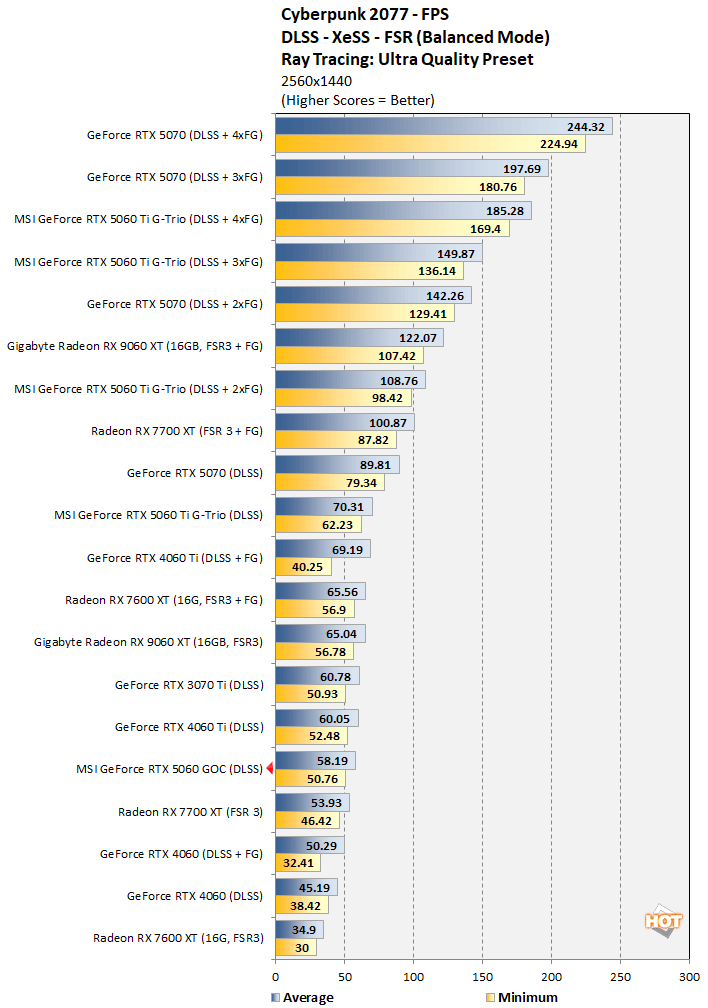
Unfortunatley, we couldn't get Frame Generation working properly on the RTX 5060, but DLSS resolution scaling still functioned. With DLSS balanced mode enabled, the RTX 5060 nearly breaks the 60 FPS mark in Cyberpunk at 1440p.