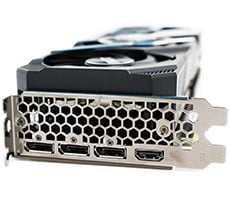
NVIDIA's GeForce GTX Titan: Yes, It CAN Play Crysis 3

We mentioned in our preview article that the GeForce GTX Titan includes a full 64 Double Precision CUDA Cores per SMX versus 192 Single Precision CUDA Cores. But, by default, the GeForce GTX Titan runs its DP cores at 1/8th their full clock speed, since they generally don't benefit gamers Since each SMX has one third the number of DP cores vs. SP cores, double precision operations run at 1/24 the SP rate, which is similar to GeForce GTX 680.
;)
NVIDIA's Drivers Give Users The Ability To Unlock Full DP Mode on Titan
NVIDIA, however, gives users the ability to enable full speed DP in the drive control panel. In order to unlock full performance DP you must open the NVIDIA Control Panel, navigate to “Manage 3D Settings” and under the Global Settings tab find the option titled “CUDA – Double Precision”. Select it, then tick the GeForce GTX Titan checkbox to enable full speed DP. Then click OK and apply the settings. The CUDA – Double Precision listing should then change from “None” to “GeForce GTX Titan”. When full speed DP is enabled though, the GeForce GTX Titan's GPU operates at lower-than-stock frequencies, so this option should be disabled unless you're a GPU-accelerated application that will benefit from it.
To test the GeForce GTX Titan's GPU compute capabilities, we ran a couple of GPGPU benchmarks with SiSoft SANDRA and Computemark. We tested all of the cards represented here with SANDRA's GP (GPU/CPU/APU) Processing benchmark, using the OpenCL GP Processor option and have the aggregate and native double-shader scores for you reported below.
 |
|

We tested the GeForce GTX Titan with an without full DP enabled here. Even with full DP disabled, the Titan is clearly faster than the GeForce GTX 680, due to the increased number of cores available in the GPU. Titan still trails the Radeon HD 7970, however. With full DP enabled though, the Titan's performance jumps up considerably and outpaces all of the other cards we tested.
 |
|


The Computemark benchmark doesn't benefit from the Titan's full speed DP mode, so we left it disabled for these tests. Regardless, Computemark leverages all of the cores available in the GK110 for its simulations quite well, and as such, the GeForce GTX Titan clearly outpaces all of the other cards here.