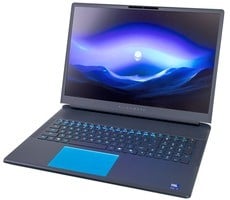
Dell 16 Plus 2-in-1 Review: Mini-LED In A Big Convertible Laptop


Dell 16 Plus 2-in-1 Performance Benchmarks
The Dell 16 Plus 2-in-1 is designed to balance flat-out performance, thermals, and noise output. The TDP range for the Lunar Lake processor inside ranges from 17 - 35 watts, so the system won't turbo as long as some others with more capable cooling solutions in long, multi-threaded workloads. The Dell 16 Plus 2-in-1 is better designed for shorter, more bursty applications. The built-in NPU tops out at 47 TOPS, which is similar to other devices using the same chip. As a Copilot+ PC, it fully supports what Microsoft’s suite offers, including Windows Studio Effects, Live Captions, Cocreator Mode, and Recall, among other features.
The key advantage of these features is that they work on-device, and include live transcription and AI-background effects in video calls, among other things, but ultimately the feature set is similar to other Copilot+ PCs.
ATTO Disk Benchmark Results
Getting to the benchmarks, ATTO is a good place to start. This disk benchmark measures read/write speeds and IOPS of a system's SSD. While our review unit had a 1TB drive, we expect the 512GB variants would likely score similarly.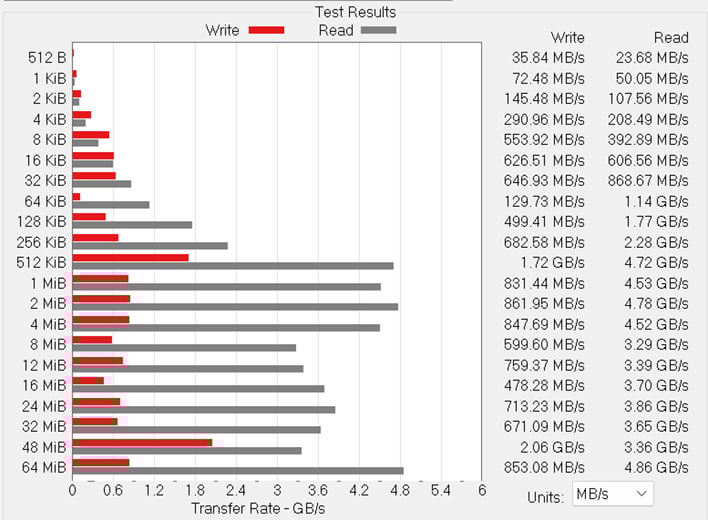
The numbers aren't particularly inspiring for a modern PCIe Gen 4 SSD, with a maximum read of 4.8GB/s, with peak but sporadic 2GB/s writes. Write speeds here aren't all that great for more demanding multimedia tasks, like moving big video files and large batches of photos, but this SSD will be fine for general productivity.
Speedometer 3.1 Browser Benchmark
BrowserBench.org's Speedometer measures web application performance and web development frameworks, including React, Angular, Ember.js, and even simple JavaScript.
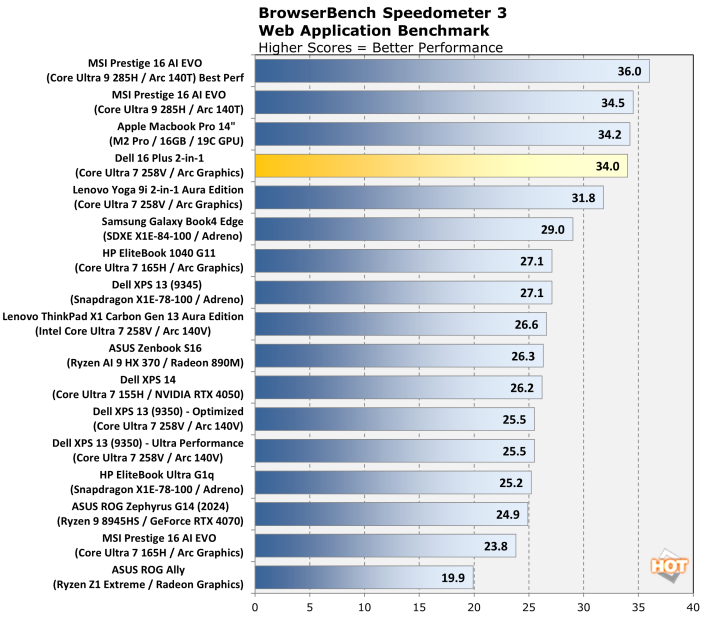
The Dell 16 Plus 2-in-1 is right in the mix with other systems based on Intel's Lunar Lake processors, but the lower-power V-series parts can't quite catch the beefier H-series processors.
MAXON Cinebench 2024 3D Rendering Benchmark
Next up is Cinebench 2024, based on the Cinema 4D rendering engine. It's a purely CPU-based test that doesn't make use of the graphics processor or NPU, and it scales very well with additional CPU cores. We ran both single- and multi-threaded tests on all of the machines represented here.
In its out-of-box configuration, the Dell 16 Plus 2-in-1 trails other systems powered by the same processor. Dell's power profile in this machine holds it back somewhat in long, sustained multi-threaded workloads.
Geekbench 6 CPU Performance Benchmark
Geekbench is a cross-platform benchmark that simulates real-world workloads in a wide variety of tasks, including encryption, image processing, physical simulation, machine learning, and many more. We tested the systems featured here with the latest Geekbench 6 version to get an idea of their overall system performance.

The Dell Plus 16 2-in-1 unsurprisingly lands smack in the middle of other systems powered by the same processor.
UL PCMark 10 Applications Benchmark
The PCMark 10 Applications benchmark measures performance in the Microsoft Office suite, as well as in the Edge browser, offering native instruction set-compatible versions of the apps for optimal performance across a wide variety of workloads in tools office workers, students and home users utilize every day. The following results should show a view of performance with a best foot forward from all systems tested.
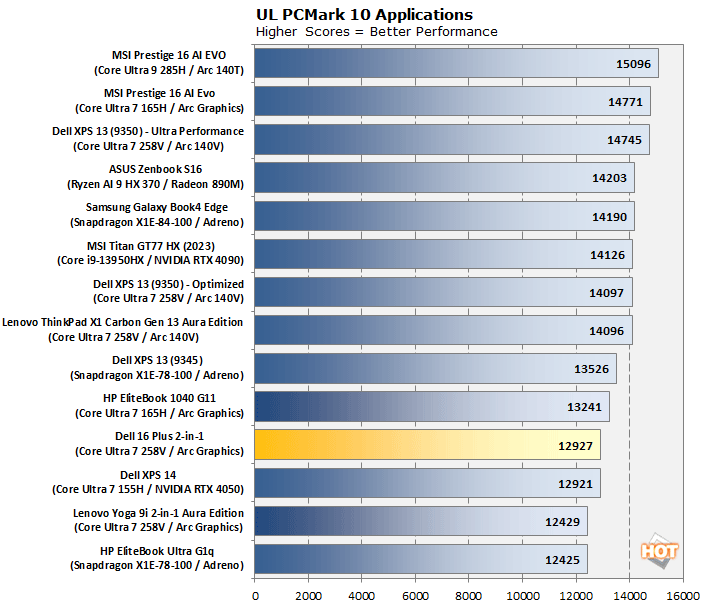
The Dell 16 Plus 2-in-1 is competitive with other systems powered by the same processor in PCMark various productivity benchmarks. It doesn't quite keep pace with some of the more premium machines, but its performance here is more than acceptable for these types of productivity workloads.
UL Procyon AI Computer Vision Benchmark
The idea of “edge AI”, or running AI workloads natively on your local devices, instead of in the cloud, is emerging on mainstream PCs. As such, benchmarks for these workloads aren't exactly prolific. Fortunately, UL has already built a few into its Procyon benchmark suite. The following is a look at how a few machines do in this benchmark suite's AI Computer Vision benchmark, which exercises a system's ability to handle machine vision workloads, which you'll find in everyday tasks like webcam background blur, subject tracking, eye gaze correction and other effects, for example.

The Dell 16 Plus 2-in-1 produces a very respectable score here, in line with other systems powered by the Core Ultra 7 258V.
UL 3DMark Gaming Benchmarks
3DMark has a wide variety of graphics and gaming related tests available. In this next test, we chose to run 3DMark Night Raid, a modern DirectX 12 test specifically for mobile platforms with integrated graphics, as well as the more-demanding, cross-platform Wild Life Extreme benchmark which utilizes more modern rendering APIs.
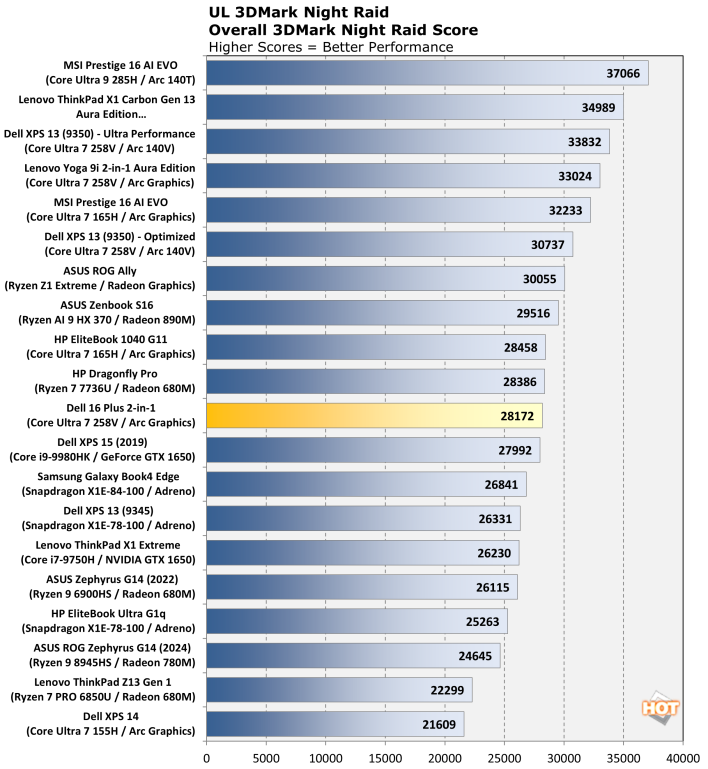
The 16 Plus 2-in-1 ends up in the middle of the pack falling a little behind the Dell XPS 13 and a couple of other models using the same SoC.
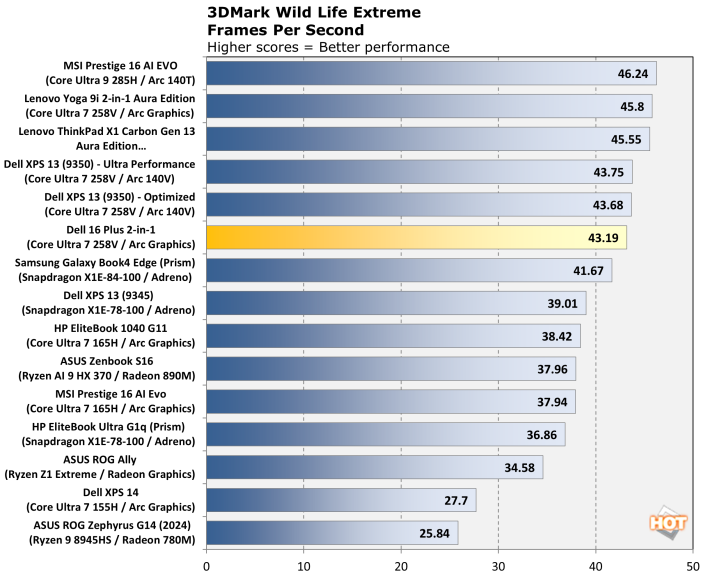
The Wild Life Extreme lands the Dell 16 Plus 2-in-1 right in the mix, if only slightly behind, other systems featuring a similar processor.
F1 22 Formula 1 Racing Game Benchmark
Racing simulator F1 2022 is a DirectX 12 game title that is sensitive to certain system configurations, and as such, is useful for teasing out certain performance anomalies. We tested the game in its High graphics preset, with upscaling disabled, and at 1080p resolution.
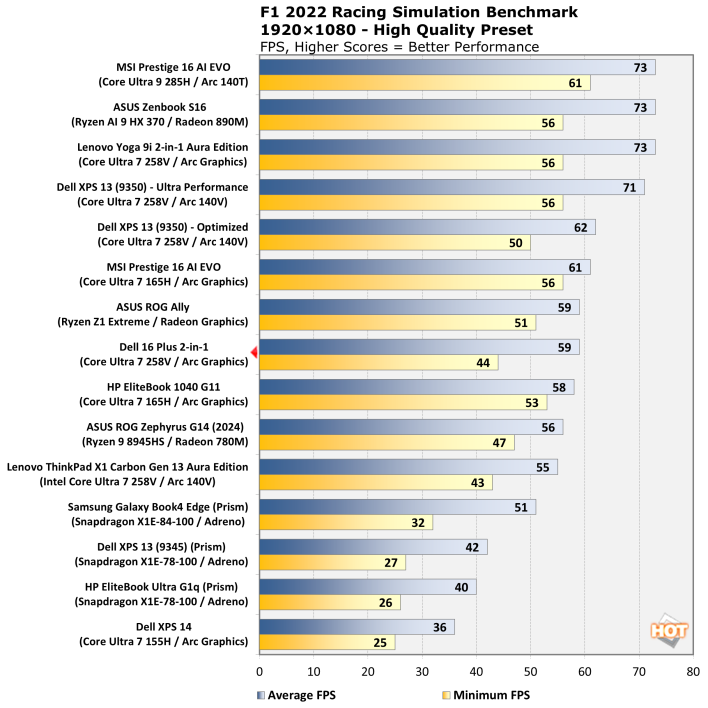
The Dell 16 Plus 2-in-1 finishes just about where you'd expect in this test. This is not a bona fide gaming machine by any stretch but F1 2022 runs relatively well at high settings and 60 FPS is possible if the in-game graphics options are scaled down somewhat.
Gears Tactics Strategy Game Benchmark
Gears Tactics, released in 2020, still makes an excellent benchmark for integrated graphics. It's a tightly-optimized Unreal Engine title with a highly-configurable built-in benchmark that provides a wealth of performance data after each run. We tested it on High, Medium, and Low presets at 1920×1080 resolution.

Again, the Dell 16 Plus 2-in-1 holds up well here. Its results are solid enough to run a lower end game like this easily. With older game titles, the Dell 16 Plus 2-in-1 offers a decent gaming experience even at High settings, where the visuals look great and the framerate hovers near 60 FPS.