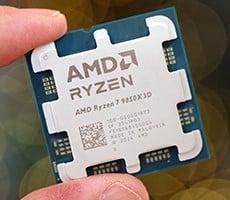
AMD Ryzen 7 9850X3D Review: The Best Gaming CPU, Boosted


For the 3DMark Physics test, we simply create a custom 3DMark run consisting solely of the physics test, which is multi-threaded and CPU dependent, and report the results...
UL 3DMark CPU Physics Benchmark
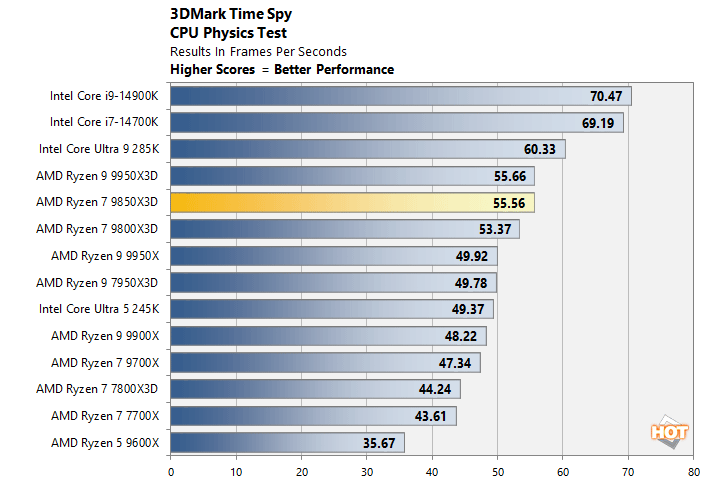
3DMark's Physics test ran particularly well on the Ryzen 7 9850X3D relative to the other Zen 5 chips. This benchmark prefers Intel's architectures, though, particularly Raptor Lake.
High And Low Resolution Gaming & Graphics Benchmarks
We also ran some mid and high-resolution game and graphics benchmarks on our test rigs with 3DMark, F1 2024, Final Fantasy XIV: Dawntrail and The Talos Principle 2. We used 3DMark's default Time Spy preset, and the games were run in two different configurations — either 1080p with Medium/High details, or 4K with High/Extreme details. The lower resolution tests are designed to be more CPU bound to better isolate processor performance, while the higher resolution tests are more GPU bound, where the CPU should have less of an impact.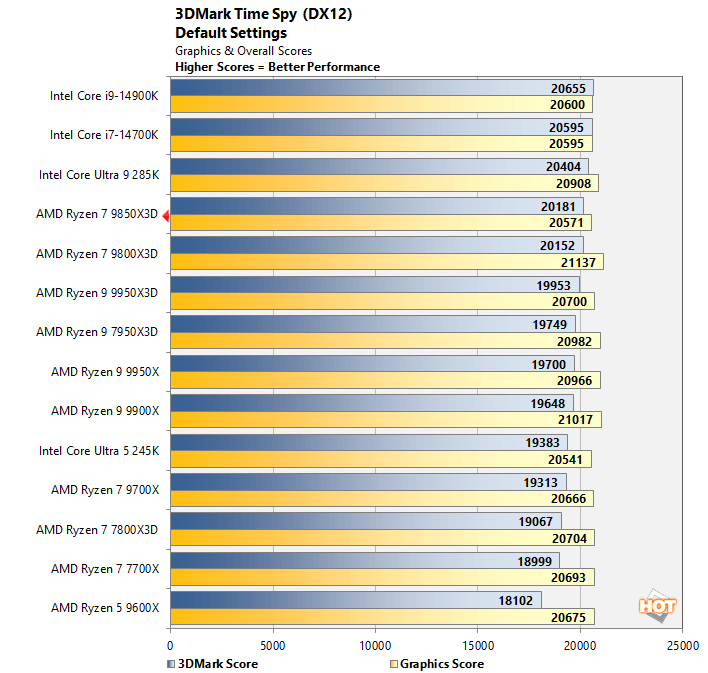
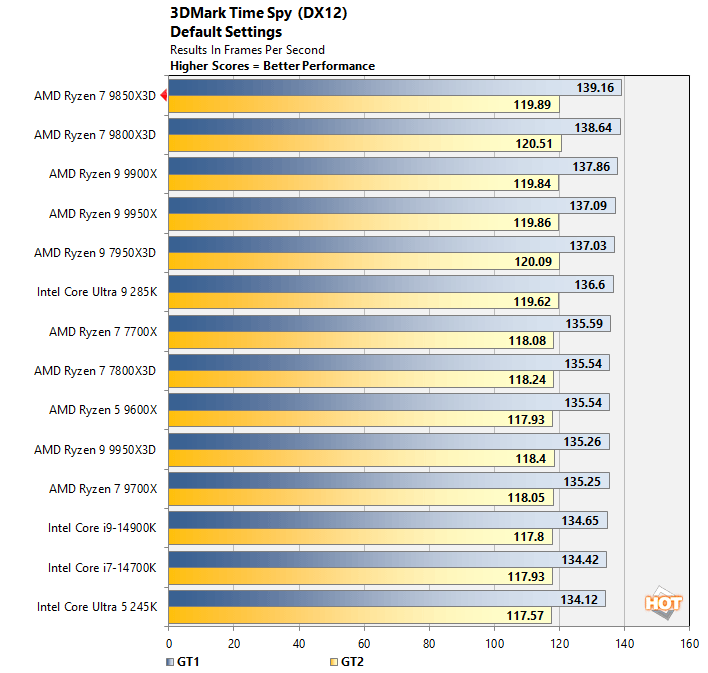
You'll notice these 3DMark-related charts have different rankings. That's because the actual Game Test framerates are not the only things factored into the overall score -- the physics results (above) are also thrown into the mix. As such, the Ryzen 7 9850X3D lands in fourth place here, behind Intel's fastest processors in terms of its overall score. However, the Ryzen 7 9850X3D posted the highest actual framerates of the bunch, albeit by relatively small margins.
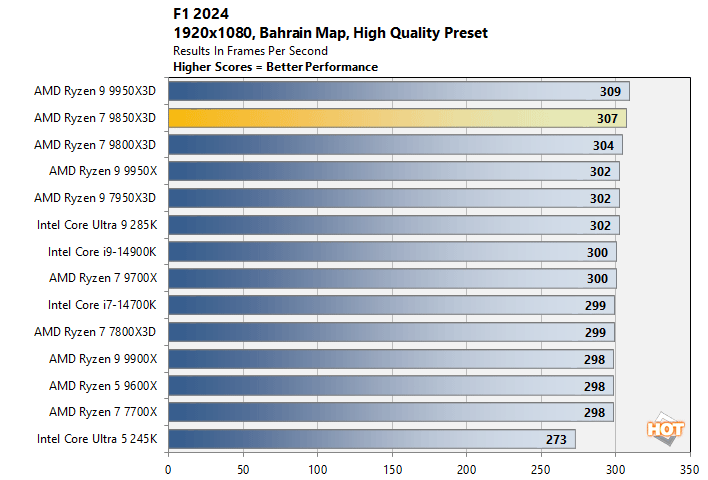
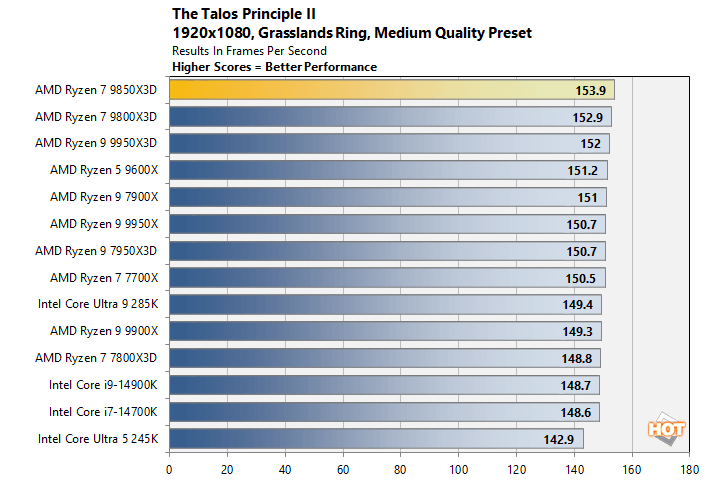
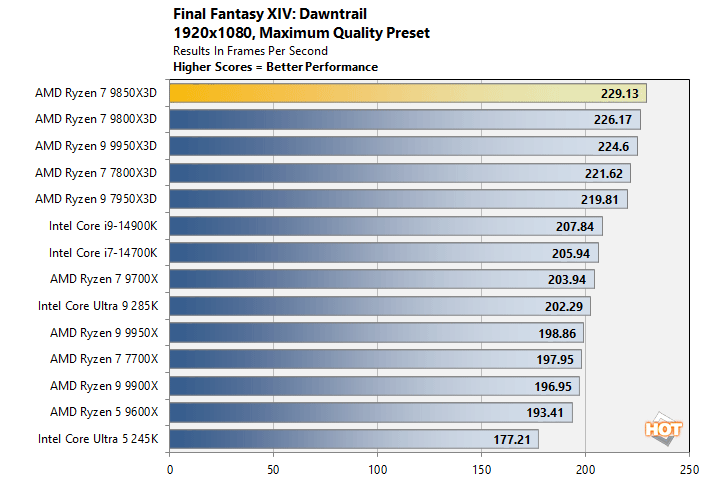
As you can see, the Ryzen 7 9850X3D outperformed every other processor we tested in our 1080p game tests, with the sole exception of the 9950X3D in F125. AMD claimed increased gaming performance with the Ryzen 7 9850X3D, and better gaming performance than the Core Ultra 9 285K, and that's exactly what we saw here.
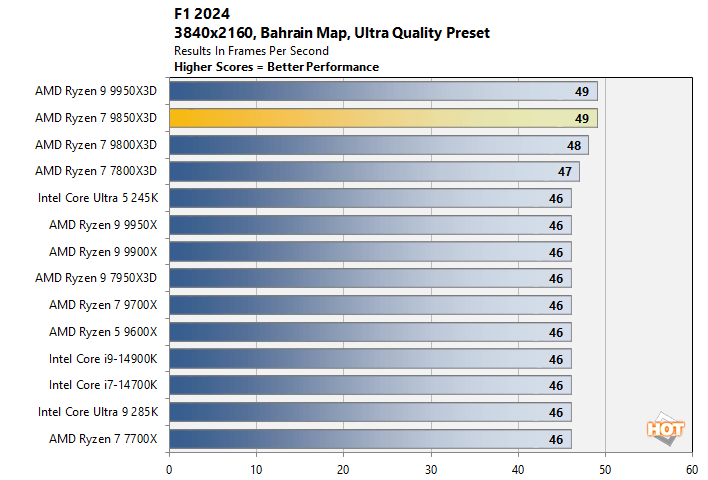
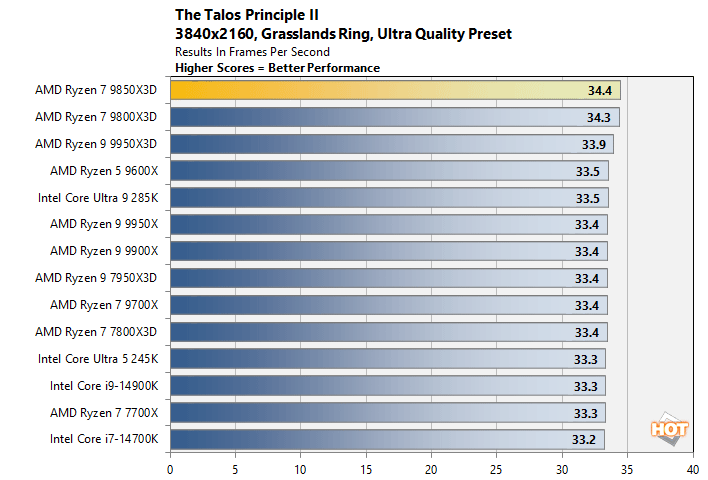
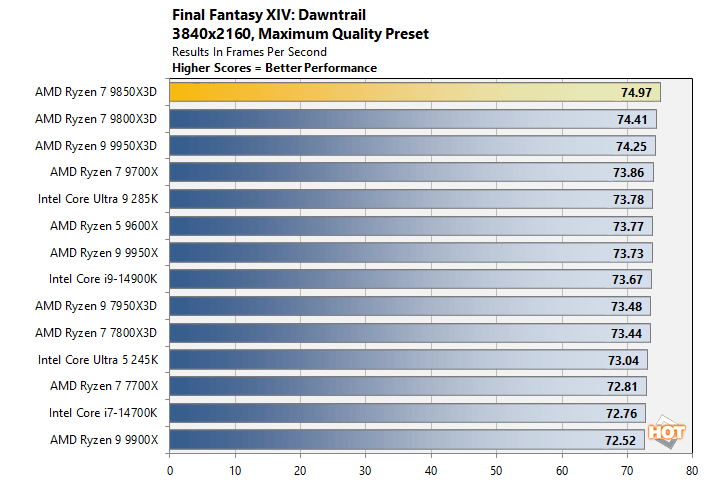
With higher image quality settings and the game resolution increased to 4K, frame rates level off, the GPU becomes the limiting bottleneck, and all of the platforms we tested performed within a couple of frames per second of each other. That said, the new Ryzen 7 9850X3D still finishes at (or near) the top of the charts in all three high-resolution / high-quality in-game tests.
AMD Ryzen 7 9800X3D Total System Power Consumption
Throughout all of our benchmarking and testing, we also monitored how much power our test rigs were consuming with a power meter. Our goal here is to give you an idea as to how much power each configuration used while idling at the Windows desktop and while under taxing CPU workloads across one or all cores. Keep in mind, this is total system power consumption being measured at the outlet and not the the individual power being drawn by the CPUs alone.
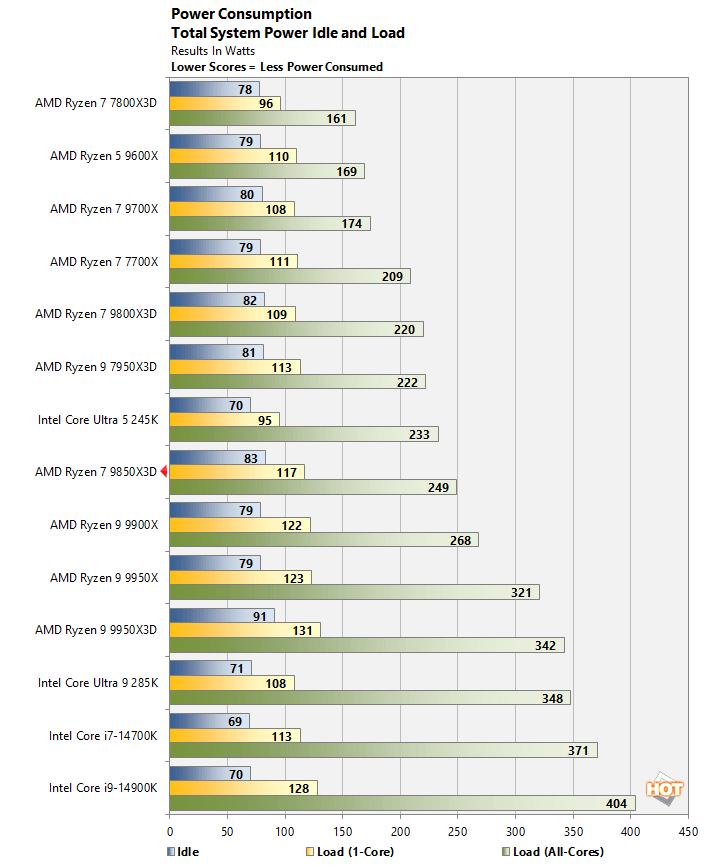
There's nothing extraordinary to report regarding the Ryzen 7 9850X3D's power consumption, other than to say it is a relatively power-friendly processor and its higher boost clock pushes peak power consumption somewhat higher than the Ryzen 7 9800X3D. In fact, the Ryzen 7 9850X3D's peak power surpassed the 16-core / 32-thread Ryzen 9 7950X. The Ryzen 7 9850X3D obviously consumed more power than the 8-core / 16-thread Ryzen 7 9700X, which lacks any 3D V-cache, but less power than the 12-core / 24-thread Ryzen 9 9900X. And it consumed less power than all of the Intel processors, except for the Core Ultra 5 245K.

How power, frequencies, and thermals are affected in a variety of workloads with the Ryzen 7 9850X3D is presented in the chart above. What you see here are frequencies, temps, and utilization over the course of a standard PCMark 10 benchmark run. The CPU clock shows relatively small variations, and remains in the 4.7GHz - 5.6GHz range whenever the CPU is under load, but it dips lower when not fully taxed. CPU temperatures also remain relatively low, and vacillate mostly in the low-60°C / high-50°C range. When running in its default configuration, we saw peaks of about 80°C after numerous multi-threaded benchmarks, and temps never exceeded 82°C.