



Microsoft Vows To Make Windows 11 The Best Place For Gaming


Historically speaking, gaming is one of biggest reasons that most enthusiasts chose to continue using Windows. That might be a controversial take, but it's more true than false. Gaming on Linux was simply not very good for a long time, and while playing games may not have been the main thing an enthusiast did with their PC, it was certainly part of it.
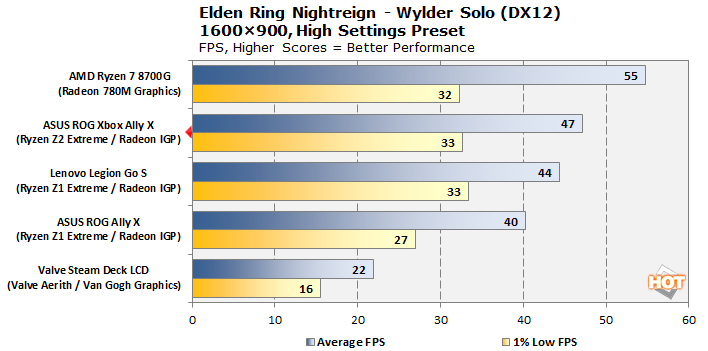
That's no longer the case. Gaming on Linux is fantastic now; the overwhelming majority of Windows PC games will "just work" when run through Proton, and many of those that don't can be finagled into working by fiddling with the compatibility settings. Microsoft has reason to be concerned; in our testing, the ROG Xbox Ally X rarely put up significantly higher performance than the Lenovo Legion Go S with Steam OS despite the ROG Xbox Ally X sporting a newer SoC.
Microsoft's blog post, which is titled "Windows PC gaming in 2025: Handheld innovation, Arm progress and DirectX advances," is essentially a summary of all of the work Microsoft put into the Windows gaming experience in 2025. The advancements are grouped under the three categories mentioned in the title: handhelds, Arm, and DirectX, but there's also a section describing Microsoft's plans for the future.
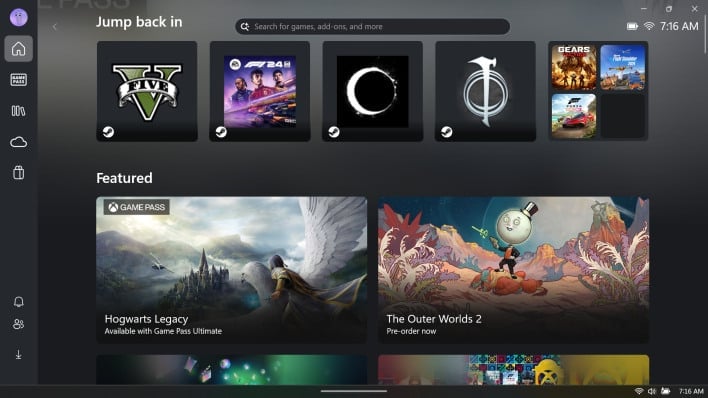
Advancements For Handheld PC Gamers
On the handheld gaming side of things, Microsoft notes its Xbox Full Screen Experience (FSE), Advanced Shader Delivery, and system-level performance tweaks. The Xbox FSE is arguably the most impactful of these changes, offering a slimmed-down console-like game launcher that delivers real—if relatively small—improvements to game performance thanks to a reduction in background services and system functions required, much like SteamOS' gaming mode.Advanced Shader Delivery is a feature that has great potential to improve the lives of Windows PC gamers, but in its current form it's underwhelming. Here's the deal: on SteamOS, Valve ships pre-compiled shader packages so that you don't have to sit through long shader burns, or worse, deal with intrusive stuttering during gameplay. Microsoft is offering the same thing, but only for the ROG Xbox Ally handhelds, and only for a select few games (mostly its own titles.) We'd like to see this come to hundreds if not thousands more games, and also to every graphics architecture; for now it's an interesting novelty.
As far as the system-level performance tweaks, Microsoft says that it adjusted power management and memory behavior for AMD APUs, as well as reduced CPU overhead from background processes, such as "controller input, RGB lighting services, graphics drivers, and background processes." The company does acknowledge that AMD and ASUS were the origin of these improvements, and says that they "began with handhelds but now benefit the broader Windows ecosystem." As long as you're on a Ryzen APU, anyway.
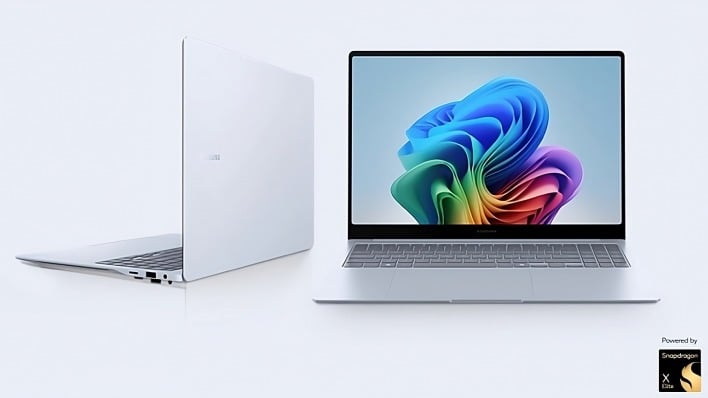
As far as the Windows on Arm improvements go, the big-ticket item is that you can now download Microsoft's PC games inside the Xbox PC app and run them locally, instead of being forced to rely on cloud streaming. While that's a welcome development, it's strange that it took Microsoft this long to roll this out.
Gaming On Arm-Based Windows Devices
The company also brags about its expanded Prism compatibility and native anti-cheat support. For the latter, Prism is the emulation layer that allows x86-64 software to run on the very different Arm ISA. Prism wasn't able to handle a lot of games when we tested it on the Samsung Galaxy Book4 Edge some 17 months ago, but Microsoft and Qualcomm have since added support for AVX and AVX2 instructions to the package, which opens the door for much more gaming software.Meanwhile, native anti-cheat support is a pretty big deal considering that's one of the major faults of gaming on SteamOS. While some games' anti-cheat is configured to support SteamOS, like Elden Ring, most aren't, and will simply fail and exit on game launch. That included big titles like GTA V Online and Fortnite, so it can be a real problem. By contrast, Microsoft notes that Easy Anti-Cheat, Battleye, Denuvo, and XIGNCODE3 are all supported on Windows on Arm. Of course, all of these are deeply invasive kernel anti-cheat technologies and there's some question as to whether developers should be allowed to deploy these techniques at all. That discussion is neither here nor there for this post, though.
On the DirectX front, Microsoft boasts about DirectX Raytracing 1.2, which brings support for new features known as Opacity Micromaps and Shader Execution Reordering. Both of those features were introduced with NVIDIA's Ada Lovelace architecture in 2022, so it's not a great look that they're only being standardized now in 2025. Remember when DirectX used to standardize hardware features before they came out? HotHardware remembers.
Microsoft also notes the introduction of Neural Rendering as a DirectX feature. Put simply, this lets developers embed neural workloads directly into the graphics pipeline. More than anything, it's a key requirement for neural texture compression, which both NVIDIA and AMD have been talking about recently. It can also improve performance when using AI for upscaling and denoising, like in AMD's just-released FSR Redstone, and of course, NVIDIA's DLSS.
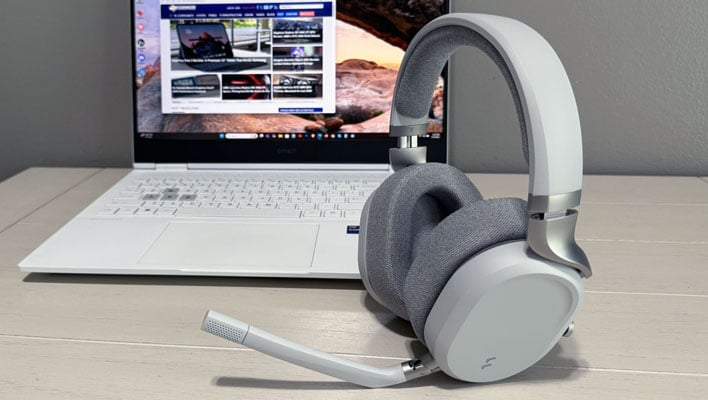
Lastly, it's not clear why this got stuck in the DirectX section, but Microsoft is also deservedly proud of its improvements to Bluetooth audio in the latest versions of Windows 11. The biggest change is support for super wideband stereo, which allows one wireless headset to be used for both high-quality game audio and voice chat at the same time, something that traditionally wasn't possible.
To be fair, Microsoft's plans for the future do directly address some of our snarky remarks above. The Xbox Full Screen Experience is finding its way to all Windows PCs, and while some Windows gamers will surely be interested, we do expect it will improve the experience for console-like HTPC-style installations the most. Likewise for the next Xbox machine, rumored to be Windows-based.
Microsoft's Future Plans For Windows Gaming
Microsoft's also bringing Advanced Shader Delivery to more games and says that it's begun "early integration work to support additional hardware and storefronts." Those are both good news, but we'd really like to see Microsoft pick up the pace here. The same goes for Auto Super Resolution (AutoSR) integration. It's been nearly a year and a half since the feature debuted on Copilot+ PCs, and only now is Microsoft promising to bring it to one other device: the ASUS ROG Xbox Ally X.Finally, Microsoft makes a vague promise to "continue refining system behaviors" to improve gamers' experience on Windows 11. That includes "background workload management, power and scheduling improvements, graphics stack optimizations, and updated drivers." These sound like good things, but we don't hear any plans to address the insanely bloated userspace apps (like the ridiculously heavy Windows 11 start menu) nor the oppressive security environment.
That's to say nothing of the myriad other gripes that people have with Windows these days: seemingly endless Copilot integrations, intrusive advertisements, 'father knows best' settings reversions, forced updates, and so on. We're all aboard if Microsoft truly wants to make Windows the best place to game, but actions speak louder than words, and right now it seems more like Microsoft is trying to prepare for its next Xbox launch than like it is actually concerned with the plight of PC gamers.





