PowerColor PCS+ Radeon R9 390 8GB GDDR5 Review

The Powercolor PCS+ Radeon R9 390 looks somewhat similar to its tri-fan PCS+ R9 290, save for some cosmetic differences to the front fan shroud and rear back-plate
 This particular card is model number AXR9 390 8GBD5-PPDHE, and as the name suggests, it is packing 8GB of GDDR5 memory. As we’ve mentioned, the Hawaii GPU at the heart of the card offers 2560 stream processors. The GPU is clocked at 1010MHz and links to the 1500MHz memory via a 512-bit interface. The clocks are different than the 947MHz / 1250MHz of reference R9 290 cards, but not otherworldly. There’s only so much headroom in the GPU and the memory is clocked only 50MHz higher, though that does result in 25% bump in the effective clock speed (5.0Gbps vs. 6.0Gbps).


The cooler used on the Powercolor PCS+ Radeon R9 390 is a triple-slot affair, that also packs in triple-fans and a large think-fin array, linked together via heat pipes. We’re not particular pleased with triple-slot graphics cards, especially when more powerful, dual-slot cards are available, but if you plan to run only a single-GPU and want something that looks pretty beefy, the Powercolor PCS+ Radeon R9 390 fits the bill. And the cooler does a good job keeping temperatures in check, without making a ton of noise. However, the card is not silent by any means when under load.


The card requires PCI Express 6-pin and 8-pin connectors for power and Powercolor recommends a minimum of a 750W unit to keep the card fed.

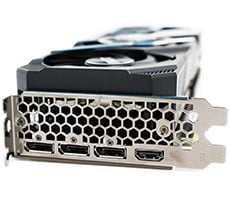
The output configuration looks just like the previous generation Radeon and consists of a pair of DVI outputs, a single HDMI output, and a single, full-sized DisplayPort output. There’s also a vent in the case bracket, but it’s strictly cosmetic with a card like the Powercolor PCS+ Radeon R9 390. As you can see, its heatsink fins actually block the vents.