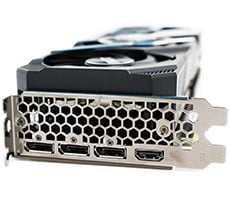
NVIDIA's GeForce 7950 GX2 & Forceware Rel. 90


NVIDIA spent considerable resources engineering the new Forceware Release 90 drive suite. The new control panel design simply didn't come about from an arbitrary decision to make a change. NVIDIA actually built their own Software Usability Lab complete with state-of-the-art digital video equipment to aid them in the design.
;)
NVIDIA's New Usability Lab
User reactions were monitored in the usability lab and the new Rel. 90 control panel was molded based on those reactions. NVIDIA also used Microsoft and human interface research in the design, they interviewed NVIDIA and OEM support staff for suggestions, and also took user comments in many open forums into consideration. The end result is a completely new control panel with a larger emphasis on usability, that's much easier to navigate and understand. The Forceware Release 90 drivers give enthusiasts more control over their hardware, and give novices an easier to use interface. If you haven't already installed these new drivers on your own systems, we urge you give them a shot. According to NVIDIA, 88% of users preferred the new interface in "blind taste tests" that took place in the usability lab.

|
|
;)
;)
;)
;)
Whenever NVIDIA unveils a new flagship graphics card, they usually release a new demo to exploit the card's new features and performance capabilities. To coincide with the launch of the new GeForce 7950 GX2, NVIDIA is introducing a new demo dubbed GeoForms. In this new demo, the GeoForms change their shape to the beat of music. The GeoForms can also change their subatomic organization, quickly morphing into almost any material, be it glass, metal, water, wax, putty, brushed metal, marble, or jade. The materials can range from opaque to translucent, polished smooth to rough as sand, and from plain to porous and veined. The GeoForms demo uses many advanced rendering techniques, including HDR with anti-aliasing (using a proprietary technique), HDR Motion Blur, HDR Lens Flare, Real-time "Depth Peeling" Refraction, and Sub-Surface Light Scattering.