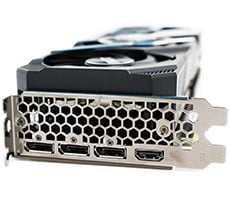
NVIDIA TITAN V Review: Volta Compute, Mining, And Gaming Performance Explored

Performance Summary: The NVIDIA TITAN V is an absolute beast. Although the card is not designed for gamers, and we ABSOLUTELY DO NOT recommend anyone drop 3-grand on a graphics card alone, the fact remains that the TITAN V significantly outpaced every other graphics card in a variety of games with the highest image quality settings. Sometimes its leads were relatively small, but the TITAN V was the fastest gaming GPU nonetheless. In GPU compute workloads, the TITAN V is much more dominant. Save for one image processing test, which doesn’t really leverage all of the cores in the GPU anyway, the TITAN V often offered many times the performance of a TITAN Xp or Radeon RX Vega 64. Finally, when it comes to Ethereum mining, NVIDIA's Titan V is far and away the fastest GPU on the planet currently.
However, we must point out that what we’ve shown you here today doesn’t tap the Tensor Cores built into the GV100 GPU at the heart of this card. We have engaged with a couple of data scientists with the hope of testing the TITAN V’s Tensor performance soon, but we’re not quite there yet. Stay tuned...

 The NVIDIA TITAN V gives us an interesting glimpse into what consumer-targeted, Volta-based GPUs from NVIDIA may offer gamers in the not too distant future, assuming NVIDIA eventually builds Volta-based GeForce cards. Even though the TITAN V is not meant for the gaming market, it is easily the fastest card on the market, though at $3,000 a pop, the value proposition for gamers is obviously not there. For academics, workstation professionals and data scientists in need of a GPU for serious compute workloads, that don’t have access to Tesla-powered servers, however, the TITAN V is probably a mouth-watering proposition. Its GPU compute performance is simply in another league versus existing offerings and access to its resources are as simple as popping the card into a PCIe slot right at their workstation.
 |
 |
|
|