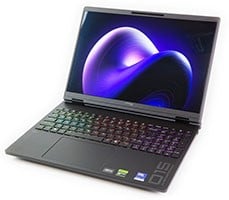


NVIDIA RTX Spark N1X Laptop Benchmarks: The Results Are In


| NVIDIA RTX Spark N1X): Starting @ $2599 NVIDIA's RTX Spark N1X delivers class-leading GPU and AI performance, strong multi-threaded CPU horsepower, and decent battery life in a powerful new Arm-based PC platform, albeit at a premium price.
|
|||

|

|
||
After many months of rumors and an initial unveiling at Computex earlier this year, NVIDIA’s RTX Spark, or N1X, series of processors is due to arrive in an array of premium laptops this week. Additional form factors, including mini desktop PCs akin to the DGX Spark, will be coming a little later. Today though, we can finally reveal all of the pertinent technical details and publish independent benchmarks using the top-end configuration inside Microsoft’s Surface Laptop Ultra, which we know many of you have been waiting for.
What Is NVIDIA’s RTX Spark N1X?
NVIDIA’s RTX Spark, which is officially branded the RTX Spark N1X in NVIDIA’s materials, is a highly integrated SoC with a unified memory architecture, aimed at a mix of use-cases including content creators, AI users and developers, and gamers that seek leading-edge ray tracing and AI acceleration in both portable and desktop systems.
At its core, the RTX Spark N1X is very similar to the GB10 used in the DGX Spark. It features up to 20 Arm CPU cores, with dedicated ray tracing cores, tensor cores for matrix math and AI, and up to 6,144 programmable NVIDIA Blackwell GPU cores for more general compute and graphics processing. Much of the technology used on the chip exists in other forms in various discrete CPUs and GPUs, but NVIDIA integrates the CPU, GPU and IO resources onto a single package. Power efficiency is a central tenet of the N1X, because the chip is intended for both laptop and small desktop form factors, however.
NVIDIA RTX Spark N1X Features And Specifications:

At this point in time, NVIDIA is releasing two primary RTX Spark N1X variants. A full-featured chip is outfitted with 20 CPU cores (comprising 10× Arm Cortex-X925 performance cores and 10× Arm Cortex-A725 efficiency cores), with clock rates peaking at 4.1GHz on the performance cores and 2.8GHz on the efficiency cores. The CPU complex is connected to a Blackwell-architecture GPU with 6,144 shader cores, which is right in-line with a discrete GeForce RTX 5070—in terms of CUDA cores at least; a desktop RTX 5070 has a completely different memory configuration.

The RTX Spark is a two-chiplet SoC, with one Blackwell GPU chiplet paired to a MediaTek-designed CPU + I/O chiplet, both built on TSMC’s 3nm node, connected to each other by a very fast silicon bridge interconnect capable of 600 GB/sec of bandwidth, faster than even the latest PCI Express standards. The total compute throughput of the top-end chip is just north of 1 Petaflop.
What Differentiates The NVIDIA RTX Spark N1X?
The chips also employ a unified memory architecture in which the CPU and GPU share the total available pool of system memory. As such, some configurations will offer much more effective memory capacity to the GPU versus discrete solutions, which will in turn allow the RTX Spark to handle larger AI models, potentially help in some high-resolution gaming scenarios, and allow game developers to work more seamlessly with larger, more diverse worlds. You can see how Unreal Engine, for example, benefits from the additional memory in this video:There will also be an 18-core (9+9) CPU version with a 5,120 CUDA core GPU, and lower peak clocks—3.9GHz on the P-cores and 2.8GHz on the E-cores. Both versions will have similar TDPs in the 45W-80W range, but the RTX Spark will dynamically boost to somewhat higher transient power levels; one of our test systems includes a 140W power brick, for example, and when testing total system power consumption we saw peaks in the 138 watt range, with display brightness turned way down. Of course, that factors in other system components too, but power and thermals permitting, the SoC will likely boost to higher than 80W.

Top-end RTX Spark configurations will support up to 128GB of LPDDR5X unified memory, operating at up to 9,400Mbps, connected via a 16-channel (256-bit) interface, for effective peak memory bandwidth of 300GB/s. All RTX Spark SoCs will also offer PCI Express Gen 5 + Gen 4 connectivity as well, with various lane configurations to support SSDs, networking hardware, and other peripheral devices. The platform also supports USB 4.
NVIDIA’s Got More PC Processors On Its Roadmap
In terms of potential future offerings, we've heard rumblings that lower power N1-based RTX Spark variants will feature 12 or 10-core CPU configurations (8P+4E or 7P+3E), with 2,560 or 2,048 shader cores, respectively. Memory support on N1 configurations could top out at 64GB, using an 8-channel (128-bit) interface, and their TDPs will fall in the 45W range (but with higher boost power). These chips are likely the 400 petaflop Grace Blackwell Sparks shown on the roadmap slide below. Future versions based on Vera Rubin and Rosa Feynman are also on NVIDIA’s roadmap.
NVIDIA worked with an array of partners to bring systems to market, including Dell, ASUS, Lenovo, HP, Microsoft, and others. All of the RTX Spark N1X systems on the initial roster are premium, creator, and AI-focused systems, with price points at the higher end of the spectrum—typically starting north of $2,000.
Software, Drivers And Ecosystem For RTX Spark In The Age Of Agentic AI
Like NVIDIA’s discrete GPUs, RTX Spark N1X configurations will work with the same software, drivers, utilities, and toolsets. The N1X family benefits from the same CUDA, OptiX, and TensorRT ecosystems, and they support the same graphics technologies – like DLSS – as GeForce RTX GPUs. In fact, in the lead-up to today’s launch, NVIDIA announced that it had nearly doubled the performance of its DLSS 5 model, since its debut last month, and compatible games with DLSS 5 super resolution will run on the RTX Spark. Essentially, any workload designed to run on NVIDIA hardware, should be compatible with the RTX Spark N1X. There will likely be some initial growing pains because Windows-On-Arm isn’t quite as mature and robust as Windows for x86 systems, but expect fairly broad compatibility. With Qualcomm pushing the Windows-On-Arm ecosystem forward for the last two years, and Microsoft’s most recent event focused solely on RTX Spark, Microsoft’s commitment to the platform is clear at this point, but it simply hasn’t been around as long, so some hiccups are to be expected, at least initially.Obviously agentic AI is a major focus of NVIDIA’s RTX Spark N1X. NVIDIA did its job getting the hardware, drivers, firmware, frameworks, and other platform software in place, but it will also require broader industry support from Microsoft and other ISVs. The state of Arm-native software on Windows today is vastly superior to what it was just 12 – 16 months ago, and upcoming Windows updates are squarely focused on the RTX Spark’s strengths.

For example, Microsoft is moving its Microsoft Execution Containers (MXC) out of beta and into general availability. MXC is the company’s policy-driven sandboxing layer for AI agents that enforces boundaries on what agents and code can access in terms of local files, network resources, and tools, across not only Windows, but Linux and macOS as well.
Microsoft also offers its Agent 365 IT control platform, which initially launched back in May. Microsoft Agent 365 is an enterprise-targeted control plane for AI agents that lets IT admins discover, monitor, and govern AI agents running across Windows and cloud environments. Microsoft Entra, Defender, and Purview are all core Agent 365 integrations, furthering AI security and guardrail capabilities.
Another tool targeted at the enterprise market is Microsoft AutoPilot, which the company calls the first "enterprise-grade, long-running agent”. Microsoft AutoPilot is a cloud-based Windows provisioning system that automatically configures new devices using Intune policies to quickly streamline system setup for enterprises.
Project HydraFusion is also in the works, specifically targeting agentic AI-assisted coding workflows. HydraFusion is a GitHub Copilot multi-model orchestration system that will dynamically choose the best workflow to solve a coding task. It evaluates each request, drafts with the most efficient models, and escalates tasks only when needed to produce higher-quality results. Project HydraFusion is designed to optimize quality, latency, and cost by intelligently coordinating multiple models, whether local or in the cloud, at runtime.
Llama.cpp, the popular open-source C/C++ framework for lightweight local inference, is also coming to Windows ML, and Meta’s Muse personal AI agent is coming to Windows too, as a native app later in the year. Microsoft’s MAI Code 1.1 Flash, DeepSeek V4 Flash and new NVIDIA Nemotron local models are inbound as well.
Windows 11 Gets Deeper AI Integration In Response To RTX Spark
A number of new features or more streamlined AI integrations are coming to the Windows UX too. In the next fall update, users will be able to initiate many more actions directly from the search bar. The search bar is often the first stop for Windows users looking for app or feature shortcuts, so Microsoft is surfacing more actions directly in "search" results. For example, users will be able to take screenshots, arrange windows, or even send text messages (assuming your phone is linked to Windows) right from the search panel.
Windows Search will also be able to connect directly with Copilot, and Copilot – with user permission – will be able to access three new things: local context, local action, and local models. Copilot will still connect to the cloud for more complex tasks, but it will gain the ability to work locally, even when a system is completely offline, for more sensitive tasks where users may want to keep their data local.

A new Get Started experience is coming to Windows 11 as well, though it’s not clear if or how long it will be exclusive to RTX Spark-based systems. The new Get Started experience will enable auto-setup of popular AI agent platforms right out of the box, including OpenClaw, Hermes, and others, upon first boot.
And with that, let's get to some NVIDIA Spark N1X benchmarks, shall we?