

Apple iPhone 18 Pro Max Review: Killer Cameras, Speed And Smarts


|
Apple iPhone 18 Pro Max (starts at $1,299, as reviewed $1,899)
The iPhone 18 Pro Max ($1,299) benefits from Apple’s ultra-efficient A20 Pro chip and variable aperture on the main camera, making it Apple’s best – and most “Pro” – smartphone yet. |
|||

|

 |
||
The iPhone 18 Pro ($1,199) and Pro Max ($1,299) are here, and on the surface, not much has changed since last year’s iPhone 17 Pro and Pro Max, which represented a major shift with Apple going all out on “Pro” features. For 2026, there are new colorways, a new A20 Pro 2nm SoC, a new C2 modem on certain models, variable aperture on the main camera, and a smaller Dynamic Island. Apple also promises significant battery life gains.
On the user experience, software, and AI side of things, iOS 27 delivers Siri AI, Apple’s revamped conversational virtual assistant, and the company’s first proper Gemini competitor. The iPhone 18 Pro and Pro Max also incorporate new imaging features which were previously only available via third-party apps. And as usual, these handsets benefit from Apple’s broad ecosystem of apps, services, and accessories.
Today, I’m reviewing the iPhone 18 Pro Max, the bigger one of the two, but much of this review also applies to the smaller iPhone 18 Pro. So, are these Apple’s best iPhones yet or should you consider the iPhone Duo? How much of an upgrade is the new A20 Pro chip? Does the variable aperture on the main shooter make any difference? Has battery life improved as much as Apple claims? Let’s find out.
iPhone 18 Pro Max Hardware And Design
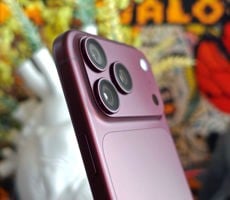
In Apple’s past, the iPhone 18 Pro and Pro Max would have been “S” models, like the iPhone 3GS was to the iPhone 3G, the iPhone 4S was to the iPhone 4, etc… You get the idea. Tick-tock cycles are nothing new in tech and the iPhone 18 Pro and Pro Max are an incremental upgrade (tock) to last year’s iPhone 17 Pro and Pro Max’s major redesign (tick). Colorways aside, the iPhone 18 Pro and Pro Max look and feel identical to their predecessors.
The new handsets are heavier (211g vs 206g for the Pro, 249g vs 233g for the Pro Max), but the dimensions are the exact same on paper, though the camera “plateau” is a hair thicker this year. As such, Apple says that technically, while iPhone 18 Pro cases fit the iPhone 17 Pro, the reverse isn’t always true, and this also applies to Pro Max cases. In my experience, it's a non-issue: all of my iPhone 17 Pro Max cases fit my iPhone iPhone 18 Pro Max review unit just fine.

While I’ve never been in love with this triangular rear camera layout, I really like the new iPhone Pro design language Apple introduced with the 17 series, and inherited by the iPhone 18 Pro and Pro Max. These are still unmistakably iPhones, with the usual rounded corners and flat front glass, but they look more “Pro”, like precision instruments instead of ornate jewelry, and the curved edges where the sides meet the back make them feel better in hand.

As you’d expect, the iPhone 18 Pro and Pro Max are eSIM only in North America, Japan, Guam, the US Virgin Islands, and the six Gulf nations. In the rest of the world, these phones have a SIM tray on the left side, but lack support for mmWave 5G and pack slightly smaller batteries. Four years in, I still strongly believe that excluding the SIM tray from iPhones in some markets hinders flexibility and reduces consumer choice.
iPhone 18 Pro Max Specs And Features
| Processor & 5G Platform |
Apple A20 Pro SoC (7 GPU cores), Qualcomm X80 5G Modem (US only), Apple C2 5G Modem (RoW), Apple N1 Networking Chip |
| Display | 6.9-inch 1.5k LTPO OLED (Super Retina XDR), 2868 x 1320 resolution, 1-120Hz |
| Memory | 12GB |
| Storage | 256GB/512GB/1TB/2TB |
| Rear-Facing Cameras | 48MP 1/1.28” f/1.48-f/4.0 Dual-Pixel PDAF, sensor-shift OIS - 48MP 1/2.55" f/2.2 120º Ultrawide PDAF - 48MP 1/2.55" f/2.8 4x Telephoto sensor-shift OIS, PDAF |
| Front-Facing Cameras | 24MP 1/3.6" f/1.9 PDAF 1:1 aspect ratio (Center Stage) |
| Video Recording | Up to 4K @ 120fps, 1080p @ 120fps, 1080p slow-mo |
| Battery | 5567mAh (eSIM), 5391mAh (nano SIM), 54W wired charging, 25W wireless charging (with MagSafe magnets) |
| OS | iOS 27 |
| Dimensions | 163.4 x 78 x 8.8mm |
| Weight | 249g |
| Connectivity | 802.11be Wi-Fi 7, Bluetooth 6.0, NFC, UWB, Thread, USB-C 3.2, LTE, 5G (sub-6GHz and mmWave) |
| Colors | Black, Silver, Glacier, Burgundy |
| Pricing | Starting At $1,299 |
iPhone 18 Pro Max Display Quality
The iPhone 18 Pro and Pro Max inherit the iPhone 17 Pro and Pro Max’s Super Retina XDR displays with one minor difference. You’re getting the same 6.3-inch (2622 x 1206 pixels) and 6.9-inch (2868 x 1320 pixels) 1.5k LTPO OLED panels (460dpi, 19.5:9 aspect ratio) with a 1-120Hz adaptive refresh rate and HDR10 / Dolby Vision support. These are bright and gorgeous screens (3,000 nits peak), with vibrant colors, deep blacks, and wide viewing angles.

What’s changed this year is the Dynamic Island, which is roughly 25% smaller than before. Apple was able to achieve this by repositioning the IR camera required for Face ID from the Dynamic Island to the top left corner, under the display. This only leaves the IR dot projector and 24MP Center Stage selfie camera inside the Dynamic Island, and makes room to show three Live Activities simultaneously instead of just two.

iPhone 18 Pro Max Camera Performance And Image Quality
The iPhone 18 Pro and Pro Max’s main camera now boasts variable aperture (f/1.48 to f/4.0) for its 24mm lens. It uses the same 48MP 1/1.28-inch 1.22-micron sensor with dual-pixel PDAF and sensor-shift OIS as the iPhone 17 Pro and Pro Max’s main shooter. The ultrawide (f/2.2, 13mm, 120 degrees) and 4x telephoto (f/2.8, 100mm) also use the same 48MP 1/2.55-inch, 0.7-micron sensor with PDAF (and sensor-shift OIS for the telephoto) as before.

Like most flagships with 48MP cameras, these iPhones support in-sensor cropping, enabling 2x and 8x “optical-quality” zoom for the main shooter and telephoto. Both also support pixel binning for better low-light performance. This combines four nearby pixels into one larger pixel and results in 12MP images. It also enables the 24MP mode found on most modern iPhones, which blends 12MP shots for dynamic range with a 48MP shot for detail.

The iPhone 18 Pro and Pro Max also boasts Apple's clever 24MP Center Stage selfie camera. It consists of a square (1:1) 1/3.6-inch sensor with PDAF paired with a 23mm f/1.9 lens. This lets you take 18MP selfies in any orientation (portrait or landscape) regardless of how you hold the phone. Center Stage automatically keeps you centered in the frame, and intelligently rotates and zooms out to fit more people into a shot.


As for the variable aperture, Apple’s camera app offers four presets (f/1.48, f/1.8, f/2.8, and f/4.0), which are applied automatically, but can be set manually. This opens up some fun creative options, like adding star-like effects around light sources in night photos. But overall, the difference between f/1.48 and f/4.0 is subtle unless you shoot something close up, since the effect is limited by the main sensor’s relatively small size.


It’s worth noting that the iPhone 18 Pro and Pro Max aren't the first phones with variable aperture. Nokia was first with the N86 8MP back in 2009 (f/2.4, f/3.2, f/4.8), followed by Samsung with the Galaxy S9 series in 2018 (f/1.5, f/2.4). Some of Huawei and Honor’s flagships have featured continuously variable aperture since the Mate 50 (f/1.4-f/4.0) in 2022. Regardless, I welcome Apple’s decision to expand creative options by adding this feature.
Next up: audio, performance, and battery life...