



Apple Unveils Siri AI With Supercharged Agent Capabilities At WWDC 2026


During the WWDC 2026 keynote, Apple Software Chief Craig Federighi directly addressed the evolution of Siri and pushed back against the idea that it's just another "bolted-on chatbot." When asked what changed since Apple previously downplayed standalone chatbots, Federighi stated, "We see Siri not as a separate chatbot, but rather as an integral but conversational tool that you use in the moment."
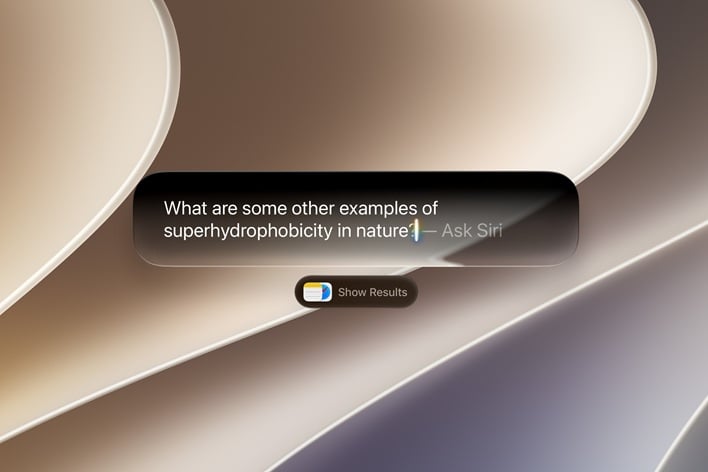
Anyone who has ever watched or experienced Siri completely forget a conversation from two minutes prior will find that this update reassuring. The new architecture promises state-of-the-art understanding and reasoning, deep integration across Apple hardware, and a heavy emphasis on user privacy.
Deep Integration and Real Context
Apple says the standout feature of Siri AI comes down to context. Rather than simply fetching generic web results for a query, the assistant can dig into messages, emails, photos, and calendar invites to surface specific personally pertinent information. A user can ask it to track down a hotel confirmation buried in an old email, or find a restaurant recommendation a friend sent weeks ago. That kind of retrieval is where previous versions of Siri would have faltered and opened Safari for a web search.Siri AI also offers on-screen awareness, which takes things a step further. If a friend texts about a weekend potluck, a user can brainstorm recipes with Siri right there in the conversation, then immediately push the best option into the Notes app. Apple also expanded app actions, so a person can instruct Siri AI to draft an email from scratch, or edit and share a specific photo album across third-party applications.
Accessibility gets a boost as well. iPhone users can swipe down from the Dynamic Island to trigger a text-based chat, while Mac and iPad users will find Siri AI baked directly into Spotlight and system context menus, including a control-click option that lets a person ask about any image, file, or text on the screen. For Apple Vision Pro owners, the assistant appears as a floating 3D visualization that activates at a glance.
When a request demands more horsepower than local hardware can provide, it routes to Apple servers running optimized foundation models via a Private Cloud. Apple states that personal data is never stored or accessible to anyone, including Apple itself, and independent experts can audit the code to verify that claim. This will be an important aspect for more privacy conscious users.

It's also worth noting that Siri AI's cloud intelligence is powered by a custom Google Gemini integration, which is the result of a multi-year collaboration Apple and Google announced earlier this year. On-device tasks still run on Apple's own foundation models, so the two approaches work in tandem depending on what a request requires.
On devices capable of running the advanced on-device models, dictation gets a meaningful upgrade too. The system handles punctuation, capitalization, and formatting automatically as a person speaks, and users can fine-tune the assistant's voice, adjusting cadence and expressiveness to sound more human.
A Standalone App, Visual Smarts, and Smarter Writing
Apple is also introducing a new dedicated Siri app, which serves as a centralized hub for reviewing past interactions. Thanks to iCloud syncing, a person can kick off a brainstorming session on a Mac and pick it back up on an iPhone or Apple Watch later in the day.Camera integration rounds out the iPhone experience in a practical way. A dedicated Siri mode inside the Camera app lets a person point the lens at a restaurant bill to split it using Apple Cash, or scan a plate of food for nutritional data. Mac and iPad users can control-click on images or files anywhere on the screen to ask Siri questions about what's displayed. Vision Pro users can just look at physical objects or app windows to pull up details.
Also, Siri AI inserts itself into the writing process with integrated tools for drafting and editing text across the system. Apple also confirmed systemwide proofreading that runs quietly in the background, checking work across both native and third-party apps
How To Try The New Siri AI
For anyone eager to test it out, a quick clarification: Siri AI is part of iOS 27, the developer beta of which dropped yesterday at WWDC 2026.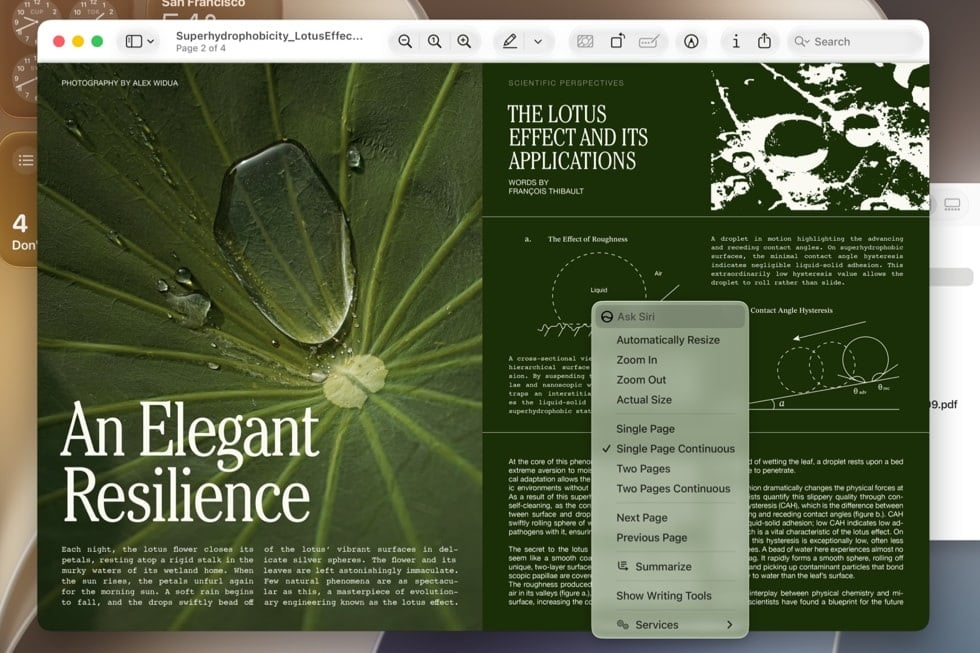
Even with the right software installed, however, Siri AI will require some manual configuration for now. Just as it did with the original Apple Intelligence rollout, Apple has gated access behind a waitlist. After updating to the iOS 27 developer beta, a user needs to navigate to Settings, then Apple Intelligence, and tap "Join the Waitlist." From there, it's a waiting game while Apple's servers process the request and push the necessary AI models to the device. Early adopters are reporting wait times ranging from a few minutes to upwards of 18 hours.
Hardware matters too. Siri AI is restricted to the iPhone 15 Pro and 15 Pro Max, the full iPhone 16 lineup, and the iPhone 17 series going forward. Older devices from iPhone 11 through iPhone 14 can technically install the iOS 27 beta, but they won't see any option to join the waitlist. The new Siri simply won't show up for them.
It is important to note that when iOS 27 and iPadOS 27 ship later this year, users in the European Union will not have access to Siri AI on iPhones or iPads. Siri AI on watchOS 27 will also be unavailable since it requires a paired iPhone to access and use Siri. Apple and the European Commission are publicly sparring as to why. Apple insists the situation is a regulatory dead end, following what it says was months of proposing solutions. Representatives for the EU state the decision not to launch in the EU is Apple's alone, and that nothing in the Digital Markets Act prohibits Apple from introducing new products there. Regardless of who is at fault, EU consumers will miss out on Siri AI, at least initially.
Also worth noting Siri AI is geo-blocked in China pending government approval. Joining the beta waitlist in the EU or China will not grant you access.





