



7 Must-Have Gaming PC Components Released This Year For Ultimate Performance


For these selections, we focused on newer, current-generation parts that offer top performance without breaking the bank. These aren't the most expensive or necessarily the absolute best options in any category for every use case, and so you might argue that the headline is a little misleading. However, all of these parts will get you within percentage points of the very best option for a fraction of the cost of the actual top pick. So saying, they're smart buys, not slick and stylish money sinks with little practical benefit. We wouldn't lead you wrong, would we?
Without further ado, let's talk shop.
The Fastest Desktop CPU On The Planet, Bar None
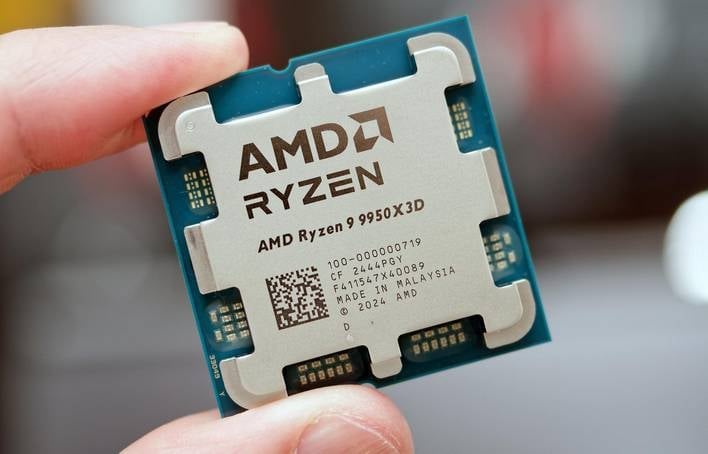
AMD's Ryzen 9 9950X3D is the very much real and not-hypothetical "girl who can do both." This is a Socket AM5 CPU with dual eight-core Zen 5 CCDs, giving it a whopping 16 cores—32 logical cores—that clock all the way up to 5.7 GHz, or 5.85 GHz if you enable PBO. That's already impressive, and it delivers top-shelf performance in productivity applications, but it has another ace up its sleeve: AMD's second-generation 3D V-Cache. This newer design places the V-Cache chiplet underneath the CCD, which means it doesn't impede cooling like it did on the first-gen parts. It's only applied to one CCD, so you have eight cores that clock to the ceiling, and then eight cores with 96MB of local L3 cache. It's pretty much the top in every workload, so it definitely fits 'ultimate'.
The Most Popular CPU Cooler Of Today
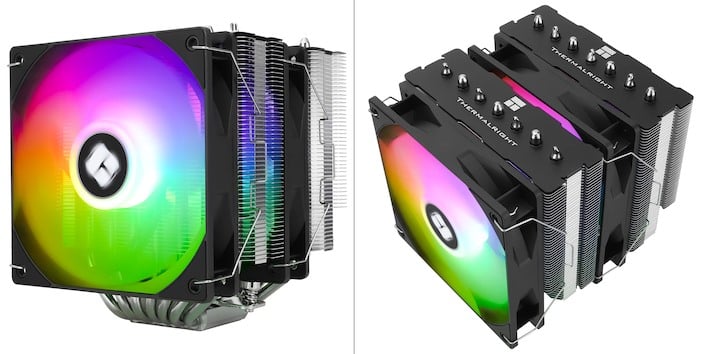
You may be surprised to see an air cooler here. The reality is that Thermalright's Phantom Spirit 120SE—the updated, improved version of the ever-popular Peerless Assassin 120—is more than enough CPU cooler for anything that isn't being manually overclocked, and that includes auto-overclock features like AMD's Precision Boost Overdrive and Intel's Thermal Velocity Boost. There's simply no need for most users to pay for a more expensive CPU cooler, and this one even comes with addressable RGB LED lighting. Glamorous!
A Mighty Socket AM5 Mainboard With Many Ports
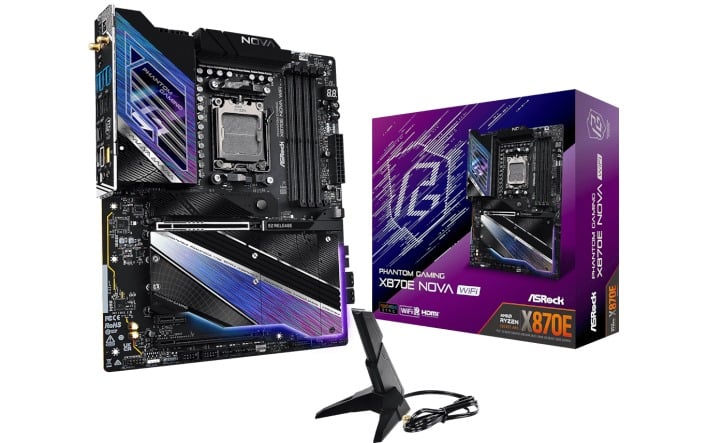
When we reviewed three of the top-tier Socket AM5 motherboards, our favorite of the three was this board, ASRock's Phantom Gaming X870E Nova. This isn't an extravagant platter like MSI's MEG X870E Godlike or the Gigabyte X870E Aorus Xtreme, but for the price you simply won't beat it. It has everything: 20-phase power using 110A Smart Power Stages, five M.2 slots, 5-Gigabit Ethernet, Wi-Fi 7, onboard debug LEDs, and beautiful RGB LED lighting accents. Is it the finest motherboard ASRock makes? No. The practical benefits of paying out hundreds more for a better board are pretty darn slim. For a smart shopper, this is the superior pick.
RAM Is All Expensive, So Let's Go Whole Hog
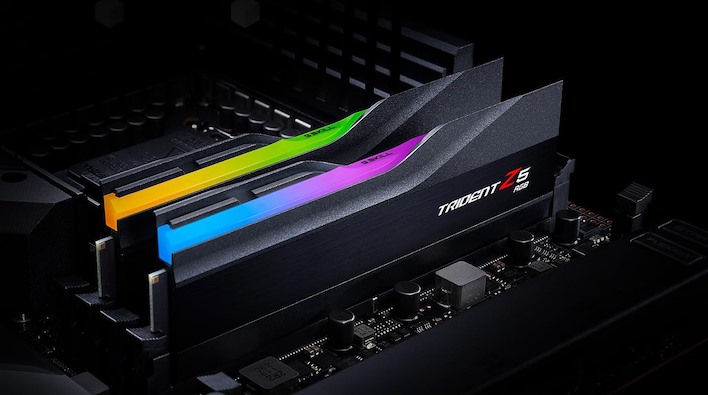
It's just a fact: PC memory is monstrously expensive right now. The hardest-hit have been the most popular parts at the "sweet spot" of capacity, transfer rate, and latency; some kits have gone up as much as 200%. With that in mind, we might as well look at some high-end RAM that hasn't gone up quite as much, because it was astronomically expensive to begin with. That's the perfect description for this G.SKILL TRident Z5 RGB kit, which comes with a pair of 48GB modules running at 6400 MT/s with a low 32-cycle CAS latency. 96GB of RAM should pretty much get it done no matter what 'it' is, at least in the context of a desktop PC. Best of all, it's only 1.35V, meaning you won't be stressing your memory controller too much.
The Unavoidable Concession: An A Tier GPU
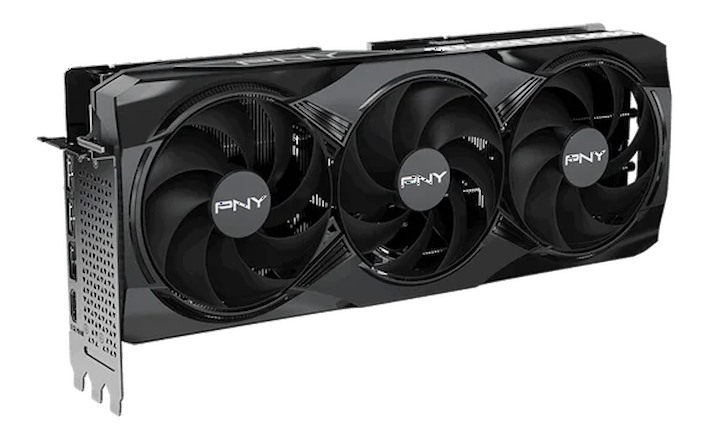
Now look, the GeForce RTX 5080 is no doubt a ridiculously fast graphics card. However, we do have to admit that it isn't the "ultimate"; obviously, that's the GeForce RTX 5090. The problem is that those cards are basically unobtanium. The only listings we can find in stock are going for $900 to $1000 over the already painful $1,999 MSRP, and we can't recommend anyone to buy those. The recent GeForce x90 cards are monuments to graphical excess, but they're simply not practical purchases for any gaming workload. This under-MSRP GeForce RTX 5080 will absolutely make it happen—even if "it" is Cyberpunk 2077 in RT Overdrive mode.
Supremely-Fast Solid State Storage
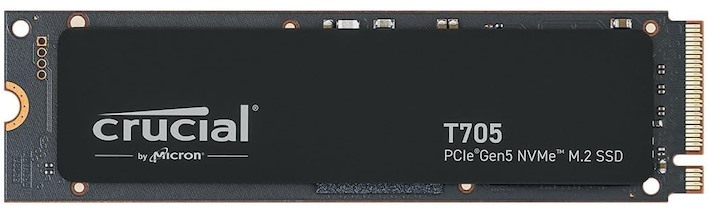
Crucial T705 4TB PCIe 5.0 x4 NVMe SSD: $339.99 at Amazon
Crucial P510 2TB PCIe 5.0 x4 NVMe SSD: $139.99 at Amazon
PCIe 5.0 SSDs are still pricey, but they're coming down slowly. This Crucial T705 is a slightly-revised version of the first-generation T700, and it offers transfer rates up to a blistering 14 GB/second. 4TB of capacity is probably more than you'll need in the short term, to say the least. However, we also couldn't pass up the chance to pass on the amazing Crucial P510 deal. $139 for a 2TB PCIe 5.0 drive is crazy cheap, and while the P510 isn't the speed demon that the T705 is, it's still fast enough to leverage its 5.0 x4 interface.
A Perfectly Puissant Platinum-Rated Power Supply

MSI MPG A1000GS 1000W PCIe 5.0 Power Supply: $109.99 at Amazon
FSP Hydro PTM X PRO 850W 80+ Platinum Power Supply: $149.99 at Amazon
ADATA XPG CYBERCORE 1000W Power Supply: $129.99 at Wal-Mart
MSI's MPG A1000GS is the perfect power supply to go with an ultimate desktop. It offers a full 1kW of peak power, and it's ATX 3.1-compliant, which means it supports brief excursions all the way to 2kW. It's fully modular, which simplifies cable routing immensely, and it actually includes a pair of 12V-2x6 connectors. We don't need both for this build, but it never hurts to have a backup, right?
We also found a couple of other great power supply deals. FSP Group has long been a well-respected name in power supplies, and the FSP Hydro PTM X is a fully modular unit that can crank out 850 watts sustained load, with ATX 3.0 support. It has better-than 80 PLUS Platinum efficiency, and includes a 12V-2x6 native cable, so you don't have to fuss with adapters. If you're not worried about that, there's also this ADATA XPG CYBERCORE unit. It's older than the MSI model above, but it also boasts superior efficiency; if you don't need 12V-2x6 (say, for a Radeon build), it will work just as well.
So, What About HEDT? The Hottest of Hardware
We focused this part list on standard desktop PC components because the so-called "high-end desktop" has all but vanished as market segment. You can still buy components and build your own AMD Threadripper or Intel Xeon WS machine, but for the overwhelming majority of users, it's really not a good idea. You end up with worse single-threaded CPU performance, as well as worse memory latency, for the very dubious benefits of having many more CPU cores and much more memory bandwidth—neither of which are very useful for typical client tasks. It's true that an HEDT machine is more "ultimate" than the desktop we've parted out, but it's also just worse for most uses.All total, after you add a chassis, the current US pricing for these parts comes out right around $3,000, which is not bad for what is essentially a top-of-the-line gaming desktop. You'll need to select a chassis yourself; we didn't pick one because aesthetics are almost completely down to personal preference. There's no shortage of gorgeous case options on the market, though.
Despite the spike in RAM prices, right now is a pretty good time to part out a PC. Zen 5 processors have been out long enough for prices to have settled, but they're still in production. GPU, cooling, and power pricing are at all-time lows, too. If you're considering a new gaming PC, there may be some small price cuts come next week after Thanksgiving, but we wouldn't hold our collective breath. Let us know if you find a better value somewhere else!





