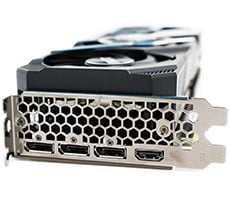
Sapphire PURE Innovation PI-A9RX480


We've been working with the Sapphire Pure Innovation PI-A9RX480 for the last few weeks, and have experimented with three different BIOS revisions. Having worked with the last three BIOS revisions, we have a rather unique perspective on this motherboard. We'll explain more in the overclocking section below...
 |
|
;)
;)
;)
;)
;)
;)
;)
As you can see, the Sapphire Pure Innovation PI-A9RX480 is equipped with an Award / Phoenix BIOS derivative, similar to most other motherboards available today. The standard BIOS menus pictured above are home to all of the common items used for enabling or disabling on-board features, setting the time and date, configuring the boot order, etc. Throughout all of the standard menus, we didn't find any surprises. Everything you'd expect from a highly-integrated, enthusiast class motherboard is there. The "Overclocking Features" menu is a whole other matter, however.
 |
|
;)
;)
;)
;)
;)
;)
;)
;)
;)
;)
;)
;)
;)
The Overclocking Features menu, as its name implies, houses all of the PI-A9RX480's overclocking related tools. If you take the time to peruse the screenshots above, you'll see that Sapphire went all out on this board's BIOS. Even if you've read some older articles on the web, take the time to look through the shots above. As we mentioned earlier, we've worked with a few different BIOS revisions on this board, and with the latest BIOS posted on Sapphire's site just a few days ago, they completely re-vamped the Overclocking Features menu. Sapphire re-named a few of the options and changed its layout to make the menu far more user friendly.
If you browse thorough the menu, you'll see that the PI-A9RX480's BIOS gives users control over a multitude of DRAM settings, the CPU multiplier, various voltage options, and of course bus speeds. CPU voltages over 2v are available, the chipset voltage can set as high as 1.5v, as can the HT link and PCI-E v1.2 voltages. PCI-E v1.8 voltages as high as 1.8v are available, and the PCI Express and system bus clocks can be configured in 1MHz increments, as high as 200MHz and 440MHz, respectively. Overall, this BIOS has got to be one of the most overclocker friendly BIOS configurations we have encountered to date.
The Radeon Xpress 200 chipset has quietly been earning a reputation as being one heck of an overclocker. To see what the Sapphire PI-A9RX480 could do in the overclocking department, we dropped our CPU's multiplier and also lowered the HT multiplier and DRAM divider, cranked up the CPU and HT voltages by .2v and slowly raised the system bus speed until our test system was no longer stable. When all was said and done, we hit an impressive 280MHz HT clock speed, and a final CPU clock speed of 2.66GHz. This was actually the highest we have ever been able to overclock our Athlon 64 X2 3800+. Kudos to Sapphire for the accomplishment, the PI-A9RX480 is definitely an overclocker's motherboard.