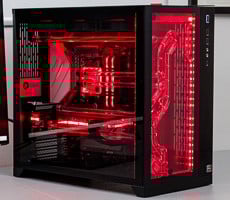
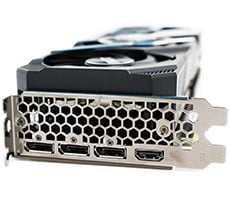
NVIDIA GeForce GTX Titan Powered Maingear SHIFT

GPU Boost 2.0 (cont.):
What the new temperature target of GPU Boost 2.0 does, over and above allowing the card to ramp up to higher clocks more often, is significantly alter the temperature distribution of the GPU. With GPU Boost 1.0, users would often see a gradual ramping up or down of the GPU temperature as the chip idled or was put under load.
;)
The typical temperature distribution of a GeForce 6 series card with GPU Boost 1.0 is represented in the slide above. What that graph says is that the GPU would most often run at about 80°C, and less often at lower temps or at higher temperatures approaching the GPU’s maximum threshold.
;)
Temperature distributions with GPU Boost 2.0 are very different. Due to the fact that GPU Boost 2.0 uses an actual temperature target, which is monitored in real time, frequencies and voltages are ramped more aggressively to push the GPU right up to the desired temperature target. On the flip side, should the GPU temperature exceed the target, GPU Boost 2.0 will scale the voltage and frequency lower to bring the temp back down more quickly.
;)
Users will have the ability to alter the desired temperature target with GPU Boost 2.0 as well. If you have a well-ventilated case with good cooling and want to improve a GeForce GTX Titan’s overall performance, you can increase the temperature target which will allow GPU Boost 2.0 to push the card’s GPU voltage and frequency more aggressively to run at the desired target.
Display Overclocking:
;)
In addition to GPU Boost 2.0, NVIDIA is introducing Display Overclocking with the GeForce GTX Titan. The vast majority of standard LCD monitors being sold today will operate at display refresh rate 60Hz. 3D capable LCD monitors will typically have a display refresh rate of 120Hz. In the case of a standard LCD monitor, what that means is that when V-Sync is enabled, even if the graphics card is capable of higher performance, it’s outputting 60 frames per second to the monitor.
;)
Some monitors, however, are capable of operating at higher refresh rates than their official rating. What NVIDIA’s Display Overclocking does is essentially ignore the feedback from the screen’s EDID (Extended Display Identification Data) and allow the graphics card to output higher refresh rates.
Like any overclocking, however, your mileage will vary from monitor to monitor. One monitor may be able to operate at refresh rates 20% higher than its rated specification, while another monitor of the same type may choke at slightly higher speeds. This is a feature that individuals will have to play with to find the sweet spot on their particular setup.