AMD Radeon HD 7970: 28nm Tahiti GPU Review

We have been hearing about AMD’s “Southern Island” family of graphics processors for quite some time. Even during briefings for the Northern Island series of products which ultimately became the Radeon HD 6000 series, news about Southern Islands was already trickling out. Rumors about these parts have been rampant for what seems like ages, but now, just in time to get all you hardcore gamers fired up this holiday season, AMD is officially taking the wraps of Southern Islands. More specifically, today AMD is announcing their latest flagship single-GPU, the Radeon HD 7970.
As you may suspect, if you paid attention to Eric Demer’s excellent keynote address at the AMD Fusion Developer Summit and the resulting onslaught of news that followed, the top-of-the-line GPU in the Southern Islands family—codenamed Tahiti—features AMD’s totally new Graphics Core Next (GCN) architecture. In addition to being the first GPU to feature GCN, Tahiti is also AMD’s first GPU to be manufactured at 28nm, their first with PCI Express 3.0 connectivity, the first with DirectX 11.1 support, and the first to sport a few other new technologies we’ll cover a little later (ZeroCore, PRT, multi-point audio).
There’s a lot to cover, so we’re not going to take up any more bandwidth telling the backstory. Up next are some preliminary details regarding the Radeon HD 7970 and other GPUs in the Southern Islands family, followed by a deep dive into the technology and a full performance profile of the fastest single-GPU money can (almost) buy...
;)
The AMD Radeon HD 7970 3GB Graphics Card

AMD Radeon HD 7970
Specifications & Features

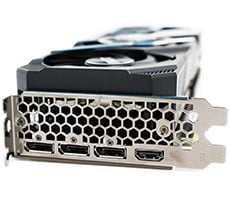
We’re going to go into much more detail a little later, but here are some preliminary details regarding the Tahiti-based Radeon HD 7970. The GPU is outfitted with 2,048 stream processors featuring AMD’s Graphics Core Next architecture and is paired to 3GB of GDDR5 memory connected over a 384-bit wide memory bus. The maximum number of displays supported per GPU is six, just like the previous generation Radeons, but the display output configuration has changed; one of the DVI outputs has been nixed.

The "Southern Islands" Family of AMD GPUs
The Tahiti GPU isn’t the only memory of the Southern Islands family slated for release, however. It is the only one to feature GCN, but new mainstream and “sweet spot” 28nm GPUs are coming too. The Pitcairn core will power the Radeon HD 7800 series, while Cape Verde will be the foundation of the Radeon HD 7700 series. We’ll have more details regarding those parts in the coming months.
Before we move on to the inner working of Tahiti and the Radeon HD 7970 in general, we should highlight a few previous HotHardware articles that are pertinent to today’s announcement. Although it’s based on a new GPU, the Radeon HD 7970 shares many features with previous-generation Radeons, like CrossFire, Eyefinity, PowerTune, UVD, and more. Since we won’t be covering those topics in depth here again, we’d suggest giving the following articles a glance.
- AMD Radeon HD 6970 & 6950 Debut: Enter Cayman
- AMD Radeon HD 6870 & 6850 Graphics Cards Debut
- AMD ATI Radeon HD 5870: Unquestionably Number One
- ATI Radeon HD 5870 Eyefinity 6 Edition Gaming
- AMD Radeon HD 6870 CrossFire with 5x1 Eyefinity
In the Radeon HD 6800 and 6900 series launch articles, we discuss a number of features like PowerTune, the UVD video engine, and Eyefinity. In the Eyefinity specific articles, we further explain the technology, discuss performance, and show a number of demos of Eyefinity in action on a variety of screen configurations.