



Windows PCs Crash 3x More Often Than Macs If This Study Is Accurate


A new study focusing on shadow AI, security gaps, and device instability has found that systems running macOS are far more stable than PCs with Windows installed, resulting in significantly fewer application crashes and being less prone to freezing, among other so-called "micro-frictions" that can cause a cause a productivity gap in the enterprise. It's not uncommon for Microsoft to push out emergency Windows patches to fix issues that are caused by in-band updates.
The findings are part of Omnissa's 2026 State of Digital Workspace report, which summarizes data analyzed across millions of Omnissa-managed enterprise endpoints between January and December 2025. Omnissa says its research is based on anonymized and aggregated telemetry data collected from endpoints across the globe and spanning over 17 industries, including high tech, retail, healthcare, financial services, education, and government.
It's towards the end of the 23-page report that Omnissa discusses instability trends, which such disruptions imposing a "forced interruption tax" on productivity.
"The telemetry reveals that Windows devices exhibit
3.1x more total forced shutdowns (including system
crashes and unexpected restarts) than macOS
devices... The productivity gap extends into the app layer. Telemetry shows that Windows devices experience 2.2x more app crashes and a staggering 7.5x more app hangs," the study states.
Obviously system stability is crucial to a productive work environment, but according to the study, it's not just about the time it takes to reboot a PC or get back into a application that has crashed or hanged. Citing other studies, Omnissa says it takes an average of 23 minutes and 15 seconds to refocus after a disruption.
"When these events happen daily
across thousands of employees, the cumulative
effect is a massive, invisible 'productivity tax' paid by the organization," Omnissa states.
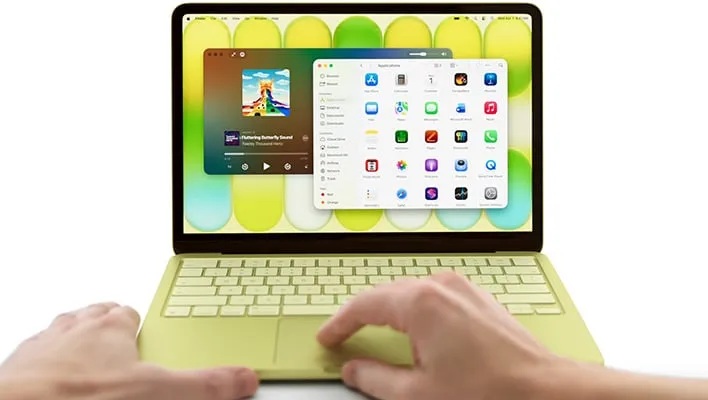
Does this mean that enterprises should rush to replaced their fleet of Windows PCs with Macs? That's a loaded question and it's not one that is adequately answered in this study. For one, the breakdown between Windows and Mac systems is not clear, so we can't assume that the sample size between the two ecosystems is the same or even similar.
Secondly, it's also not clear what conditions exist where crashes are most prominent. Are they being observed more frequently on older, unpatched Windows PCs? Are the users (including IT admins) less savvy at organizations that have a higher frequency of crashes and hangs? Is the hardware older?
There is a lot of criteria that can skew the results. That said, it's true that Apple's ecosystem is more streamlined and less fragmented than Microsoft's, in terms of the number of hardware combinations. Related, Apple keeps a tighter grip on hardware designs, whereas Microsoft is coding and patching Windows not just for its own first-party devices like the Surface Laptops, but a vast array of third-party designs.
That's all to say, we can believe Omnissa's findings macOS more stable than Windows, it just may not be as cut and dry as the study suggests.




