



Unico's 10-Inch 4:3 Retro Gaming Monitor Hides Your Consoles In The Back


To be clear, this is not a CRT display. Unico actually hasn't given any technical specifications whatsoever for this screen, but we know it's not a CRT despite the boxy shape of the device because you can clearly see that the back of the ULW10 opens up to reveal a storage compartment behind the screen. There are holes in the side of the chassis of the ULW10 that would normally be for integrated speakers; it's not clear if there will be speakers there or if they will be found somewhere else in the device at all. We'd expect speakers because there are regular old RCA audio jacks in the back as well as an HDMI port, but you never know.
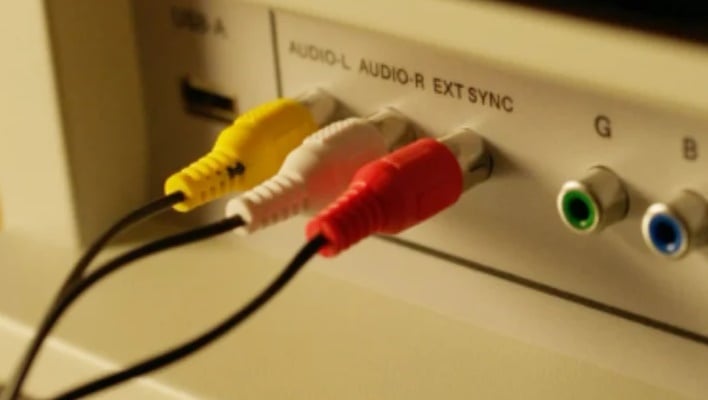
Don't worry; the HDMI connection isn't the only video connection. Unico is a company that specializes in producing LCD screen replacements for old arcade systems that used CRT monitors. Using its expertise, Unico has created this display with HDMI and VGA connections as well as arcade-style RGB inputs, including a line for external video sync, which is required for most RGB signals. There's also a USB Type-A port, presumably for firmware updates or other diagnostic use. What you won't find here are common composite ("yellow plug"), S-video, or component video connections, which means you're going to need a modded console.
As cool as this little display is, I have to express some skepticism. Unico has previously been caught misrepresenting the capabilities of its displays, and the fact that the firm is offering exactly zero details on the technical capabilities of the ULW10 isn't exactly inspiring. The product page emphasizes that the native 4:3 aspect ratio of the ULW10 offers "no black bars" and "no distortion, perfect pixel-to-pixel or proportional display", which suggests that the screen's integrated scaler supports integer scaling. That's better than stretched scaling, but it's impossible for a fixed-pixel screen like an LCD to actually support all of the resolutions of retro games, so you're necessarily going to have letterboxing or pillarboxing sometimes.

It also mentions a "one-key toggle to sRGB mode for more accurate color restoration," but classic 8-bit, 16-bit, and 32-bit video games predate the sRGB standard, and in fact have nothing to do with it; they were mostly made for the NTSC or PAL standards. It's not clear why Unico would advertise this feature; it damages the credibility of the product.
Furthermore, despite the CRT styling, this is not a CRT and does not have the benefits of same. A common complaint with Unico's arcade screen replacements is that they do absolutely nothing to mitigate the sample-and-hold motion blur that originates from LCDs and OLEDs without motion blur reduction technologies such as backlight strobing or black frame insertion. Indeed, Unico's website and promotional materials don't even address the issue. The firm's expertise seems to lie in signal compatibility with classic analog video circuitry, which absolutely has value, but it doesn't really make an LCD a replacement for a CRT in my view.
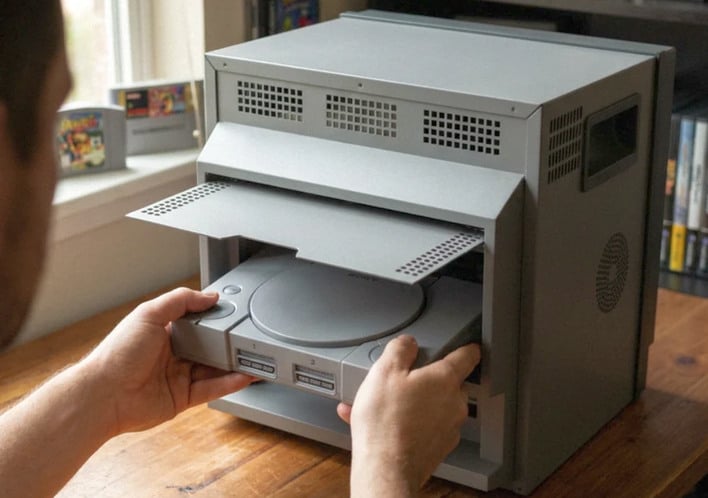
Still, there's definitely a charm in a lightweight and portable PVM-styled screen, especially if it has decent audio, and the analog inputs plus the storage compartment in the back mean that you could essentially use the thing as a carrying case for retro gaming hardware. Depending on the pricing, which isn't announced yet, this could be a cool little device for those who aren't sensitive to LCD motion blur. If you're interested, head over to Unico's Kickstarter to sign up for notifications once the crowdfunding campaign kicks off.





