



Starlink Satellite Breaks Apart In Orbit As SpaceX Confirms Major Hardware Anomaly


SpaceX has confirmed an orbital anomaly involving a Starlink satellite that fragmented into dozens of pieces, raising fresh concerns about space debris even as the company maintains that the event poses no threat to major upcoming missions like Artemis II. The incident marks the second fragment creation event for the constellation in recent months.
On Sunday, March 29, Starlink satellite 34343 experienced an anomaly on-orbit, resulting in loss of communications with the satellite at ~560 km above Earth.
— Starlink (@Starlink) March 30, 2026
Latest analysis shows the event poses no new risk to the @Space_Station, its crew, or to the upcoming launch of NASA’s…
According to Starlink, the breakdown occurred at an altitude of roughly 560 kilometers, significantly higher than the first similar incident recorded back in December of last year. Because the debris is located at a higher altitude where the atmosphere is thinner, the resulting fragments (estimated to be "tens of objects") are expected to remain in orbit for a much longer period before de-orbiting and burning up. More so, this higher orbit is in a zone where the debris could potentially interfere with other commercial and scientific satellites.
This latest so-called anomaly comes at a time when the sheer volume of the Starlink constellation is under scrutiny. With 10k-plus satellites already in orbit and plans for tens of thousands more, the risk of cascading collisions is a constant topic of debate among astrophysicists. While SpaceX designs its satellites to fully incinerate upon re-entry to minimize ground risk, the period they spend as uncontrolled fragments in space remains a big question mark.
For now, the debris is being monitored by the U.S. Space Force’s Space Surveillance Network. However, most of the pieces are small enough that they are difficult to track with precision but large enough to cause significant damage to operational hardware.
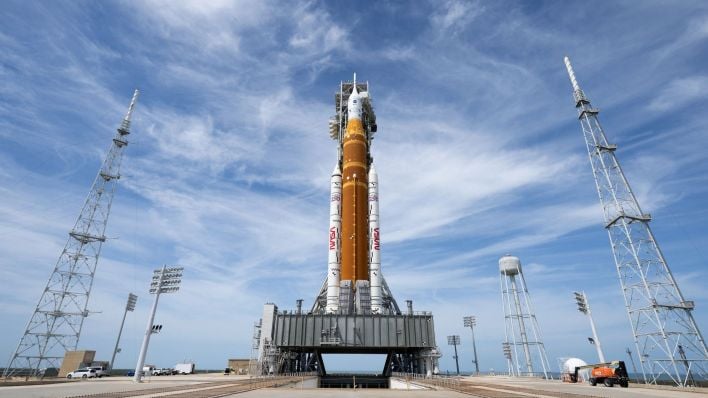
As teams at Cape Canaveral continue the final fast-fill operations for the Artemis II rocket, SpaceX stated that it is actively investigating the root cause of the structural failure and communication loss, promising to implement corrective actions once it figures out what triggered the breakup.
Main photo credit: Sociedad de Astronomia del Caribe





