



Malfunctioning SpaceX Satellite Is Hurtling To Earth After Apparent Explosion


SpaceX/Starlink has confirmed that one of its satellites suffered a major hardware failure in orbit, resulting in the release of debris and a total loss of communications with the vehicle. The errant craft is expected to re-enter Earth's atmosphere over the next few weeks.
The satellite (official designation 35956) was actually launched just weeks ago on November 23. According to information released by the company, the spacecraft "experienced an anomaly" while orbiting at an altitude of approximately 418 kilometers. The malfunction led to a sudden venting of the onboard propulsion tank and a rapid decay in the satellite’s altitude (we're waiting on the Chinese government to claim otherwise). Most concerning for orbital safety trackers was the accompanying release of several low-velocity objects—small fragments of debris now drifting in the wake of the defunct machine.On December 17, Starlink experienced an anomaly on satellite 35956, resulting in loss of communications with the vehicle at 418 km. The anomaly led to venting of the propulsion tank, a rapid decay in semi-major axis by about 4 km, and the release of a small number of trackable…
— Starlink (@Starlink) December 18, 2025
While SpaceX has not explicitly labeled the event an explosion, the description of a pressurized tank venting and the subsequent ejection of trackable fragments strongly suggests just that. From the looks of it, 35956 has no means for ground controllers to steer it. Without functional propulsion, SpaceX engineers anticipate that the vehicle will remain in orbit for a few weeks before it eventually plunges into the Earth’s atmosphere, where what's left is expected to fully incinerate upon reentry.
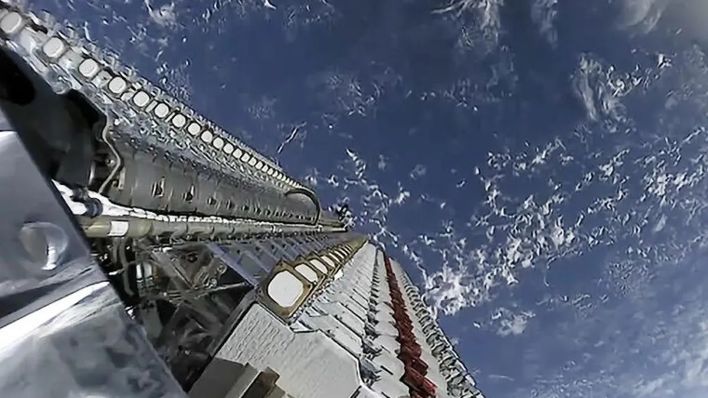
This malfunction introduces a new layer of complexity to the ongoing discussions about space junk and the sustainability of massive satellite constellations. Starlink currently operates 9,300 satellites in LEO (Low Earth Orbit), a density that has long drawn criticism from astronomers and safety advocates. Every fragment of debris, no matter how small, travels at several kilometers per second, where even a tiny bolt can strike another satellite with the force of a hand grenade.
SpaceX noted that the tumbling satellite is currently falling below the altitude of the International Space Station, but to mitigate the risk of a cascading collision event, it is coordinating closely with NASA and the U.S. Space Force to track the new debris fragments. The company is also in the process of pushing out software updates to the rest of its massive fleet, designed to bolster protections against similar anomalies in other vehicles.





