



Redmagic 11 Air Gaming Phone Debuts With Snapdragon 8 Elite And Lots Of Cool Tech


Thin is in when it comes to smartphone design, or so that's been the recent trend with devices like Apple's iPhone 17 Air and Samsung's Galaxy S25 Edge. Does the same slim design philosophy translate to gaming phones, though? It does as far as Redmagic is concerned, which has launched its Redmagic 11 Air gaming handset in China.
While not quite as svelte as either of those handsets, the Redmagic 11 Air is fairly thin and light in its own right, measuring 7.85mm thick and weighing 207 grams. In comparison, the iPhone 17 Air measures 5.64mm thick and weighs 165 grams, while the Galaxy S25 Edge checks in at 5.8mm thick and around 163 grams.

Redmagic's newest gaming handset is built around a 6.85-inch AMOLED display with a 1.5K resolution (2688x1216), 144Hz refresh rate, ultra-narrow 1.25mm bezels, and a 95.1% screen-to-body ratio. Corning Gorilla Glass 7i protection adds a bit of durability, though we generally recommend using a screen protector and the same applies here.
Underneath the hood, Redmagic's new phone pairs Qualcomm's Snapdragon 8 Elite silicon from 2024 (not to be confused with the newer Gen 5 variant) with 12GB of LPDDR5X "Ultra" memory + 256GB of UFS 4.1 storage, or a beefier 16GB + 512GB combo.
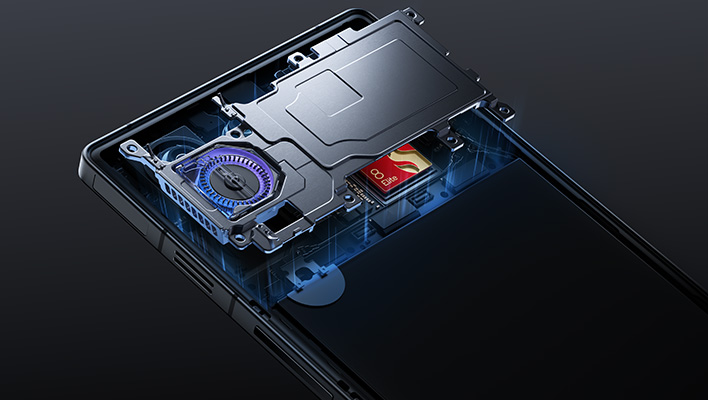
"Powered by the Snapdragon 8 Elite processor and RedCore R4 gaming chip in a dual-chip
architecture, the Redmagic 11 Air delivers exceptional computing power for even the most
demanding gaming scenarios," Redmagic says.
Redmagic also touts an Energy Cube 3.0 engine that it claims is capable is millisecond-level intelligent scheduling to optimize the coordination of performance, graphics, frame rates, and power consumption for maximum efficiency. It also supports 2K 144Hz rendering across more than 200 popular games, according to Redmagic.

Battery life is arguably even more important on gaming phones compared to regular handsets, and in this case, Redmagic opted for a capacious 7,000mAh battery. While not the biggest ever in a phone, it's the largest so far for the Redmagic Air series. It also supports 120W fast charging.
For cooling, Redmagic highlights an "ultra-thick Ice-Stage VC vapor chamber" that purportedly expands steam spaces by 40%, improves heat dissipation by 45%, and enhances thermal efficiency by 47%. This is aided but its active Turbo Fan 4.0 tech that can sustain 24,000 RPMs, along with redesigned fan blades that, according to Redmagic, increase airflow by 21% and expand the sweep area by 40%. It also supposedly improves dust resistance by 30% and reduction operational noise by 50%.
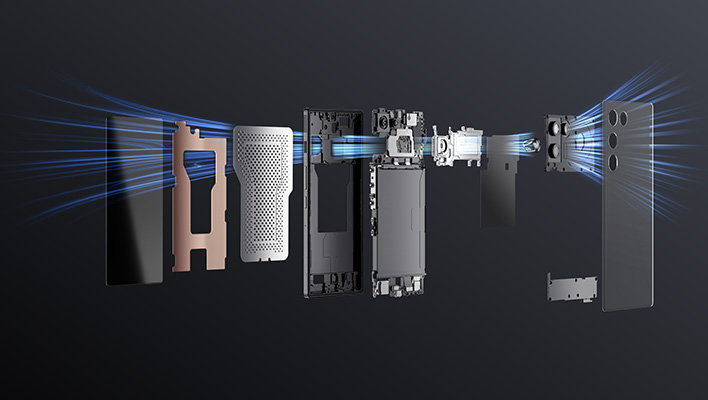
"The fan is mounted on a custom aerospace-grade aluminum bracket, delivering efficient heat
dissipation while keeping the device lightweight. Combined with a newly optimized thermal
module, the system achieves dual heat conduction and dissipation synergy, with thermal
conductivity reaching 180 W/mK, an improvement of 57% over previous designs," Redmagic says.
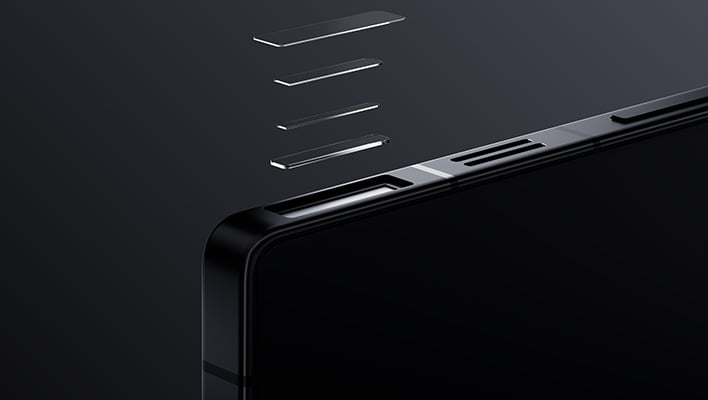
Other amenities include "professional-grade" shoulder triggers with a 520Hz response rate and anti-sweat algorithms, dual eye-care technologies (2,592Hz PWM dimming and DC dimming), instant touch sampling rates of up to 2,500Hz with 960Hz multi-finger tracking, a 16-megapixel under-display selfie camera, optical fingerprint scanner, and dual rear cams consisting of a 50MP primary shooter and 8MP ultrawide.
The Redmagic Air 11 is available in Quantum Black and Stardust White priced at CNY 3,499 (~$500) for the the 12GB + 256GB model and CNY 4,199 (~$600) for the 16GB + 512GB model. No word on whether there are plans to release the handset outside of China, but either way, it won't have to compete with any ASUS-brand smartphone launches this year, including a potential ROG Phone 10. ASUS has gone on record saying it's not planning to release any new models this year.




