



Microsoft Launches Windows Driver Quality Initiative to Reduce BSOD Crashes


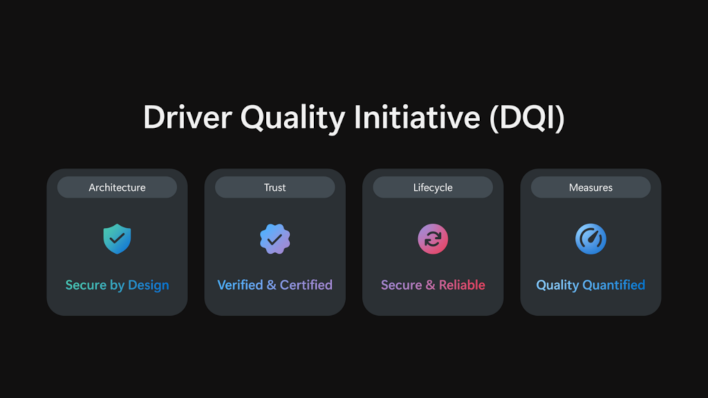
The Architecture pillar of DQI includes securing kernel mode drivers and an effort to push more third-party kernel mode drivers to Microsoft-authored class drivers or user mode drivers. Improvements to user mode and MA-class drivers are also planned, to hopefully enhance performance of PCIe devices with DMA support and to offer "continuous enhancements" to first-party class drivers on Windows 11.
The Trust pillar will include updated Windows Hardware Compatibility Program requirements, stronger partner verification, and expanded automated analysis. Meanwhile, DQI's Lifecycle pillar focuses on better Windows Update driver management, including the removal of outdated or low-quality drivers and enabling faster issue analysis.
Since Windows Update is also set to receive Cloud-Initiated Driver Recovery to be handled by Microsoft, this will mean problematic drivers should be automatically reverted to previous working versions without the need of user input.
Finally, the Quality Measures pillar will change how driver quality is measured. Previously, driver quality was measured by whether or not drivers induced system crashes, but Microsoft will also be evaluating various aspects of stability, performance, and thermals when evaluating drivers from its partners moving forward. Some of this collaborative work was even done hands-on at WinREC, with representatives from ASUS, Acer, and HP all praising the initiative.
Most of Microsoft's work on Windows 11 lately has been focused on improving performance and expanding gaming functionality, which are positive developments, but getting the wider Windows ecosystem on-board to improve drive quality should pay major dividends moving forward as well.




