



Intel Says Software Optimization, Not Silicon, Behind Up to 30% Gaming Performance Gap


Speaking to German site PC Games Hardware, Hallock had quite a bit to say on the topic. He first addressed the idea that Intel's hybrid architecture is to blame for its lagging gaming performance, saying that "it's about 1% difference" between a CPU that is all P-cores and a hybrid CPU with P-cores and E-cores. That may indeed be true, comparing like for like on Raptor Lake Refresh or Arrow Lake with an updated OS.
However, as he points out, some reviewers and many PC gamers absolutely have observed higher gaming performance with their Intel CPUs' E-cores turned off. He blames this on the early state of the Intel Thread Director at the time, saying that "Intel had not delivered the appropriate software to the market on the right schedule." He's not wrong about that, but there's more to that story that deserves mention.
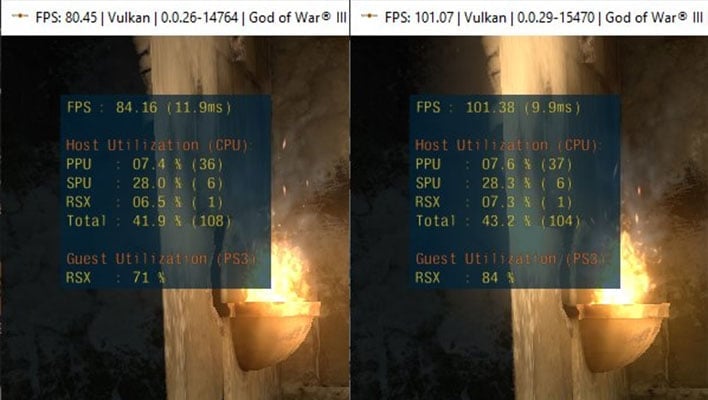
Alder Lake (12th-Gen Core) processors ran a much lower ring bus frequency when E-cores were enabled than with them disabled; this hurt memory and cache performance, which are critical for games. And, on power-constrained systems like laptops, disabling the E-cores can help save precious watts for the power-thirsty P-cores. There's also the matter of early Alder Lake processors that could use AVX-512 when the E-cores were disabled, boosting some apps (like RPCS3 Emulator) considerably, but that's probably outside the scope of what he was talking about.
So, on newer chips with Thread Director in good working order, E-cores aren't the problem; that much, we definitely agree on. Then what is the problem? Well, Intel chips still get beat by AMD's fastest gaming CPUs. Hallock says that the problem is with the software, though. Specifically, what he said was this:
"I truly believe, and this might get me in trouble, but I truly believe that the general PC gaming market and especially enthusiasts, like really hardcore PC enthusiasts, are significantly underestimating the importance of software to the PC experience, like really, really seriously. [...] There is no game on earth that is as fast as it's going to be purely through hardware. That doesn't exist anymore. That used to be the case in 2010, 2015. That is not how gaming works anymore."
— Robert Hallock, Intel Dir. of Technical Marketing
He's not exactly wrong, but there's plenty of nuance here, because gaming has actually never worked that way. All you have to do is look at the comparison between Quake and Terminator: SkyNET, both from 1996, where the former screams on even a meager 75 MHz Pentium while the latter really wants a faster CPU with a clock rate measured in triple digits. Both games are 3D FPS titles with polygonal objects and enemies, but the performance is radically different. (SkyNET is still a cool game, though, and you should check it out.)
Still, the thrust of what he's getting at is correct. Extracting the full performance possible from contemporary computer hardware is incredibly difficult, and it requires intimate knowledge of the platforms and processors. Modern PC games are complex. Believe it or not, games are some of the most complex software packages ever created, with a dizzying array of subsystems for simulation, graphics, sound, input, networking, and more. Fully optimizing every part of an app like that for maximum performance would be a nightmare, and it's understandable that most developers don't bother. If it runs, it runs.
"And that performance is, yes, you can make the game faster with a faster piece of hardware, but there's always going to be 10, 20, 30 % performance hidden behind the fact that that game was just not optimized for your CPU."
— Robert Hallock, Intel Dir. of Technical Marketing (to PCGH)
What does all this have to do with why Intel is losing to AMD in gaming performance? Hallock stops short of saying that game developers are optimizing for AMD CPUs instead of Intel chips, even though his company already said that outright at the launch of the Core Ultra 200 Plus CPUs and the Intel Binary Optimization Tool intended to help correct exactly such a supposed slant toward Intel's competitor. Assuming that developers are tightly optimizing for AMD CPUs, though, it's easy to understand why; AMD's CPUs power the PlayStation 5 and Xbox Series consoles, so of course developers would optimize for their most performance-constrained targets.
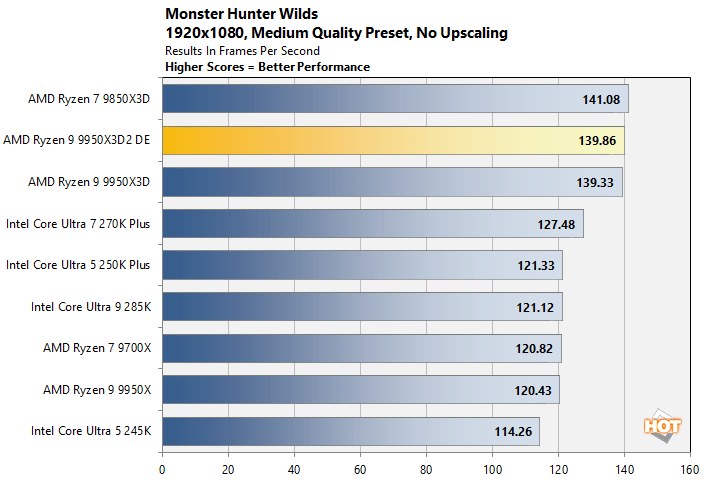
I don't really think that's what's going on, though, for the most part at least. There's a much simpler answer to why Intel is losing in gaming. Specifically, because AMD took a look at the gaming software market, correctly judged that it was a big ol' pile of horrifically unoptimized garbage, and then said "what if we just shipped a CPU with gobs of cache as a brute force workaround?" And it worked, too. AMD's regular Zen 4 and Zen 5 CPUs trade blows with or lose to Intel's latest hardware in games; it's only the "X3D" models equipped with 3D V-Cache that decimate the blue team's best.
Hallock is right; in a perfect world, software would be perfectly optimized for each platform it plays on, and we wouldn't need half the gruesome hacks we've hammered into our CPUs over the last 30 years. That's not the world we live in, though. To paraphrase an old prayer, it takes wisdom to know the difference between the things you can change and the things you can't. Holding out for hardware optimizations in mass-market gaming software is unwise, and that's why Intel is about to launch new Nova Lake CPUs with up to 288 MB of L3 cache.





