



Intel's Raptor Lake Next Rumored To Extend LGA 1700 Into 2027 With DDR4 Support


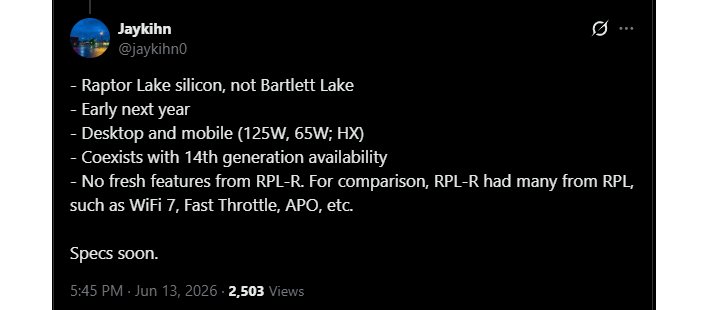
Answering a question from an enthusiast, Jaykihn reiterates his previous remarks, explaining that the "Raptor Lake Next" family will consist of original Raptor Lake silicon, that it will have no new features, and that it does not consist of a new processor stepping. That means no Bartlett Lake (and thus no 12 P-core design), no support for the Intel Binary Optimization Tool, and likely no clock bump. At best, we'll see a re-launch of the Core i9-14900KS under the Core 200 branding.
Except it apparently might not even be that, because Videocardz reports that its sources have told the site that the confirmed models include a 125W 8+8 configuration as well as a 65W 8+12, 6+4, and 4+0 configurations. No mention of an 8+16 configuration, nor any high-powered 150W models. That site also confirms that these will indeed be branded as part of the Core 200 family, not "Core i" or "15th gen."
So what's the point of this re-release? Well... it's the memory crisis. DDR4 memory remains considerably cheaper and more available than DDR5, but OEMs hate releasing new PCs with old hardware. A "new" launch of the older LGA 1700 CPUs allows OEMs to start selling Raptor Lake machines with DDR4 memory for prices somewhere in reality. The point is moving inventory, not winning benchmarks, because PC makers gotta eat, and there's really just not any DDR5 in the channel for them to buy.
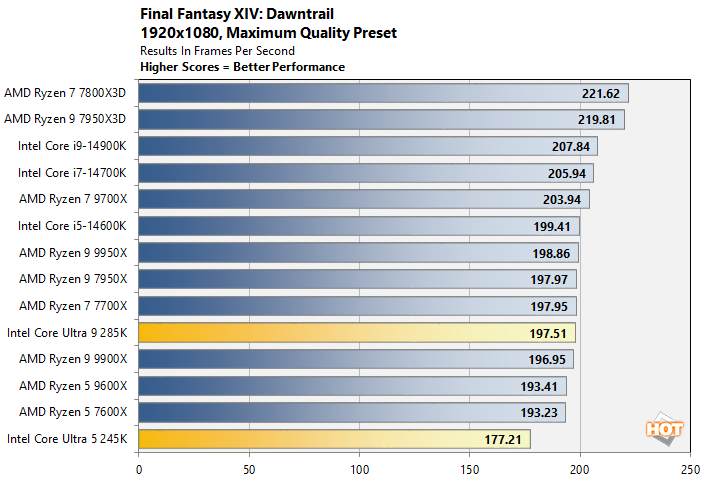
It's not the end of the world; tuned Raptor Lake Refresh systems can actually outperform Arrow Lake in gaming, and offer competitive performance elsewhere. However, if it's true that these parts are topping out at 125W and there's no 8+16 SKU on the way, we wouldn't expect them to compete on the top-end. Still, if the price is right, these could be great upgrades for a lot of folks still hanging around on even older platforms.
The "new" chips are apparently planned for late January 2027. That's pretty wild for a platform that launched in November of 2021, but maybe it shouldn't be; after all, Socket AM4 launched way back in 2016. It's not clear if these CPUs will come to the DIY market or if they're OEM-only, and it's also not clear if motherboard vendors will be producing new SKUs for these chips or simply updating the BIOS on existing models.





