



Bartlett Lake-S Benchmarked: 12 P-Core Intel CPU Shines In Gaming


But let's back up. The Core 9 273PQE is a newer processor for LGA 1700, the same platform that hosted Alder Lake and Raptor Lake, the 12th and 13th/14th generation Core processors, respectively. Unlike all previous processors for the platform, this specific CPU does not have E-cores. Instead, it simply replaces the four E-core clusters on Raptor Lake with four more P-cores, resulting in a chip with the same specs all the way around as a Core i9-14900K, just with twelve Raptor Cove P-cores instead of an 8+16 configuration.

This chip was created for the Networking and Edge (NEX) segment of Intel, where commercial buyers concerned about response time need consistent, steady performance. A hybrid chip where you're never sure if a task will be scheduled on a P-core or E-core will simply not do. Despite enthusiasts clamoring for exactly such a processor since Alder Lake came out, this chip was never meant for enthusiasts, and Intel says it has no plans to release such a part for the regular consumer market.
Indeed, despite being a fairly standard LGA 1700 processor, this chip absolutely will not boot in any motherboard that doesn't have explicit support for it. Zed Up found that out the hard way when he bought the chip from American electronics supplier Mouser (for an eye-watering 725€) and tried to boot it on an ASUS PRO WS-W680 ACE motherboard. In his words, the system would simply power off immediately, refusing to even attempt POST, with the CPU installed. While he attributes this to some sort of malfeasance on the part of Intel, it's more likely that the motherboard simply lacks any microcode for this chip and shuts off to avoid damaging it.

He did, obviously, eventually purchase a motherboard that will run the Core 9 273PQE, though. The ASRock Industrial IMB-X1714 is a very stodgy-looking green platter with absolutely zero overclocking features, which means he had to run the RAM on both the Core 7 273PQE and his Core i9-14900K comparison at pure JEDEC specifications: DDR5 5600 CL46. This absolutely isn't helping the performance of the Core i9-14900K, and likely neither the Bartlett Lake chip, but since both were tested under the same conditions, the tests are at least fair.
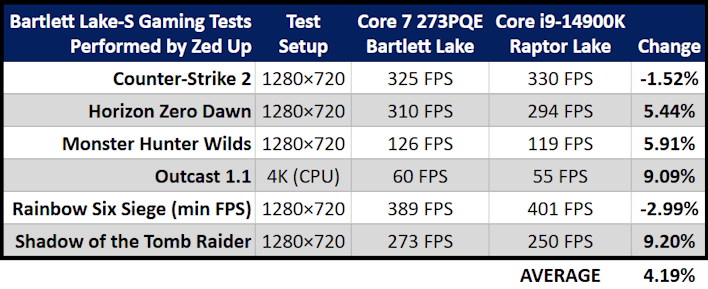
The results aren't astonishing, but frankly his methodology isn't great. In Horizon Zero Dawn, for example, rather than using the built-in benchmark, Zed Up simply measures the framerate while standing stock still in-game. However, he gave up on testing PUBG because the multiplayer nature of the game made it too chaotic. Overall, the chip won some and lost some, with significant gains in Outcast 1.1 (which is a software-rendered voxel game) and Shadow of the Tomb Raider.
Zed Up is fully aware of the informal results of his testing, to be clear; he says toward the end of his stream that he intends to send the chip and motherboard combo to various German outlets (including Igor's Lab and PCGamesHardware) to have some proper benchmark validation done. It will be fascinating to see what those sites come up with; a vision of what could have been if Intel wasn't too proud to admit its hybrid architecture might not have been the best move for desktop users.
Shout out to Videocardz for the spot.





