



Intel And NVIDIA May Team Up On Monster Serpent Lake CPUs With RTX Graphics


To understand where Serpent Lake fits, we have to look at Intel’s immediate roadmap. We’ve previously reported on quite a few leaks for Nova Lake, which is well-known to be Intel's next tile-based architecture coming late this year. Rumored to feature a staggering 52 cores on desktop and 28 cores in mobile, Nova Lake is designed to be a brute-force performance king. It's also expected to be Intel's first credible challenge to AMD's "X3D" 3D V-Cache processors in gaming, with its "bLLC" feature on some chips.

Following that, Razor Lake, which is expected in late 2027, will refine these core architectures and set the stage for next-generation SoC designs. Not a lot is known about Razor Lake yet, but it's thought that the canceled "AX"-class processor, a super-APU meant to compete with AMD's Ryzen AI Max processors, will finally see the light of day in this generation.
After that, we have Titan Lake in 2028 or 2029. Even less is known about Titan Lake, but the rumor is that it's going to focus heavily on advanced packaging, with tighter integration of the various components of the processor. Then, Serpent Lake is reportedly a branch of that family, but with one massive twist: it ditches Intel's in-house Arc graphics entirely.

While an Intel processor rocking an NVIDIA GPU tile sounds like a fan-fiction concept from a decade ago, we've known it was coming for a while. On September 18 last year, NVIDIA made a historic $5 billion equity investment into Intel. That massive financial lifeline came with a landmark agreement to co-engineer new silicon, with Intel explicitly mentioning the development of "Intel x86 RTX SoCs." Serpent Lake appears to be the first concrete product born from that alliance.
Given the projected 2028–2029 launch window, Serpent Lake would likely utilize one of NVIDIA's next-generation architectures; potentially a Rubin derivative or even Feynman. The real question is what form factor this "monster SoC" will actually take. There are a few compelling possibilities.
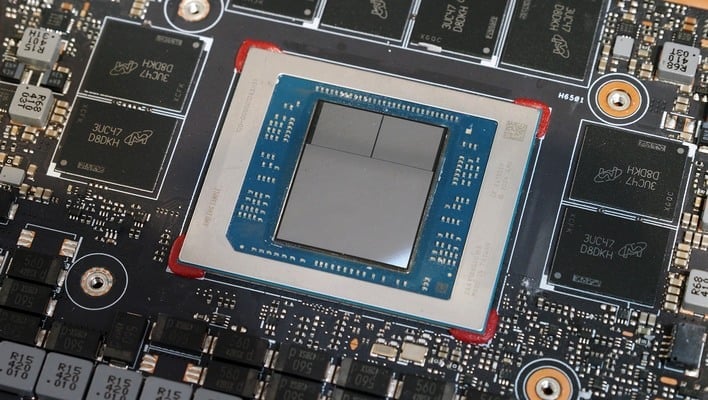
The most obvious consumer application is the Super-APU, a Strix Halo competitor. This would be a direct assault on AMD's high-end APUs. By combining Intel's x86 compute with RTX-class graphics (and their associated AI capabilities), Serpent Lake could power thin, hyper-efficient gaming laptops that completely bypass the need for a discrete mobile GPU, even for high-end PC gaming experiences.
The other obvious option is in edge compute and infrastructure applications. Given NVIDIA's dominance in AI and data centers, this chip might not be strictly for gamers. Serpent Lake could be engineered for advanced edge computing, AI inferencing, or specialized server tasks where high-performance x86 compute and raw NVIDIA acceleration need to share the exact same package for maximum bandwidth and minimum latency.
Either way, whether it ends up in a ridiculously thin gaming laptop or a high-density server rack, an Intel CPU wielding an integrated RTX tile is going to shake up the hardware market. Hopefully this chip collaboration doesn't fall through the way other deals made during the height of the AI hype have.





