



G.Skill Settles DDR5/DDR4 Memory Speed Lawsuit For $2.4M, How To Submit A Claim


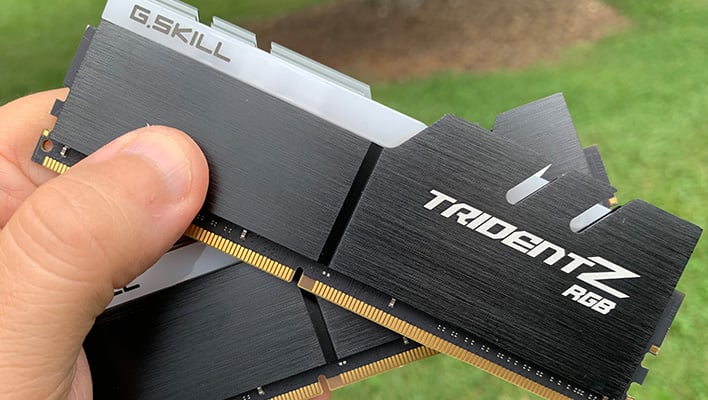
G.Skill has agreed to pay $2.4 million to settle a class action lawsuit alleging it "deceptively advertised and labeled" the speed of its DDR5 and DDR4 desktop memory modules. The settlement allows G.Skill to put the matter to rest without admitting any wrongdoing, and it avoids having a court decide of G.Skill's memory speed labels violated any consumer protection laws.
What the lawsuit really boils down to is how overclocked memory speeds are advertised. This applies specifically to DDR4 memory kits with rated speeds over 2,133MHz (technically, MT/s) and DDR5 modules with rated speeds above 4,800MHz (also technically MT/s).
According to the class action lawsuit, plaintiffs "were led to believe that the advertised speeds were 'out of the box' speeds requiring no adjustments."
Today's motherboards are typically good at making automatic adjustments to account for higher memory speeds, particularly with XMP (Intel) and EXPO (AMD) profiles, though depending on your setup, you may need to manually select a profile and/or make other adjustments in the BIOS to hit a memory kit's advertised speed.
From G.Skill's vantage point, its memory products were "appropriately labeled and advertised at all times and that they performed as represented." Nevertheless, in addition to the cumulative $2.4 million monetary payout, G.Skill has agreed to make "reasonable efforts" to update its packaging and product listings.
"Rated speeds for the products will be listed as 'up to' speeds, with the following
corresponding text: “'Requires overclocking/BIOS adjustments. Maximum speed and performance depend
on system components, including motherboard and CPU'," the lawsuit states.
How To Submit A Claim
The settlement agreement applies to anyone who purchased an affected G.Skill memory product between January 31, 2018 and January 7, 2026, while living in the United States. Eligible participants in the settlement will received a pro rata portion of the settlement fund.
Claims are limited to five per household without proof of purchase. Households that exceed five claims may be asked to provide proof of purchase
"The settlement administrator will review your claim form, and if accepted, you will be sent a physical check or
digital payment for a pro rata share depending on the number of valid claim forms received. This process takes time,
please be patient," the claim form states.
After accounting for lawyer fees, administrative costs, and awards to the class action plaintiffs, the actual settlement fund will be a little more than half of $2.4 million settlement.
The deadline to file a claim or opt out is April 7, 2026. A final hearing to approve the settlement agreement is scheduled for June 5, 2026.
You can use these links to get more information, submit a claim, or opt out...




