



FCC Bans Every New Wi-Fi Router Made Outside The US Over 'Severe' Security Risks


At a minimum, this move serves as a way to strong-arm router manufacturers into producing new hardware stateside rather than overseas. Since no current consumer router manufacturers (Netgear, Cisco, etc) actually produce hardware in the United States (being either partnered with or owned by overseas companies), this is a very interesting move. It's unclear exactly how forcing manufacturing to be done within the US will alleviate the security risks being alleged by the FCC, though. While there are numerous router exploits worth noting (as we regularly report on them), those exploits differ greatly from "foreign actors with built-in backdoors" described by the FCC.
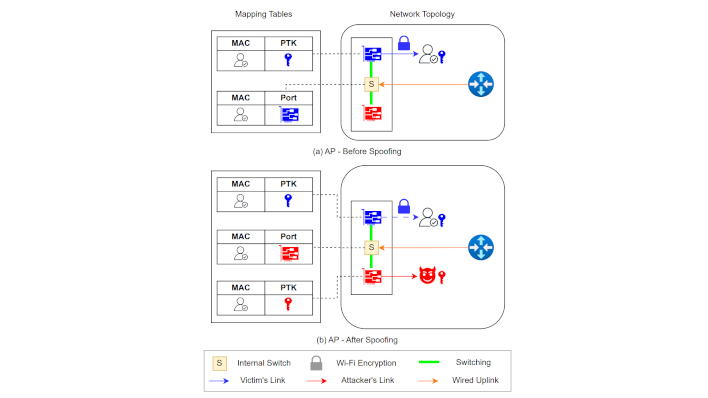
The most major router exploit in recent memory, AirSnitch (visualized above), is a great example. While AirSnitch indeed marks a serious vulnerability in virtually all existing routers, it's a fundamental vulnerability in the Wi-Fi protocol itself, not a simple hardware or software backdoor snuck in somewhere on the manufacturing line. The point of contention here isn't that routers aren't a potential vector for infection; they very much are, along with virtually any PC or smart device. Rather, it's that suddenly pulling this manufacturing stateside doesn't really do anything to solve the actual security risks.
The FCC isn't retroactively banning existing routers, either, which makes this measure fairly ineffective if the agency truly believes that all existing routers are secret backdoors for foreign governments. It will also made new routers more expensive for consumers in a time where hardware, food, fuel, and other costs continue to skyrocket. Perhaps by the time companies have made a complete adjustment to this move some of the economic pressure in other segments will have lessened. Here's hoping.




