



Apple Orders 10 Million Foldable iPhones In A Massive Bet On A $2,500 Price Tag


Apple has not confirmed a name, specs, or release date for the device, though most signs point to the iPhone Ultra branding and a fall debut alongside the iPhone 18 Pro and the iPhone 18 Pro Max. IDC reportedly expects an average selling price around $2,500, with the highest storage tier climbing toward $3,000. That kind of price tag turns a phone purchase into a genuine financial decision, and Apple appears to be betting shoppers will make it anyway.
The hardware rumors sound like something Apple would spend years perfecting before letting it near a store shelf, which, fittingly, is exactly what has happened. Supply chain leaks describe a book style foldable with a 7.8-inch inner OLED display and a 5.5-inch cover screen, wider than the tall foldables Samsung and Google favor and close to iPad mini proportions when opened. Leaked dummy units might also suggest the launch color lineup could be limited to white.
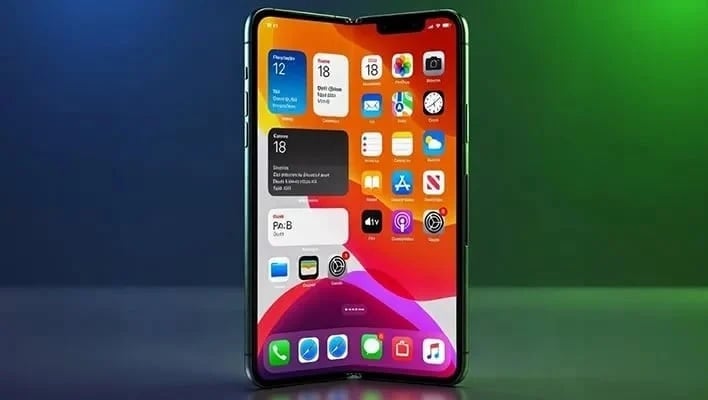
Apple seems determined to solve foldable phones' most annoying flaw—the crease that runs down the center of the screen. Reports have singled out a sophisticated adhesive as the real breakthrough behind a crease-free display, an optically clear adhesive engineered to stay pliable enough to flow into microscopic gaps and reduce the light scattering that makes creases visible. Ultra-thin glass with variable thickness at the fold plays a supporting role, but the adhesive is what is being called the key factor.
Another leak claims the hinge itself will use a liquid metal alloy. Put plainly, Apple appears to be attacking the crease problem from both the glass and the hinge at once.
None of this comes without compromise. Rumors point to a side mounted Touch ID sensor instead of Face ID, likely because cramming Face ID hardware into an ultra thin folding body is a packaging headache nobody has solved yet. It is also suggested that there will be only two rear cameras instead of the setup found on the Pro lineup. Code buried in the iOS 27 beta already references hinge angles and multiple displays, reinforcing that this hardware push has software to match.
The bigger headline might be supply chain muscle. According to Nikkei Asia's report, Apple's total component orders for new iPhones in the second half of 2026 are roughly 80 million units, including about 70 million iPhone 18 Pro and Pro Max models, pushing full year iPhone production past 220 million. That kind of buying power stands in sharp contrast to rivals like Xiaomi, Oppo, and Vivo, which have reportedly trimmed their own annual production targets amid an industry wide memory shortage. The same memory costs already forced Apple's hand once this year, as previously covered, when the company raised prices across its Mac and iPad lines in June.
Expensive first generation hardware still has to win people over, though. One online poll found interest in the iPhone Ultra sitting in the single digits, while the iPhone 18 Pro Max alone pulled in nearly half the vote. That is hardly a scientific verdict on Apple's foldable future, but it captures the uphill climb ahead. Getting shoppers to actually spend $2,500 on a first-gen folding iPhone will be the real test.





