



A Petri Dish Of Human Brain Neurons Just Learned How To Play Doom


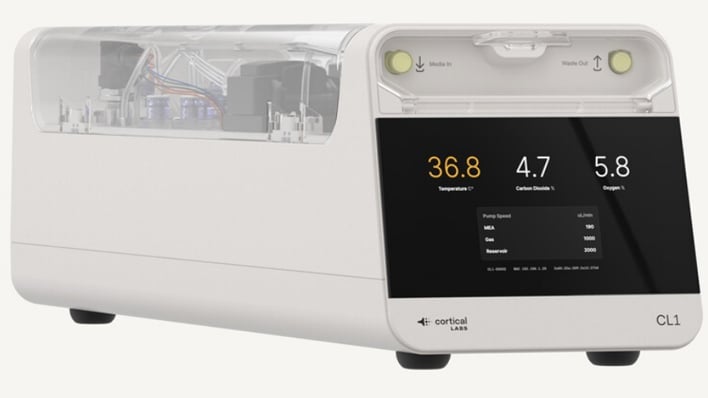
This was made possible was through the Cortical Labs CL1 biological computer. The CL1 is a machine we've previously covered that costs a whopping $35K. To those who recall The Matrix or Jill Lovelace from the Doom novelizations published in the mid-90s, worry not. The human neurons used within these CL1 units are derived from skin or blood samples of voluntary adult donors before being reprogrammed into stem cells and finally differentiated into neurons.
Since the last time we covered Cortical Labs' CL1 computer, Cortical Labs successfully developed a CL1 API based on the Python programming language and published it on GitHub. Thanks to that API, this proof of concept was completed by Sean Cole, an outside programmer, in only a week versus the year-and-a-half-plus that went into the initial Pong test. Considering how much more complex Doom is compared to Pong, any degree of playability at all is impressive, much less the ability to actually dispatch some enemies. The CL1 actually seems to do so much more quickly and efficiently than GPT-4, a victory that can be partially attributed to lower latency between game events and inputs.
The future implications of this experiment are difficult to quantify, but the Python-based API is available to anyone and developers can rent Cortical CL1 time though the cloud, if they can't afford to buy one outright. Judging by the short development time of this Doom port, the limitations of CL1's capabilities have yet to be tested. Hopefully, the future of biotechnology like this skews toward medical advancements rather than the creation of "the torment nexus" or exploring possible outcomes from nuclear warfare.




