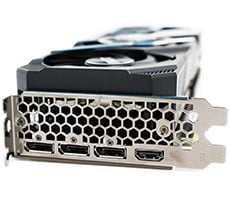
NVIDIA GeForce 8800 GTS Refresh: Asus and XFX


 |
|
 Crysis |
If you're at all into enthusiast computing, the highly anticipated single player demo of the hot, new, upcoming FPS smash-hit Crysis, should require no introduction. Crytek's game engine visuals are easily the most impressive real-time 3D renderings we've seen on the computer screen to date. The engine employs some of the latest techniques in 3D rendering like Parallax Occlusion Mapping, Subsurface Scattering, Motion Blur and Depth-of-Field effects, as well as some of the most impressive use of Shader technology we've seen yet. In short, for those of you that want to skip the technical jib-jab, Crysis is HOT. We ran the SP demo with all of the game's visual options set to 'High' to put a significant load on the graphics cards being tested. |

The new GeForce 8800 GTS 512MB cards perform right in-line in the Crysis GPU benchmark. At all resolutions, the 8800 GTS 512MB cards were a bit faster than the recently released GeForce 8800 GT and slightly slower than the mighty GeForce 8800 GTX.

Running a pair of GeForce 8800 GTS cards in SLI-mode resulted in scores slightly higher than a pair of GTX cards at the lower resolutions where memory bandwidth and frame buffer size play less of role in performance. But once the resolution is increased, the GTX cards once again regained the top spot.