AMD Ryzen 9 9950X3D2 Dual Edition Review: Ultimate No-Compromise CPU


The 3DMark CPU Profile test is multi-threaded and reports results for six different thread levels, including single-thread and maximum threads...
UL 3DMark CPU Profile Benchmark
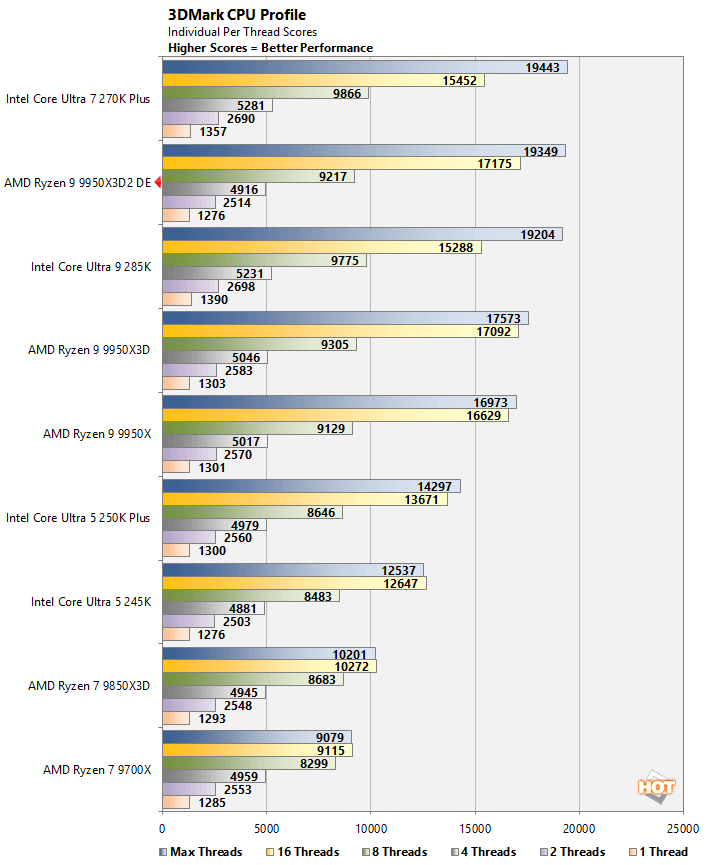
The Ryzen 9 9950X3D2 Dual Edition's higher power limits and additional cache allow it to perform markedly better than the original Ryzen 9 9950X3D as the thread counts increase in this test. It's increased performance was enough to overtake the Core Ultra 9 285K, but it couldn't quite catch the newer Core Ultra 7 270K Plus.
High And Low Resolution Gaming & Graphics Benchmarks
We also ran some mid and high-resolution game and graphics benchmarks on our test rigs with 3DMark, F1 25, Monster Hunter Wilds, and The Talos Principle 2. We used 3DMark's default Steel Nomad preset, and the games were run in two different configurations — either 1080p with Medium/High details, or 4K with High/Extreme details. The lower resolution tests are designed to be more CPU bound to better isolate processor performance, while the higher resolution tests are more GPU bound, where the CPU should have less of an impact.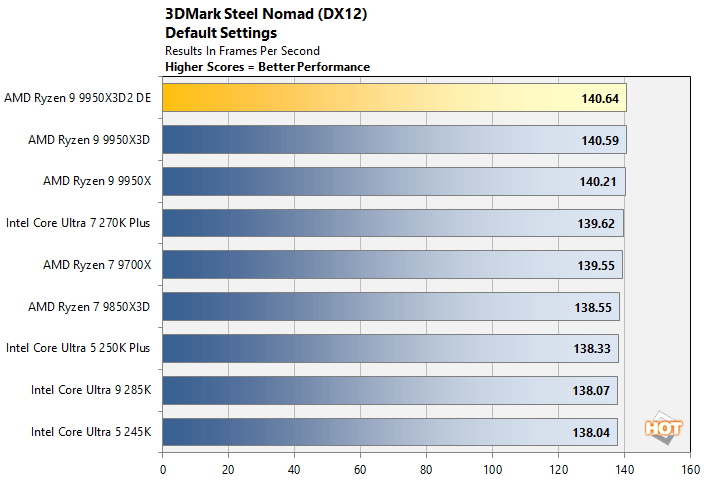
Even with a GeForce RTX 5090 in our test bed, 3DMark's Steel Nomad test is GPU bound and all of the systems are tightly grouped. The Ryzen 9 9950X3D2 Dual Edition, however, technically scored another victory and landed in the top spot yet again.
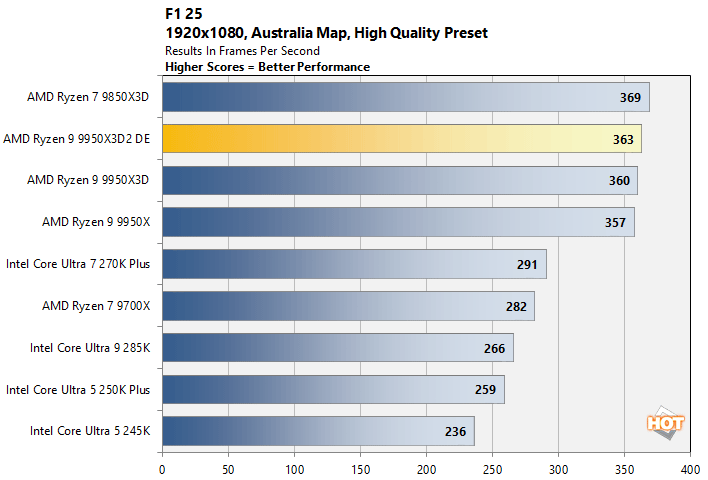
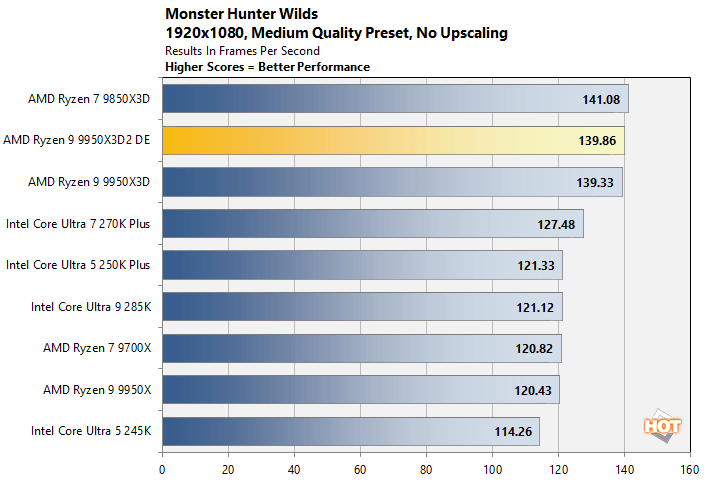
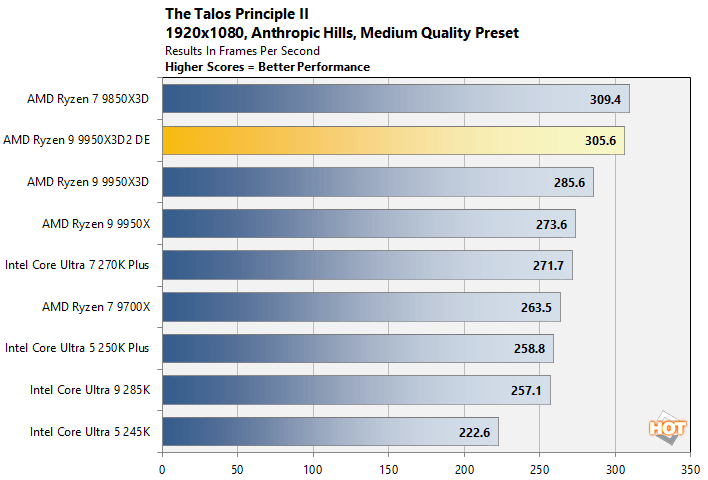
The Ryzen 9 9950X3D2 Dual Edition took silver in all three of our "low" resolution game tests. It outran the original Ryzen 9 9950X3D and all of Intel's processors across the board, but the single-CCD Ryzen 7 9850X3D with its much higher base clock took the overall lead.
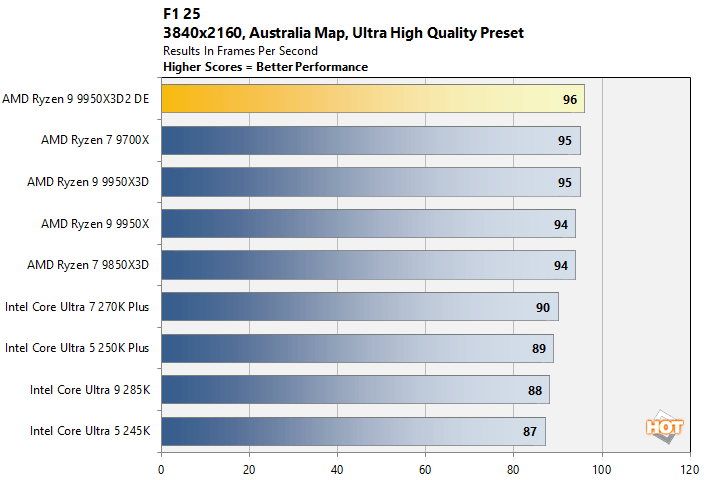
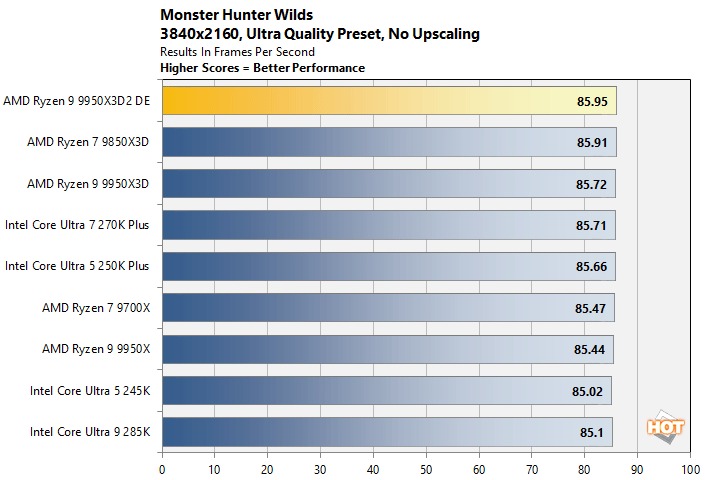
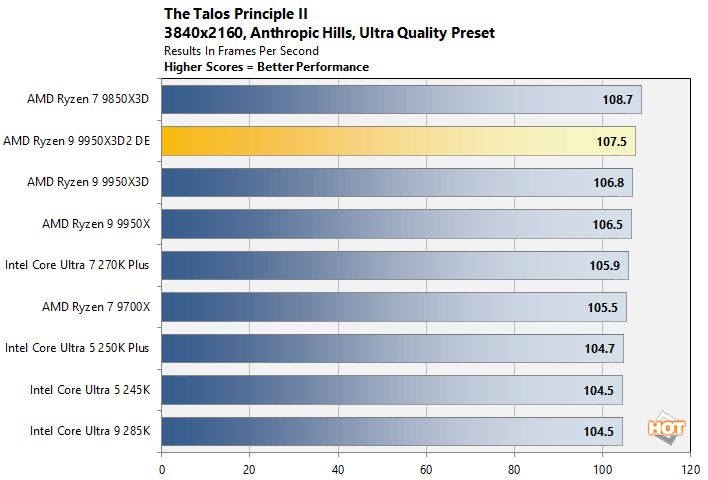
Upping the resolution compresses the performance deltas in all of the games we tested. This time around, while the Ryzen 9 9950X3D2 Dual Edition lands at the top of the heap in two of the three games, its margins of victor are relatively small. That said, the Ryzen 9 9950X3D2 Dual Edition is equally as adept at gaming as it is productivity and content creation workloads.
AMD Ryzen 9 9950X3D2 Dual Edition Power Consumption
Throughout all of our benchmarking and testing, we also monitored how much power our test rigs were consuming with a power meter. Our goal here is to give you an idea as to how much power each configuration used while idling at the Windows desktop and while under taxing CPU workloads across one or all cores. Keep in mind, this is total system power consumption being measured at the outlet and not the the individual power being drawn by the CPUs alone.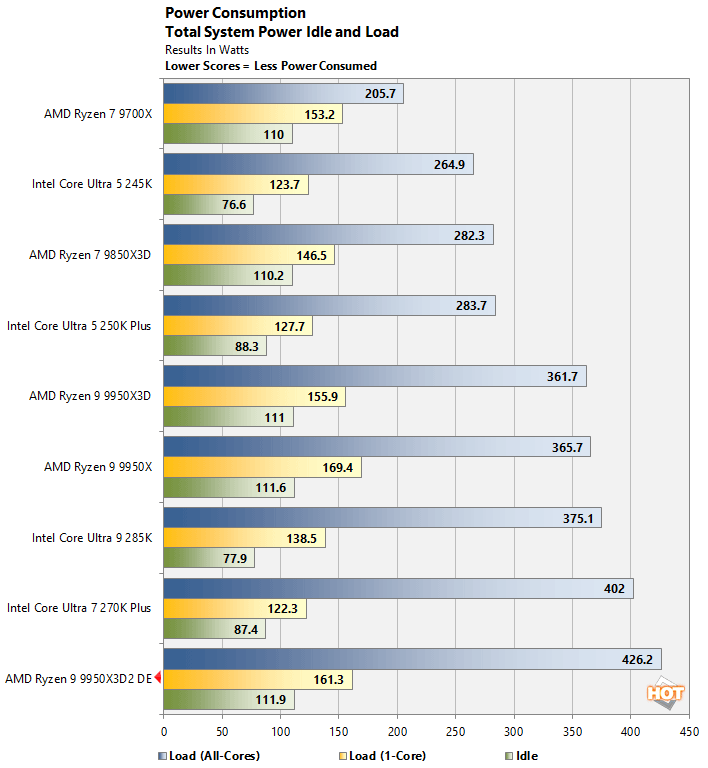
With all of that additional cache and its significantly higher power limits, we expected the Ryzen 9 9950X3D2 Dual Edition to consume more power than its predecessor and that was definitely the case. In fact, whether idling, or running single or multi-threaded workloads, the Ryzen 9 9950X3D2 Dual Edition had the highest peak power of the bunch.

Ryzen 9 9950X3D2 Dual Edition Hardware Details - 3DMark

Ryzen 9 9950X3D2 Dual Edition Hardware Details - 3DMark
The charts above detail the Ryzen 9 9950X3D2 Dual Edition's frequencies and thermals under various levels of stress. This data is gathered during 3DMark's CPU Profile test, which runs with a varying number of threads from just one all the way up to "as many as the CPU can handle," and PCMark 10's Applications benchmark. As you can see, the Ryzen 9 9950X3D2 Dual Edition ran relatively cool, with peak temperatures in the mid-70°C range (using a Coolermaster 360mm AOI cooler) and the processor had no trouble routinely hitting its max 5.6GHz boost clock.