



AMD Radeon R7 265 Mainstream GPU Review

Performance Summary: AMD targeted NVIDIA's GeForce GTX 650 Ti Boost with the Radeon R7 265 and we’d have to say they pretty much hit the bull’s-eye. In some tests the Radeon R7 265 is faster, in others the GeForce GTX 650 Ti Boost pulls ahead, and in others the two finished neck-and-neck.
Though their model numbers are separated by only single digit, we should point out that the Radeon R7 265 performed much more like a Radeon R9 270X than it did a Radeon R7 260X. That’s to be expected, considering the Radeon R7 265 and R9 270X are based on the same GPU.
;)
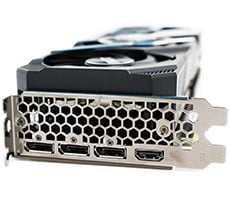
The Radeon R7 265 Reference Card - $149 MSRP
 Looking back through our numbers, the Radeon R7 265 seems to be positioned well as of today. However, cards won’t be available until later this month and by that time the landscape may have changed somewhat. We’ve currently got previous-gen cards being phased out, a smattering of price adjustments happening, and some rumored new product launches on the horizon. If you’re in the market for an affordable discrete graphics card, your options may be very different in the not too distant future.
As of this moment, AMD expects Radeon R7 265 cards to hit the $149 price point. You may be saying, “Hey! That’s the same price as the Radeon R7 260X!” Well, that’s no longer the case. To coincide with the Radeon R7 265’s soft-launch, AMD is also announcing a price cut on the 260X, which will now sell for $119. For the money, both cards offer decent bang for the buck, but the R7 265’s more powerful GPU and wider memory bus make it the more attractive option in our opinion. If you can muster the additional $30, it’s absolutely worth the investment, assuming the delta remains $30 by the time cards go on sale.

 |
 |
|
|







;)