



Valve Responds To Steam Machine's HDMI 2.1 Display Support Controversy


The HDMI port found on the Steam Machine is actually capable of supporting HDMI 2.1 and all of its features. Valve has been able to validate that these features work, albeit having to use Windows as a workaround during the testing process because of the stumbling blocks it has encountered in implementing HDMI.
The main obstacle to providing full support for HDMI 2.1 lies in the standard itself. The HDMI forum, which is the organization responsible for managing this standard, doesn’t allow for HDMI 2.1 features to be implemented in an open source manner. This clashes with the entire ethos of SteamOS, which is the operating system that powers all of Valve’s hardware. It’s based on Linux, an open source OS, and relies on open source drivers.
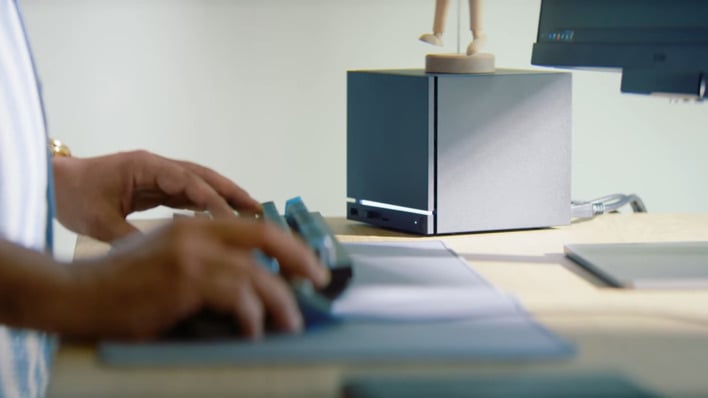
This has meant that the company has had to do some work to get the most out of the HDMI output, including increasing the resolution and frame rates it supports. HDMI 2.0 has a cap of 4K at 60Hz, but Valve has been able to push it to 4K at 120Hz on the Steam Machine. This works thanks to chroma sub-sampling, which compresses data in the video signal and leaves enough bandwidth for the higher refresh rates.
One issue it can’t sidestep is that HDMI 2.0 only supports AMD FreeSync for variable refresh rates (VRR). This might prevent many users from accessing the feature on their TVs, which typically only support the VRR found in HDMI 2.1.
While potential buyers will be disappointed to not get HDMI 2.1 out of the gate, it’s good to see that the hardware can fully support it. It leaves open the possibility that if the HDMI Forum charges its stance on open source implementations, Valve will be able to fully unlock the port with a software update.





