



Orionid Meteor Shower From Halley's Comet Debis Is Your Best Shot To Catch A Shooting Star


This year's viewing window is particularly fortuitous, providing what experts are calling ideal conditions. The 2025 show coincides with a new moon, meaning the sky has zero lunar interference to wash out the faint, high-speed meteors.
The Orionids owe their existence to comet 1P/Halley, a bright traveler that returns to the inner solar system every 75 to 76 years, last visible in 1986 and next due in 2061. Twice a year, Earth’s orbit crosses the comet's debris trail and when these tiny grains of ice and rock slam into Earth's atmosphere at roughly 41 miles per second (66 km/s), they vaporize from friction, producing the brilliant streaks of light.
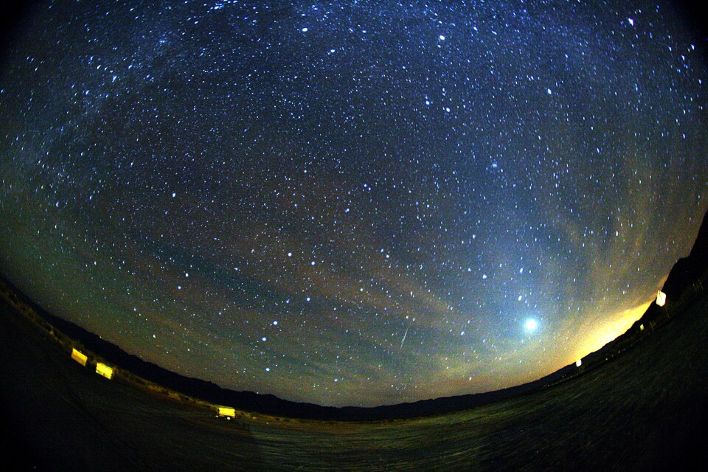
This speed makes the Orionids known for two things: brightness and duration. They are famous for leaving behind shimmering, incandescent bits of debris called glowing 'trains' that can linger in the sky for several seconds to minutes. On average, observers in dark locations can expect to see 10 to 20 meteors per hour during the maximum. However, in rare outburst years, rates have jumped to between 50 and 75 per hour.
As with most events like this, the best time to watch is during the pre-dawn hours—from 1:00 a.m. local time until dawn. The shower gets its name because the meteors appear to originate from a point, or radiant, near the famous constellation Orion, specifically close to the red giant star Betelgeuse.
It's also best to escape city light pollution. Find a
safe, dark location, away from streetlights and urban glow. Once settled, allow your eyes at least 30 minutes to
fully adjust to the dark.
However, the best viewing strategy is counter-intuitive. Looking directly at the radiant causes the meteors to appear short and stubby. Instead, skywatchers are advised to lie flat on their back with their feet generally facing the southeast and look about 40 to 45 degrees away from Orion to catch the most dramatic and longest streaks.
As an added bonus to this year’s already dark-sky peak, skywatchers might also catch a glimpse of the recently discovered Comet C/2025 A6 (Lemmon). This comet, a striking green visitor from outside our solar system, is making its closest pass to Earth around the same peak date, offering a rare celestial double feature.





