



NVIDIA's RTX 50 Super GPUs Reportedly Reach Partners But There's A Major Hurdle


NVIDIA's rumored GeForce RTX 50 Super refresh remains just that—a rumor—though the unannounced cards not only reportedly exist, but they have made their way into the hands of one or more add-in board (AIB) partners, which aligns with the upgraded models recently making a cameo on Seasonic's online PSU calculator tool. So why have they not been released or even formally acknowledged yet? A logistical snag has purportedly put the launch on hold.
Citing an anonymous source, the folks at Videocardz say NVIDIA has distributed GeForce RTX 50 Series cards to at least one partner, but pricing on 3GB GDDR7 memory chips have the upcoming GPUs in an indefinite holding pattern. If you're looking for a silver lining, it's that the cards are allegedly real and beyond the prototype stage, and all that awaits is better pricing on memory.
Assuming past leaks and rumors remain accurate, here is a look at the models and specs that are on tap:
- GeForce RTX 5080 Super: 10,752 CUDA cores, 24GB GDDR7, 256-bit bus, 1,024GB/s bandwidth, 415W TGP
- GeForce RTX 5070 Ti Super: 8,960 CUDA cores, 24GB GDDR7, 256-bit bus, 896GB/s bandwidth, 350W TGP
- GeForce RTX 5070 Super: 6,400 CUDA cores, 18GB GDDR7, 192-bit bus, 672GB/s bandwidth, 275W TGP
The non-Super models employ 2GB GDDR7 memory chips for 16GB (8 x 2GB) of VRAM on the GeForce RTX 5080 and GeForce 5070 Ti, and 12GB (6 x 2GB) on the GeForce RTX 5070 Ti. By switching to 3GB GDDR7 memory chips, NVIDIA can raise the amount of total VRAM by 50% on each model.
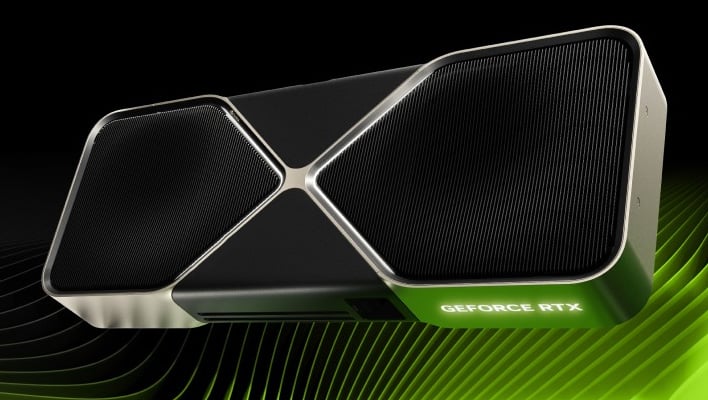
Pricing is what throws a wrench into the equation. The site's source says a 3GB GDDR7 memory chip costs between $60-$70, versus a 2GB GDDR7 memory chip running about $20. That amounts to a threefold (or more) increase in cost per chip, multiplied by six for the GeForce RTX 5070 Super and eight for the GeForce RTX 5070 Ti Super and GeForce RTX 5080 Super.
On the low end, that translates to $360 (six chips) and $480 (eight chips), while the higher end of the pricing spectrum pushes the cost increase to $420 and $560.
Those costs would undoubtedly be passed on to the consumer, and given that the GeForce RTX 50 series has mostly maintained MSRP pricing, paying hundreds of dollars more for souped-up models could be a tough sell. This is reportedly the same reason why a 9GB version of the GeForce RTX 5050 has not launched yet.
Unfortunately for gamers and consumers in general, memory is fueling the AI boom. It's too early to tell if memory chips from ChangXin Memory Technologies (CXMT) will bring relief to the industry as a whole—Apple reportedly set its sights on CXMT, and so has Corsair—and if so, if the benefit of increased supply would spill over into pricing for 3GB GDDR7 memory chips produced by players like Micron, Samsung, SK hynix.




