



NVIDIA's New Job Postings Reveal A Big Push To Boost Gaming Performance On Linux


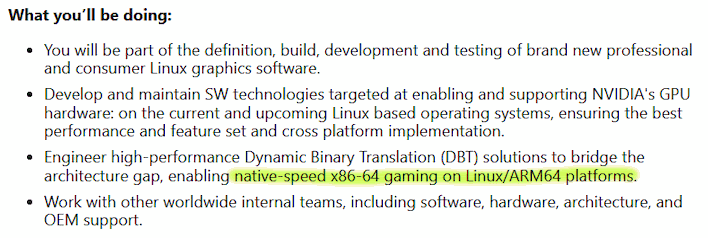
It doesn't take a genius to see what this is almost assuredly about: NVIDIA's long-rumored consumer-facing N1/N1X Arm SoCs, designed in collaboration with Mediatek. All signs indicate that these chips are slated to appear in laptops from major OEMs pretty much any day now. If that's actually the case, NVIDIA may even be a bit behind schedule with these positions (despite that they were just posted), as the ability to run whatever software users download will be a make-or-break point for consumer devices like those the N1 family SoCs are supposed to power.
These listings are also fascinating in the context of the broader industry shifts happening now. Valve's Arm-powered Steam Frame headset is expected to ship with support for large sections of the Steam library via Arm Linux plus translation tech. Similarly, desktop Linux share, buoyed by handheld devices like the Steam Deck (as well as growing dissatisfaction among Windows gamers with aggressive AI-centric design changes in Windows 11), has climbed over recent years, with recent surveys showing Linux at or above historic thresholds in userbase metrics like Steam's hardware survey and independent OS share estimates.

NVIDIA’s relationship with Linux has historically been defined by friction, famously punctuated by Linus Torvalds’ middle finger and a mountain of proprietary driver "blob" complaints. However, the release and subsequent refinement of NVIDIA’s Open Kernel Modules in 2024 started to thaw that ice, shifting the conversation from fundamental hostility to cautious optimism. These new job listings suggest we’re entering "phase two" of that redemption arc, moving beyond basic compatibility and into aggressive performance optimization.
NVIDIA clearly realizes that in an era of Steam Decks and ARM-based handhelds, it can’t just rely on Windows dominance. If it doesn't master the Vulkan and Proton stack now, it risks being the odd man out in the next generation of portable gaming. To be clear, there's been no formal strategic announcement from NVIDIA on Linux gaming. Still, coupling the recent job listings with its broader product roadmap, including both the aforementioned unreleased products as well as machines like the DGX Spark, suggests the company may be allocating more R&D muscle toward performance improvements and compatibility across both x86-64 and Arm Linux platforms.





