



NASA Warns Surge In Satellites Will Sabotage Astronomy And Hubble Images


Astronomers and experts have long warned that the proliferation of mega-constellations, chief among them SpaceX’s Starlink, Amazon, and China's Guowang networks, would impact ground-based observatories by leaving bright streaks across astronomical images. However, recent analyses—including a recent study published in Nature and supported by NASA observations—have quantified the scale of the problem extending to space-based assets. What these studies are showing is that reflections from the large solar arrays and white bodies of LEO satellites are scattering sunlight not only into Earth’s atmosphere but also into the field of view of orbiting telescopes. The latter results in distinct bright streaks that saturate detectors and a subtle but pervasive increase in the background sky brightness.
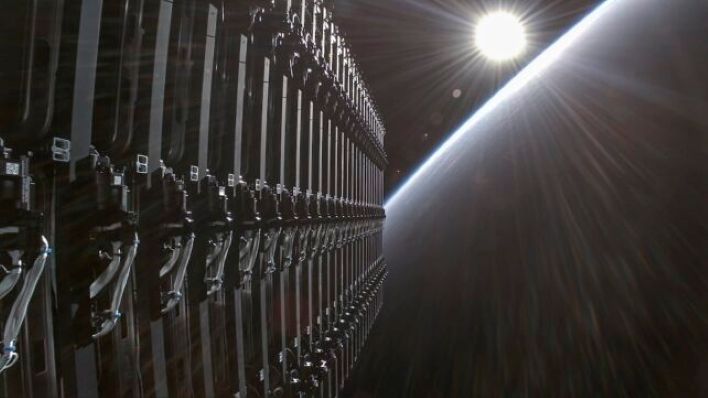
Current projections peg the number of operational LEO satellites potentially exceeding 100,000 within the next decade. Even satellites deemed "darkened" through mitigation efforts—like the deployment of sunshades or using non-reflective coatings—still scatter light. Furthermore, the study highlights that light reflected off Earth itself can illuminate the constellations from below, adding a persistent glow that degrades the ability of any instrument, in space or on the ground, to detect the faint signals from the early universe. This makes it increasingly difficult for telescopes like the Vera C. Rubin Observatory, which relies on extremely wide, deep field imaging, to achieve its goals.
So far, there has been increasing pressure on regulatory bodies like the FCC and international organizations to integrate astronomical preservation into the licensing process for satellite operators.





