



NASA Updates Odds Of A City-Killer Asteroid Smashing Into The Moon In 2032


The saga of 2024 YR4 began when the asteroid was first detected by NASA's ATLAS station in Chile in 2024, which was initially assessed to have a near-Earth trajectory, later re-calibrated to a 4.3% chance of lunar impact. At roughly 220 feet (67 meters) wide, the asteroid is significantly larger than the bolide that exploded over Chelyabinsk, Russia, in 2013.
Had it struck the Moon, the collision would have been a spectacular, albeit violent event visible from Earth. Experts estimated the impact would have carved a crater over a mile wide and ejected massive plumes of debris into lunar orbit, potentially triggering meteor showers on Earth.
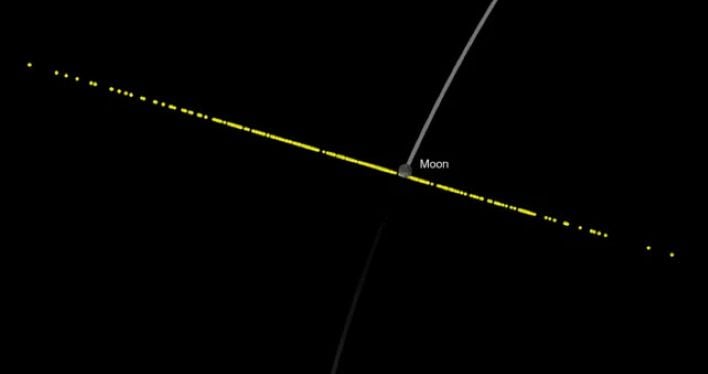
Despite the elimination of the impact risk, the 2032 encounter could become a significant scientific opportunity. When 2024 YR4 makes its pass, it will be one of the closest approaches of an object this size in recorded history. Perhaps the proximity will allow the Moon’s gravity to affect (or bend) the asteroid's path, potentially slingshotting the rock onto a different long-term orbit?
For now, we can only guess what exactly caused 2024 YR4's trajectory to change. Was it the Yarkovsky effect (the force where heat from sunlight on the rock's surface acts as a tiny thruster) or maybe it's another piece of alien tech disguised as a rock?





