



NASA Plans To Put A Nuclear Reactor On The Moon By 2030 As Space Race Intensifies


NASA and the Department of Energy have officially embarked on an ambitious goal to plant a nuclear reactor on the Moon's surface by 2030, which when completed, will have enough output to power multiple lunar households for up to 10 years.

Known as the Fission Surface Power project, the initiative aims to provide a reliable, weather-independent energy source especially for the upcoming Artemis missions. Unlike solar panels, which can be rendered useless during the 14-day lunar nights where temperatures plummet to minus 280 degrees Fahrenheit, a nuclear fission reactor can provide electricity around the clock.
NASA leadership has emphasized that mastering nuclear power in space is not just a luxury but a fundamental requirement for long-term survival. As former NASA Administrator Bill Nelson recently stated, achieving a sustainable future on the Moon and eventually sending humans to Mars requires harnessing the dense, reliable energy that only nuclear technology can offer.
While we're more likely to imagine something like Pile-1 or Chernobyl-sized reactors on the Moon, the planned system is way more modest. It must be small and light enough to fit inside a standard lunar lander, yet powerful enough to generate at least 40 kilowatts of electricity—enough to support several households, or so the plan goes—for at least a decade without any maintenance.
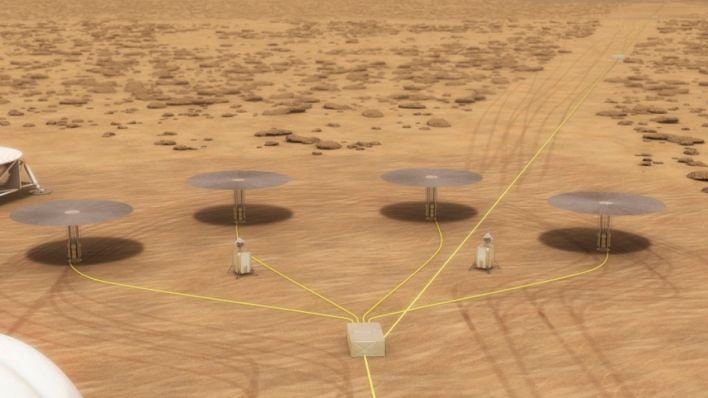
As of this writing, the project completed its initial design phase, with NASA and the DOE evaluating concepts from several industry partners. These designs focus on low-enriched uranium fuel and advanced cooling systems that can dissipate heat in an environment with no atmosphere.
Plug-and-play fission reactors could be used for life-support systems, to recharge lunar rovers, and perhaps most importantly, fuel resource utilization plants that will turn lunar ice into drinkable water and oxygen. Moreover, if successful, the lunar reactor will serve as a technological test bed for future Mars ambitions. It goes without saying that the power needs for a crewed mission to the Red Planet is even more daunting, and the Fission Surface Power project can be a testing ground for the compact nuclear systems that will one day sustain the first Martian colonies.
While the project faces regulatory and engineering hurdles, this NASA and the Department of Energy collab is a national commitment to nuclear space propulsion and power. Similarly, China, in partnership with Russia, also plans to build a nuclear power plant on the Moon by 2035 to support their International Lunar Research Station (ILRS).





