



Microsoft's Project Silica Brings 10,000-Year Glass Storage Closer To Reality


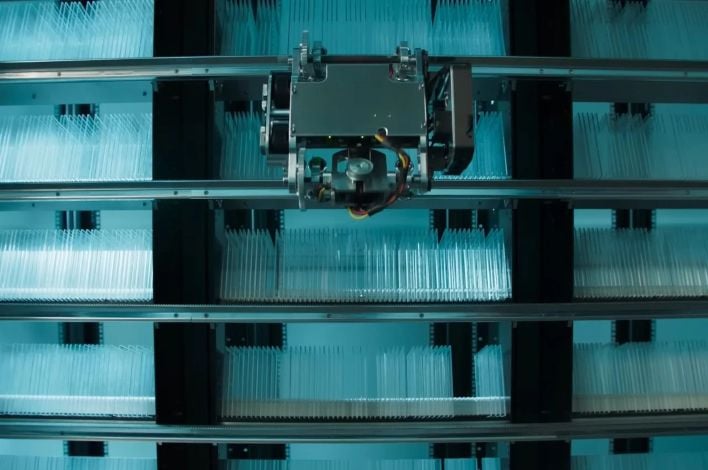
With the sheer volume of global archival data outpacing our ability to store it reliably, it's hard not get excited about something like Project Silica. Currently, data centers rely on magnetic media that must be replaced every five to seven years. In contrast, the glass platters developed by Microsoft’s team in Cambridge are passive; once the data is written, it requires zero energy to maintain. The storage units can sit on a shelf for millennia, remaining as legible as the day they were created. This sustainability factor is a cornerstone of the project, as it offers a path toward carbon-neutral data archiving by eliminating the need for constant cooling and mechanical maintenance.
The success behind Project Silica revolves around the discovery of three-dimensional pixels, or phase voxels, encoded into the 2mm-thick glass. These voxels are not merely surface markings but are structural changes within the silica itself.
To retrieve the information, high-speed wide-field microscopes capture images of the glass, which are then processed by machine learning algorithms to decode the patterns back into digital files. Recent refinements (as published in Nature) spotlight how the team has significantly increased the data density and the speed of the writing process, making the technology viable for large-scale enterprise use. To demonstrate, the researchers successfully encoded classic films (like Warner Bros' Superman), music, and cultural archives, proving that the system can handle complex, high-def datasets (a limitation of other 5D glass storage tech).
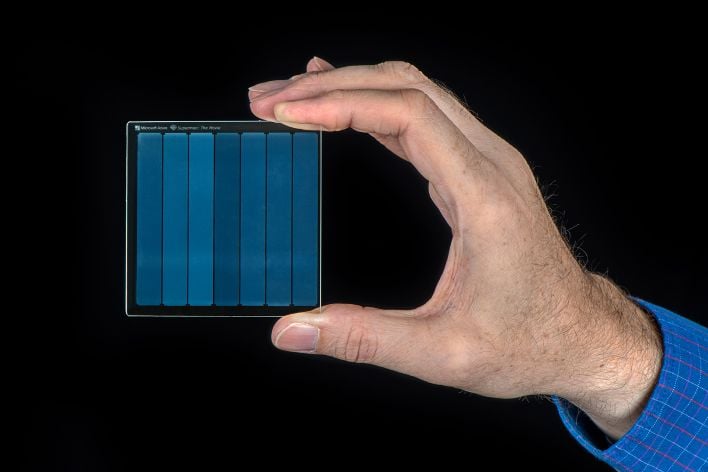
Beyond industrial applications, the implications for our cultural heritage could be quite profound. After all, modern civilization generates more information than any era in history, yet our storage formats are the most ephemeral we have ever used. While Roman stone inscriptions have survived two thousand years, a standard DVD may become unreadable in twenty. In contrast, Project Silica bridges this gap by providing a hard copy for the digital era.





