



Lenovo Forecasts Sky-High PC Memory Costs Lasting Until 2030


The statement was reportedly made with a degree of humor, but the underlying forecast is anything but a joke. Lenovo believes the memory market has fundamentally changed, and that the pricing consumers enjoyed before the second half of 2025 is unlikely to return. Mainstream PC memory and storage costs surged between 40% and 70% over the course of 2025 alone, with those increases directly impacting customers.
Samsung, SK Hynix, and Micron, the three companies that essentially control the world's memory supply, have been aggressively pivoting production capacity toward High Bandwidth Memory, or HBM. That's the specialized, memory stacked onto many of the AI accelerators powering enormous data centers. SK Hynix Chairman Chey Tae-won independently confirmed at Computex 2026 that the company plans to double its total wafer production capacity within five years, and expects the supply shortage to persist through 2030 regardless, corroborating Lenovo's forecast from an unlikely direction.
The problem is one of resource allocation. Every wafer dedicated to HBM production is one not used for DDR memory which resides in consumer devices. The demand shows no sign of slowing, either. OpenAI and Broadcom recently unveiled the Jalapeño, a custom AI inference chip that signals even more dedicated silicon, and therefore more memory demand, for the data center pipeline.
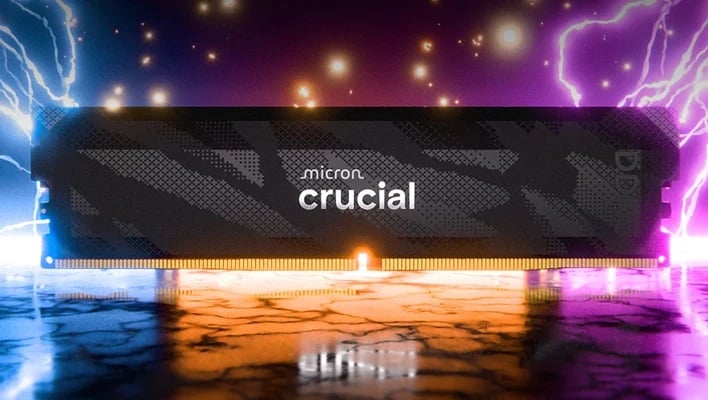
TrendForce data tells more of the story. PC DRAM contract prices more than doubled quarter-over-quarter in Q1 2026, setting a new historical record for a single quarter, while NAND flash contract prices surged 55 to 60 percent over the same period. Vendors have already begun passing those costs on to customers in the form of explicit surcharges, and Lenovo says it has had little choice but to participate. The company informed channel partners earlier this year that rising component costs were forcing adjustments across its consumer and enterprise product lines. Micron went a step further, exiting the consumer market entirely and discontinuing "Crucial" branded memory to redirect supply toward larger AI-focused strategic customers.
Historically, memory pricing has been cyclical, swinging between surpluses and shortages every few years. Lenovo's argument is that AI has broken that rhythm. Even as manufacturers invest billions in new fabrication capacity, the company expressed skepticism that additional supply will arrive quickly enough to counter balance the demand AI infrastructure keeps generating. New fabs take years to come online, and by the time they do, AI appetite may have simply grown to fill the gap.
The pinch is also showing up in across the consumer electronics industry. Microsoft recently disclosed in a blog post that console storage and memory prices have increased by more than 2.5x, and the company expects another doubling by fall 2027. That forced a second round of Xbox price hikes, following an earlier increase last October.
Apple is in the same boat. Tim Cook told Reuters that the company has "never seen a component price increase this much, this quickly," and officially raised pricing on several Mac and iPad lines after months of trying to absorb costs on the supply side. That includes the budget-focused MacBook Neo, a product explicitly designed to bring more buyers into the Mac ecosystem at a lower entry point. When Apple raises prices on its most accessible hardware, the message is clear.
The downstream impact touches essentially every category of personal technology. PCs, laptops, gaming handhelds, smartphones, tablets, and enterprise servers all draw from the same strained memory supply chain. Bargain SSD upgrades and affordable RAM kits, once reliable fixtures of the enthusiast PC market, will become increasingly scarce if the trajectory Lenovo is describing rings true.





