



Google Patents A Game-Changing Way To Swap Phone Batteries


Google has filed a patent for a glue-free, mechanically interlocked battery system that could make future Pixel repairs dramatically simpler. If this concept makes it to production, it'd be a major right to repair win for the company (and users).
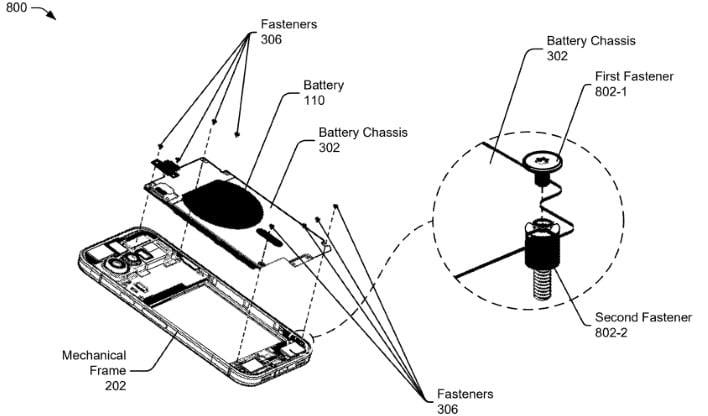
The patent (filed in April last year and discovered by Hypertxt.ai) describes a mechanical system that could debut as early as the Pixel 11 Pro series. For the most part, smartphone manufacturers have relied on high-strength adhesives to secure batteries, a practice that makes repairs hazardous and often results in punctured cells or damaged components.
Google’s new approach ditches the glue in favor of a rigid metal subassembly. In this design, the battery is housed within a dedicated chassis that slides into the phone’s frame and locks into place using shear stops and mechanical interlocks. This ensures the battery remains rock-solid during a drop while allowing it to be popped out as a single, safe module when it’s time for a replacement.
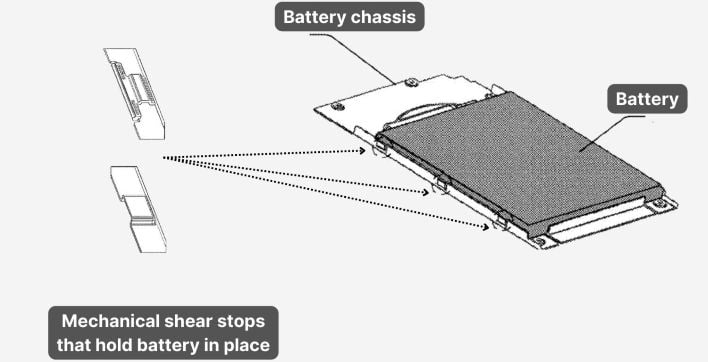
Moreover, the patent addresses technical hurdles such as signal interference and structural rigidity by using the metal battery frame itself as a system ground. By employing spring-loaded fasteners, the device maintains a constant, stable electrical connection even if the phone flexes or bends. Perhaps most crucially, this mechanical system is designed to coexist with premium features like IP-rated water resistance and wireless charging coils. What the patent doesn't answer is the potential weight penalty the battery cage assembly brings.
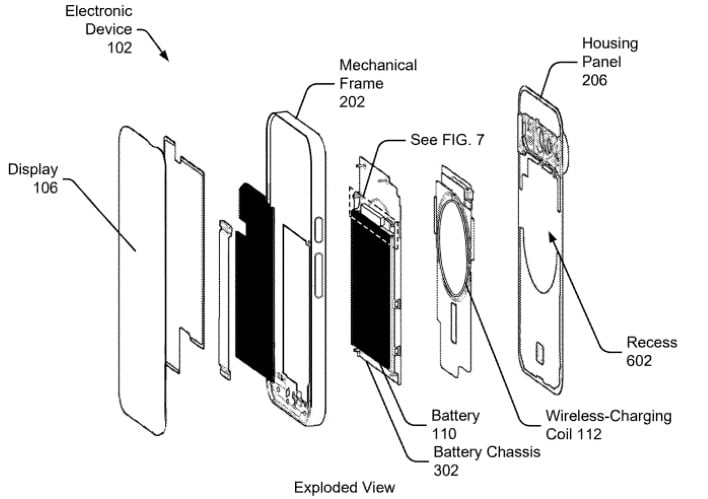
While the patent explicitly mentions standard smartphones, diagrams suggest the technology is particularly well-suited for complex devices like the Pixel 11 Pro Fold. Indeed, foldables face unique internal stresses, and a glue-free battery would prevent adhesive fatigue over thousands of folding cycles.
Of course, with the European Union mandating that all smartphones must have user-replaceable batteries by 2027, Google's patent isn't just some random design exercise. Currently, a smartphone battery usually begins to degrade to about 80% of its original capacity after two or three years. By making the swap as simple as turning a few screws rather than needing a heat gun and solvent, Google's battery cradle setup could be a champion for sustainability and right to repair.





