



Ferry Crew Member Faces Charges In Malware Incident That Shakes Maritime Cybersecurity


When the ship was docked recently in the port of Sète, Italian and French authorities plus maritime security services became aware of a Remote Access Trojan (RAT) embedded within the ship's electronic systems. The discovery led to the immediate arrest of a Latvian and a Bulgarian (who has since been released) crew members who had recently joined the vessel.
While the Latvian detainee initially appeared to be a standard maritime employee, investigators now believe he acted as a technical proxy for a foreign power. The Paris prosecutor’s office, which handles cases of national security and cybercrime, has formally opened a probe into potential attacks on the ship's automated data-processing system carried out by an organized group working for the interests of a foreign state.
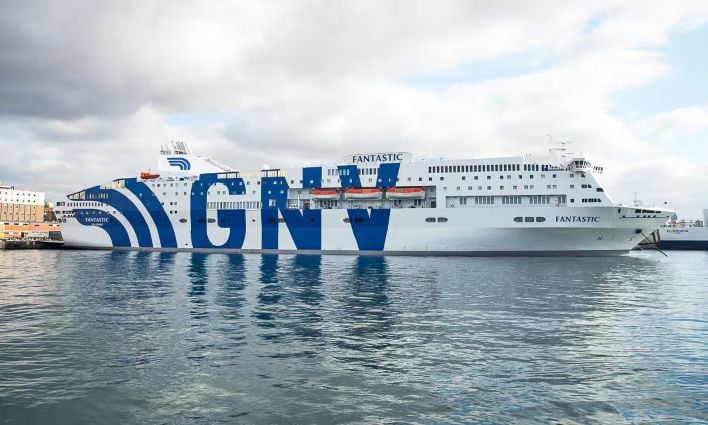
Of course, this incident also exposes the vulnerable structure of ships' (and by extension, maritime industry's) IT infrastructure and critical navigation systems. Historically, these systems were physically separated to prevent outside interference. However, modern vessels increasingly rely on integrated networks to streamline operations, allowing engine performance data, cargo manifests, and navigation charts to be updated and monitored via the same interconnected hubs. The malware found on the Fantastic could have given remote operators the ability to intercept communications, manipulate GPS coordinates, or even disable steering and propulsion during transit.
Technical experts warn that the maritime sector is becoming a primary theater for gray zone warfare, where state actors use cyber-tools to disrupt logistics and sow panic without declaring open conflict. In the case of the Fantastic, the presence of a RAT on a passenger vessel carrying 2,000 civilians might have meant something beyond corporate espionage, but potential sabotage instead. Because ferries often utilize standard PC-based operating systems for administrative tasks, a compromised laptop or a USB drive inserted into a bridge console can serve as a beachhead for a much larger takeover.
French Interior Minister Laurent Nuñez highlighted the seriousness of the situation, noting that the method of delivery, i.e. placing a physical agent on the crew to install the software, suggests a level of planning typically used by intelligence agencies. As the vessel underwent rigorous cleansing of the RAT, security protocols at French ports were immediately tightened.





