



Scientists Ask Public to Help Identify Distant, Light-Bending Galaxies


A global citizen science project is inviting you to scour through the Euclid space telescope's massive DR1 (Data Release 1) mission. The aim is to uncover possibly thousands of strong gravitational lenses that could aid in our understanding of dark energy and dark matter. By joining the Space Warps DR1 campaign, volunteers will have access to 300,000 high-quality images (pre-selected by AI) from a dataset of 72 million galaxies.
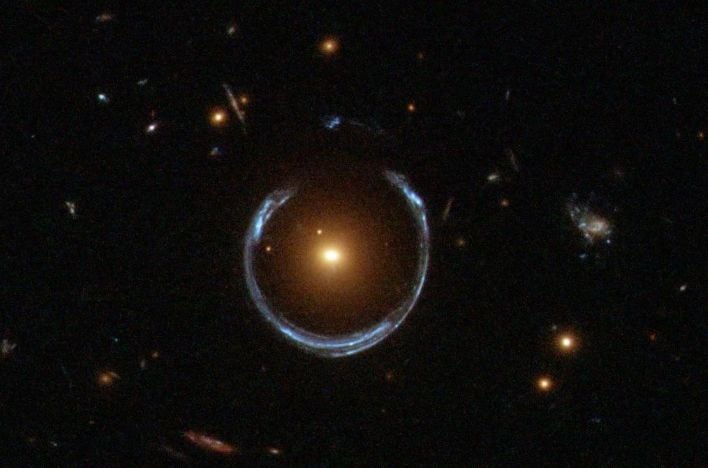
The scale of this new search is unprecedented. Previous surveys took decades to find a few hundred lenses, but this time, Euclid's DR1 dataset is more ambitious. The full-year observation covered an area roughly 9,500 times the size of the full moon, and from there, AI sifted through 72 million galaxies for the strongest candidates. However, because gravitational lenses are incredibly rare and can take on complex, irregular shapes, the human eye remains superior at distinguishing true lenses from "fakes" like spiral arms or edge-on galaxies that can confuse computer models.
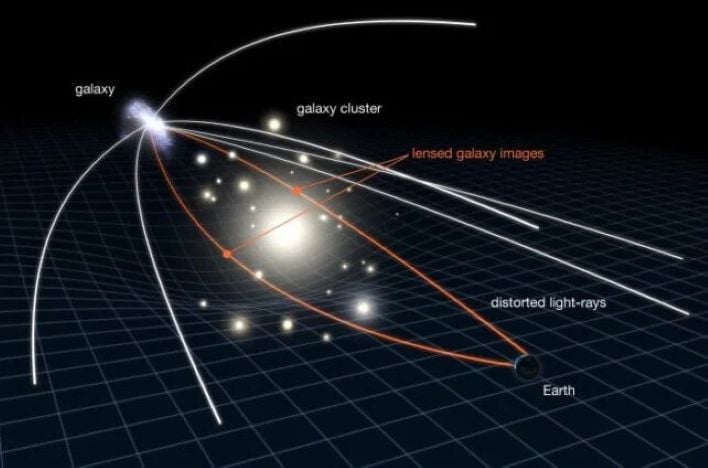
By collaborating with the Zooniverse platform, the Euclid Consortium hopes to identify more than 10,000 new strong lenses: that's four times more than the total number of lenses discovered in the last 50 years. This massive new catalog will allow scientists to study how galaxies have evolved over 10 billion years of history. For volunteers, the project offers a rare chance to be the first human ever to lay eyes on a specific warped corner of the universe, contributing to a map that will eventually help reveal the hidden architecture of the cosmos.
As big data astronomy grows in use and provides an unprecedented amount of data for scientists, this sophomore Space Warp project is a good example of how the synergy between human intuition and machine learning can keep pace with the deluge of data while making major discoveries together.
Main photo: Mosaic of strong gravitational lenses discovered in the first Space Warps campaign in 2024 (Credit: Euclid Consortium)





