



Android-to-iPhone Texts Finally Support End-to-End Encryption via RCS


Apple and Google have finally (FINALLY!) released end-to-end encrypted RCS messaging between both ecosystems, a long-awaited upgrade that brings cross-platform privacy protections to perhaps the most rudimentary kind of smartphone conversation. The beta is rolling out as we speak to users running their latest OS/software versions.
This announcement closes one of the last obvious gaps between iMessage and Android messaging. Apple said the feature is starting in beta for iPhone users on iOS 26.5 with supported carriers, while Google said Android users need the latest version of Google Messages.
Google and Apple described the rollout as the result of a cross-industry effort to add encryption to RCS, the messaging standard that has gradually replaced SMS with richer features like read receipts, typing indicators, higher-quality media, and group chats.
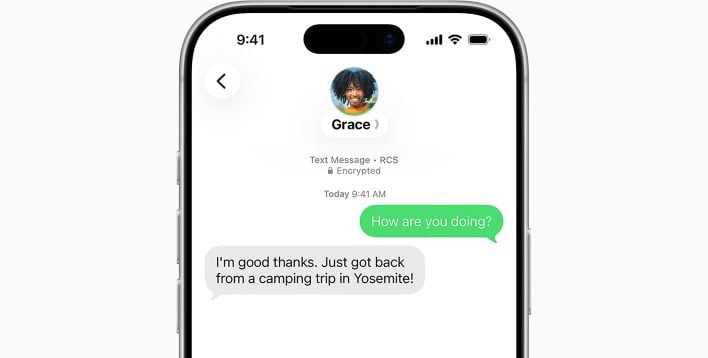
The immediate benefit of this upgrade is straightforward: when an RCS conversation is end-to-end encrypted, the messages cannot be read while they travel between devices. Users will see a lock icon in the chat to show that encryption is active, and Apple says the protection will be automatically enabled over time for new and existing RCS conversations. The same basic rule applies on Android, whereby the same lock icon appears when a cross-platform RCS conversation is protected .
One can also say that this has been a win for RCS, which has become politically and commercially unavoidable. Apple only adopted RCS in 2023 after years of resistance, following pressure from regulators and from Google—the latter a strong proponent for a more seamless alternative to SMS. Apple still frames iMessage as the best option for Apple-to-Apple communication, but thankfully, the company is now participating in the broader RCS ecosystem, which is a win-win for everybody.
Apple and Google both say the feature is rolling out in beta, so access will not be immediate for everyone, and carrier support still matters.
Main photo credit: Google





