



AMD Zen 6 Leak: Next-Gen Ryzen Processors Tipped To Clear 6.5GHz Barrier


According to the leak, Zen 6 is targeting roughly a 10% IPC improvement over Zen 5 while increasing L2 cache to 1MB per core. Standard Zen 6 chiplets are also said to feature 12 CPU cores and 48MB of L3 cache, a substantial increase over today's eight-core Zen 5 CCDs. The most eye-catching claim concerns the clock speeds, though. The leak states that Zen 6 CCDs have already reached at least 6.5GHz in testing, with frequencies as high as 6.6GHz reportedly possible. Earlier internal targets were allegedly even more ambitious, with AMD initially aiming for 7GHz-class desktop processors, but it sounds like that's not happening, at least for the initial release.

Desktop processors, codenamed Olympic Ridge, are expected to continue using AMD's AM5 platform. The roadmap suggests flagship models could feature two 12-core Zen 6 chiplets alongside a pair of low-power Zen 6C LP cores integrated into the I/O die, resulting in up to 26 total CPU cores on consumer desktop systems. The same general architecture is also expected to appear in Gator Range mobile processors, as has been tradition.
The leak further claims AMD will adopt silicon bridges between dies to replace the current interconnects used in AMD's chiplet processors. The Ryzen AI Max "Strix Halo" CPUs already do something similar to this. An earlier rumor pegged Siliconware's Fan-Out Embedded Bridge packaging technology for non-monolithic Zen 6 products. Similar in concept to Intel's EMIB and TSMC's InFO-LSI technologies, the approach uses embedded silicon bridges to improve communication between chiplets, and could play an important role as AMD expands its use of modular CPU and GPU designs.
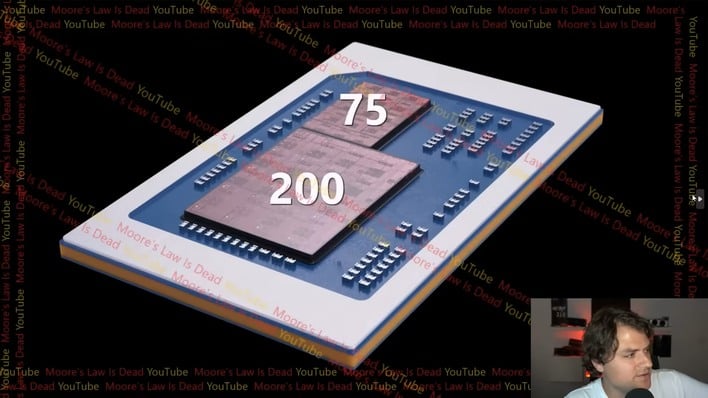
Mobile platforms are also expected to receive significant changes. Medusa Point, rumored as the successor to Strix Point, reportedly combines Zen 6, Zen 6C, and Zen 6C LP cores with an integrated RDNA 4-derived GPU and optional 12-core Zen 6 chiplet expansion. At the other end of the spectrum, a smaller monolithic design codenamed Bumblebee is said to target thin-and-light laptops and handheld gaming systems with a six-core hybrid CPU configuration and highly optimized integrated graphics.
Meanwhile, AMD's Halo-class products are rumored to evolve into increasingly modular designs featuring dedicated RDNA 5 graphics chiplets based on the same technology as the company's next-generation discrete GPUs. The roadmap describes Medusa Halo configurations pairing Zen 6 CPU chiplets with "Alpha Trion" GPU dies containing up to 48 compute units and large unified LPDDR memory subsystems. There will apparently be a full-fat Medusa Halo that is a direct successor to the current Strix Halo, and then a smaller "Medusa Halo Mini" that fits in the same socket as Medusa Point and trades the ability to optionally connect to a Zen 6 CCD for a small dedicated graphics chiplet.
The stream is worth watching; he covers a lot of things we don't in this post.
Interestingly, the report also claims that current Zen 6 B0 silicon has encountered an issue of some kind. The leaker didn't actually explain what the issue was, but intimated that it was minor, yet could potentially still cause a brief delay in the release of Zen 6 processors. We can imagine it being something that mandates a potential metal-layer respin. If accurate, that could help explain the absence of any consumer CPU roadmap disclosures during Computex 2026, where AMD (like Intel and NVIDIA) avoided discussing anything to do with next-generation client hardware.
And so, official launch timing remains unclear. While some earlier expectations pointed toward late 2026 introductions, the combination of the alleged issue and the complete lack of public guidance from major vendors has fueled speculation that Zen 6 client processors as well as potentially even AMD's Venice-generation EPYC products could slip into early 2027. As always, readers should treat roadmap leaks with caution. However, if even a portion of these claims prove accurate, Zen 6 could represent AMD's most significant desktop and mobile CPU update since the original launch of Ryzen.





