



AMD Zen 6 And Intel Nova Lake-S May Both Debut In 2027 For A Next-Gen CPU Showdown


We've been expecting AMD's "Olympic Ridge" processors based on the Zen 6 architecture in Q1 of next year for a while now, but Intel's Nova Lake desktop CPUs were thought to be coming at the end of this year. Well, a new post from the generally well-regarded leaker 金猪升级包 (which literally translates to "Golden Pig Upgrade Pack") claims that Intel's Nova Lake S chips are in fact coming at CES 2027. That doesn't necessarily mean the parts were delayed; the last thing Intel said about Nova Lake's launch window was in September of last year, when the company's John Pitzer, VP of Planning & IR, said that the new chips would arrive "late [2026] into 2027." In other words, right around CES 2027.
It's going to be quite a battle, we think. On AMD's side, you have Zen 6, a major revision from Zen 5 that promises massive clock rate scaling—possibly as high as 7 GHz, if Moore's Law is Dead is to be believed. On clock rate alone, that's going to be a nearly 15% single-core improvement. The company is confirmed to be increasing core counts from 8 per chiplet to 12; that results in desktop CPUs with a max of 24 cores, a 50% bump from the extant top-tier Ryzen 9 processors.
Even that number sounds absolutely paltry compared to the supposed 52 CPU cores that will be coming along with top-end Nova Lake CPUs, though. The story goes that Nova Lake will have four LP E-cores on its SoC tile, and then one or two compute tiles, each of which packs in eight P-cores and sixteen E-cores. With dual compute tiles, that results in the aforementioned 52 cores. Performance will likely be a bit lower than that number suggests as the LP E-cores probably won't contribute much, but the chips should still provide absolutely massive multi-core throughput—as long as they're not memory bandwidth bottlenecked.
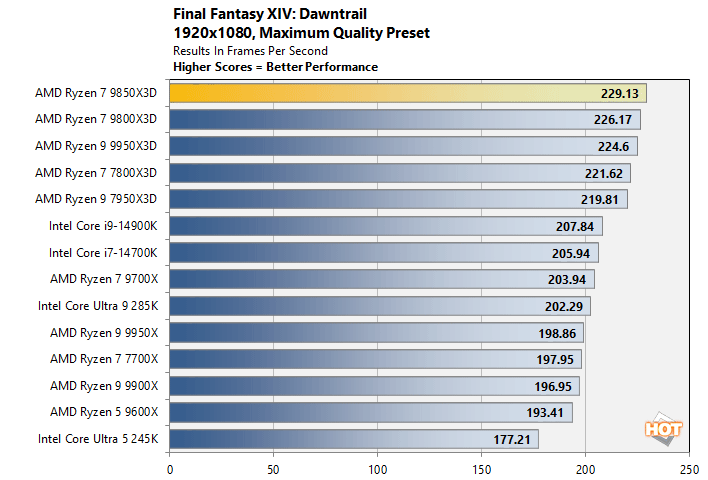
Of course, the most demanding task most DIY desktop users ever do is play video games, and while games care a little about cores and a lot about clocks, the thing they're actually most influenced by is cache. AMD's been dominating the CPU gaming arena with its "X3D" processors sporting 3D V-Cache, its technology where it physically stacks extra L3 cache on top of (Ryzen 5000, 7000) or underneath (Ryzen 9000) the CPU chiplet. Intel's been slow to respond, but Nova Lake's "bLLC," or "Big Last Level Cache", promises to even the odds by raising the L3 cache per compute tile to 144MB.
As promising as bLLC sounds, there are a whole pile of caveats here. Intel's not stacking silicon like AMD does; instead, these chips are apparently coming with compute tiles that are simply flush with cache in the base design. That increases die area, which makes the chips expensive, and as a result, it seems like only the top SKUs may have bLLC, with no direct competitor to the relatively affordable Ryzen 7 X3D parts. Worse still, scuttlebutt says that the top Nova Lake parts will be so power-thirsty that they'll require premium motherboards to even run, with reported power draw over 700 watts. Spicy!
Of course, CES 2027 is a long time from now. For all we know, the AI market could continue to accelerate and Intel and AMD may completely give up on consumer products altogether. Alternatively, China invades Taiwan and everything goes to hell. Who can even guess? Here's hoping we all make it to CES 2027 to find out who wins the battle between Olympic Ridge and Nova Lake.





